
Last updated September 23, 2026
Free visual inspection and a written scope of work before any mitigation begins - photos, moisture readings, and drying logs go in your claim file
The scope we write is the scope we bill. Anything new gets shown to you, in writing, before we touch it.
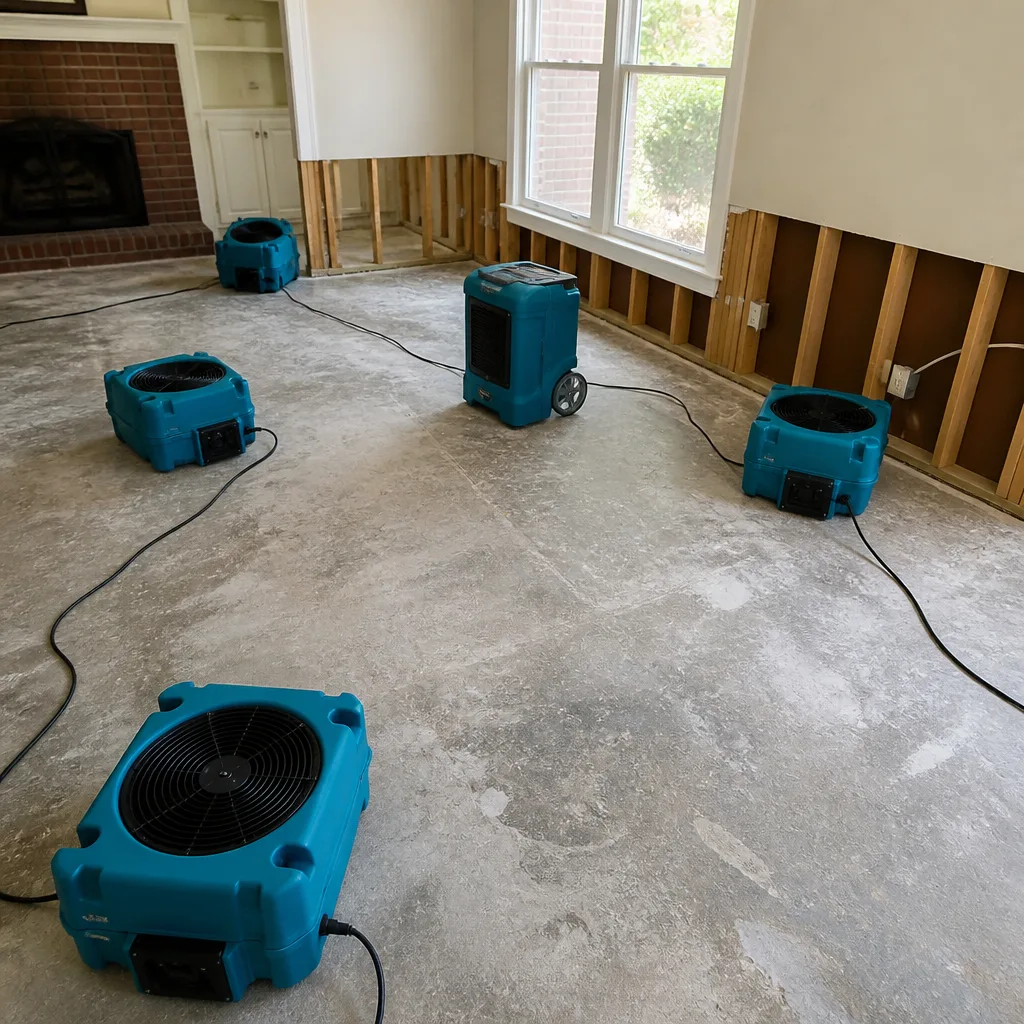
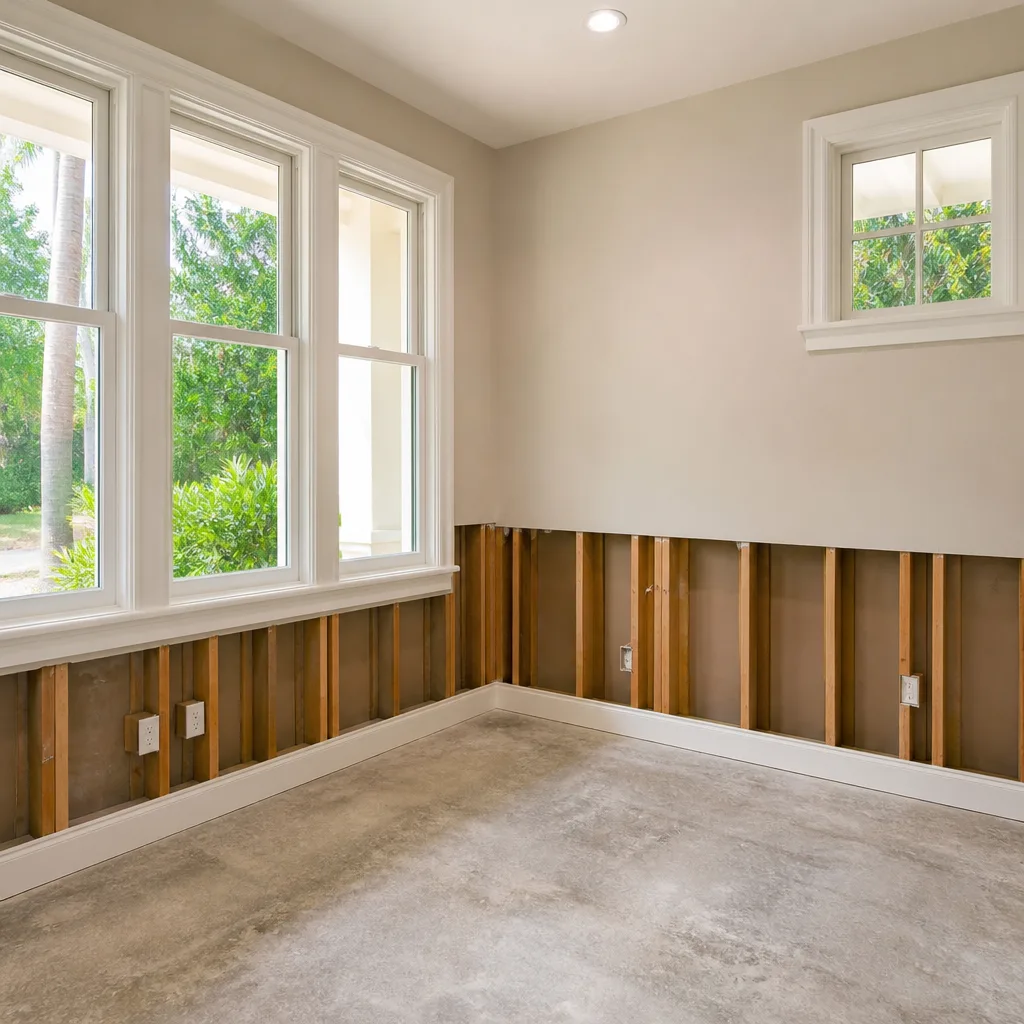
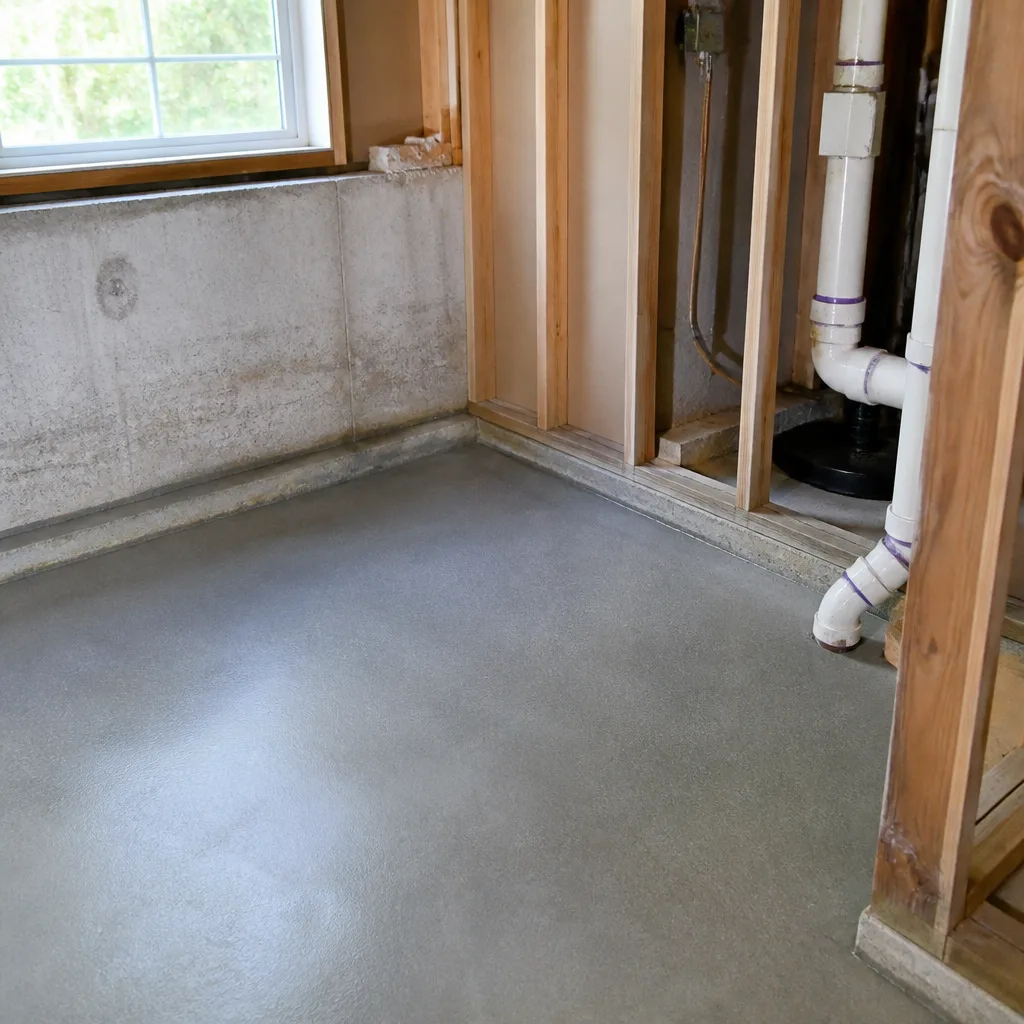
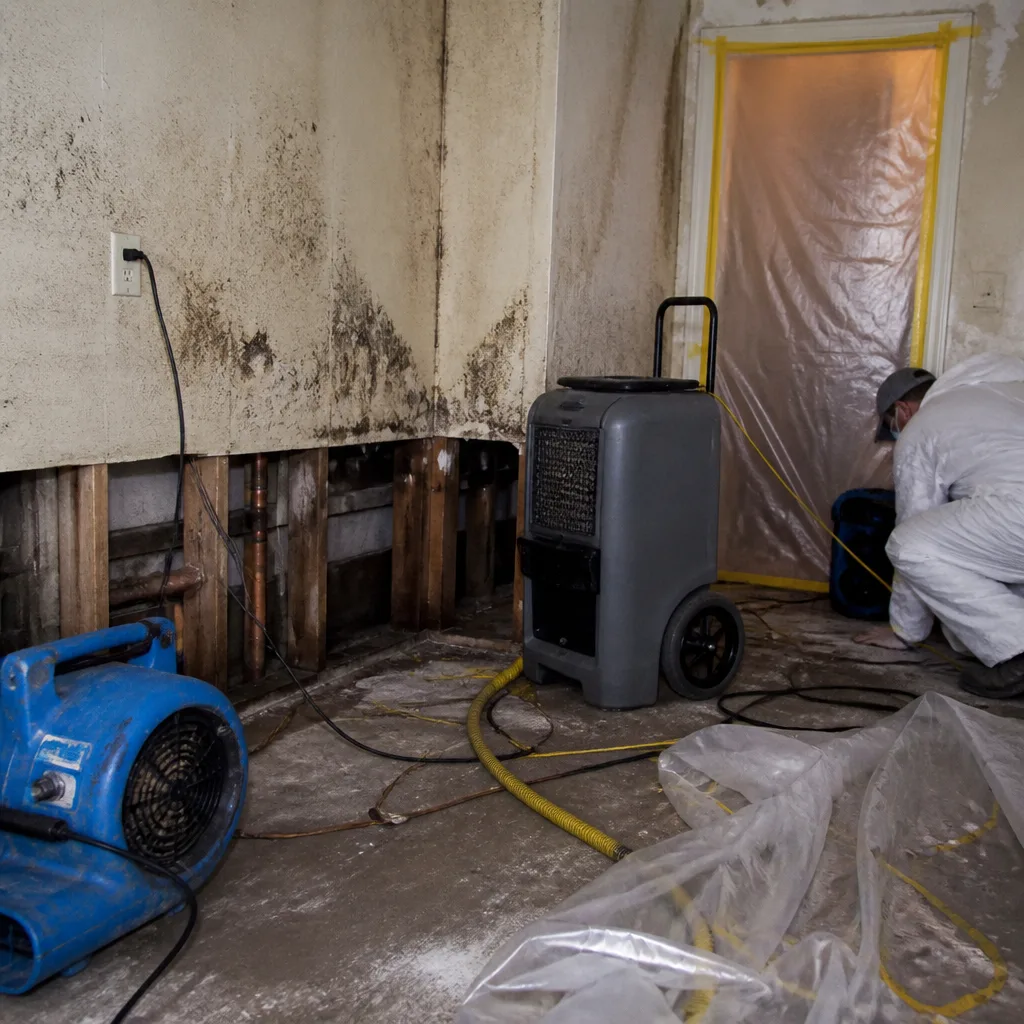 Before
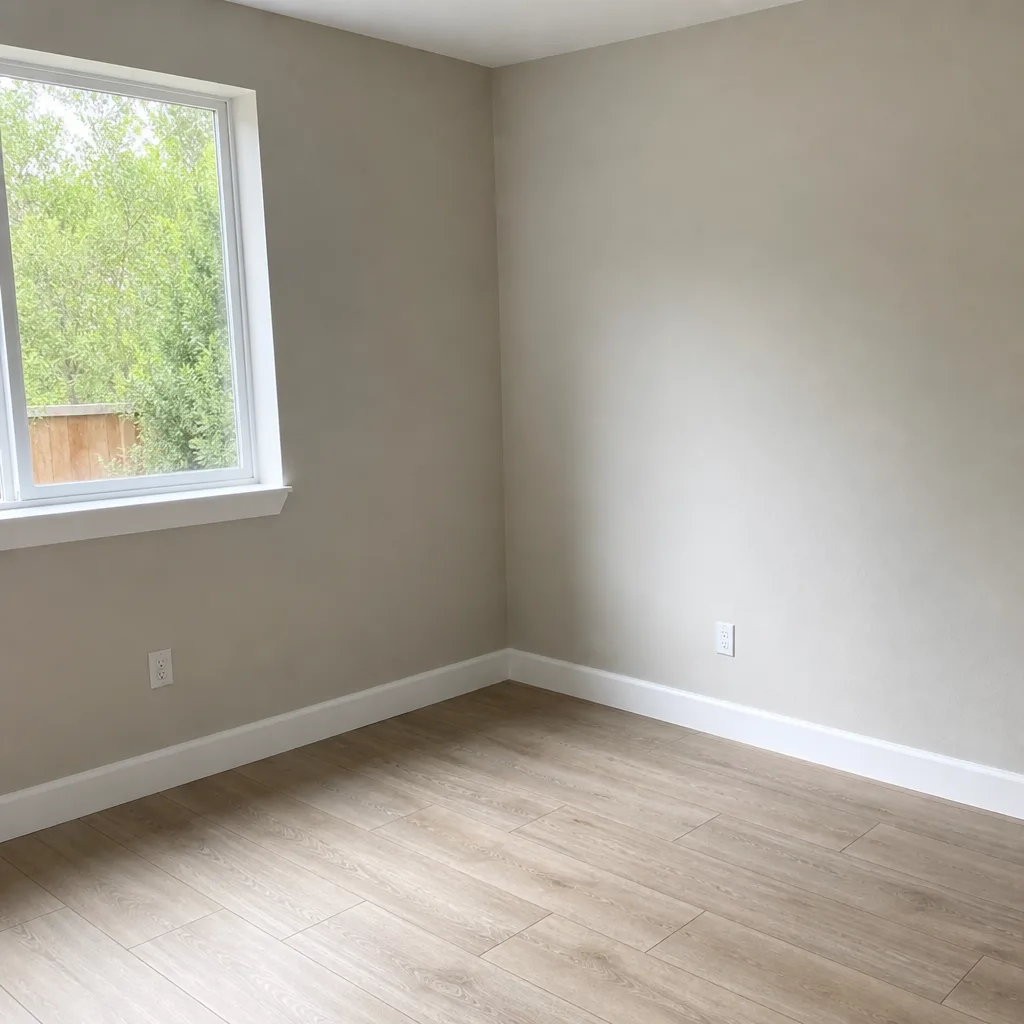 After
After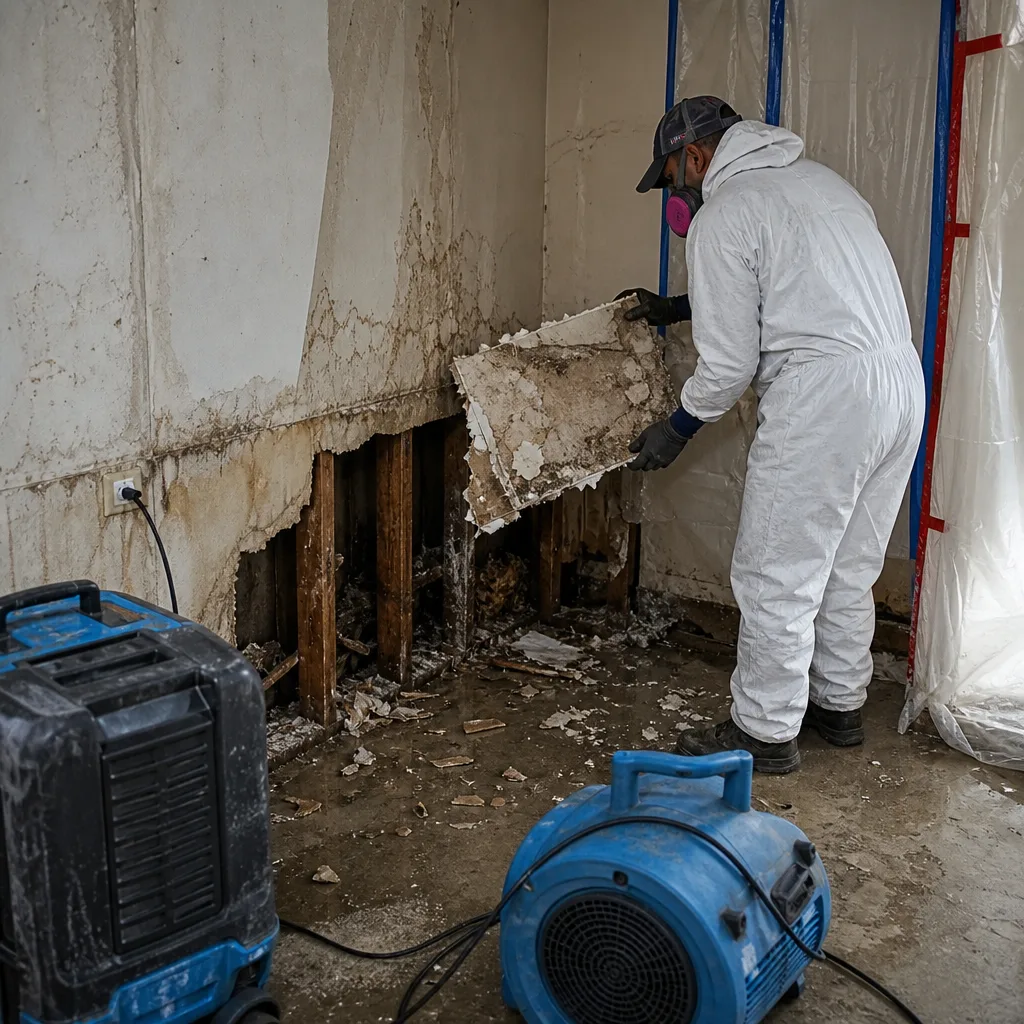 Before
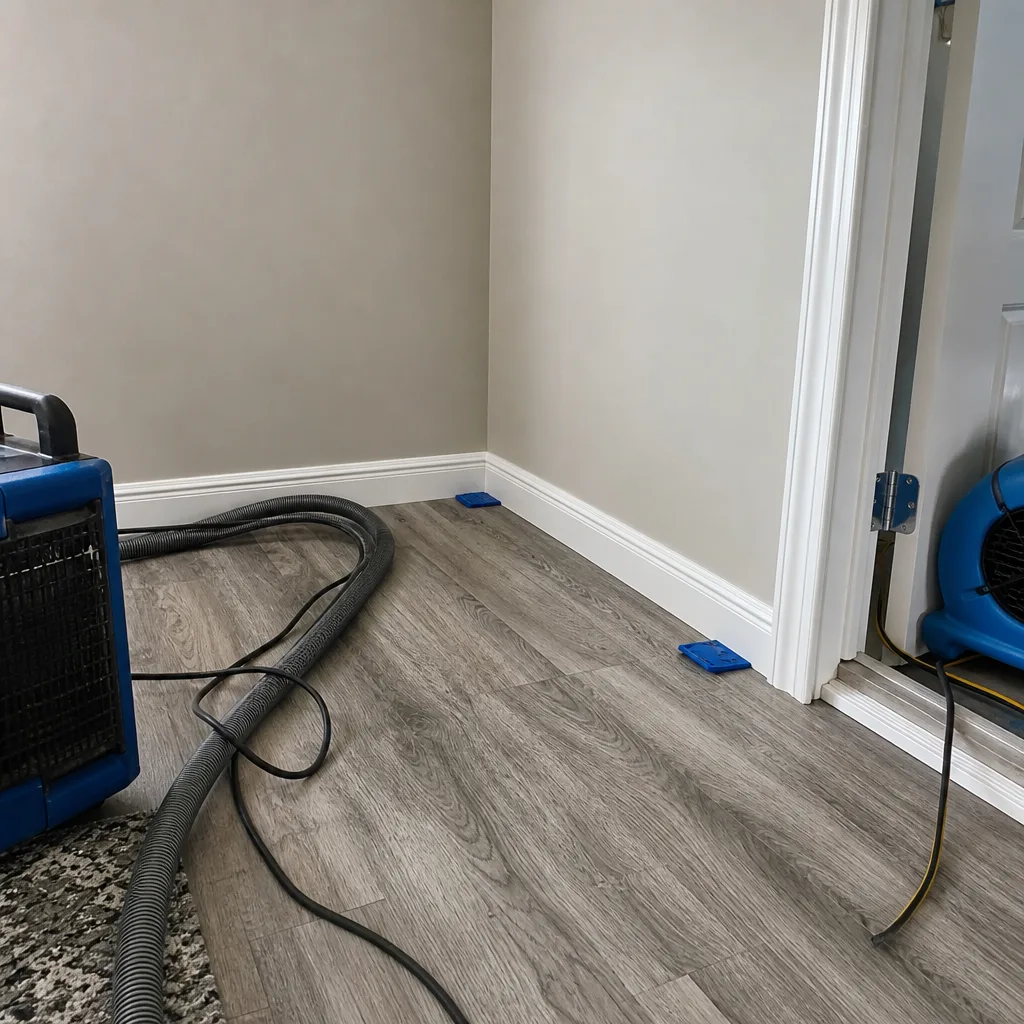 After
After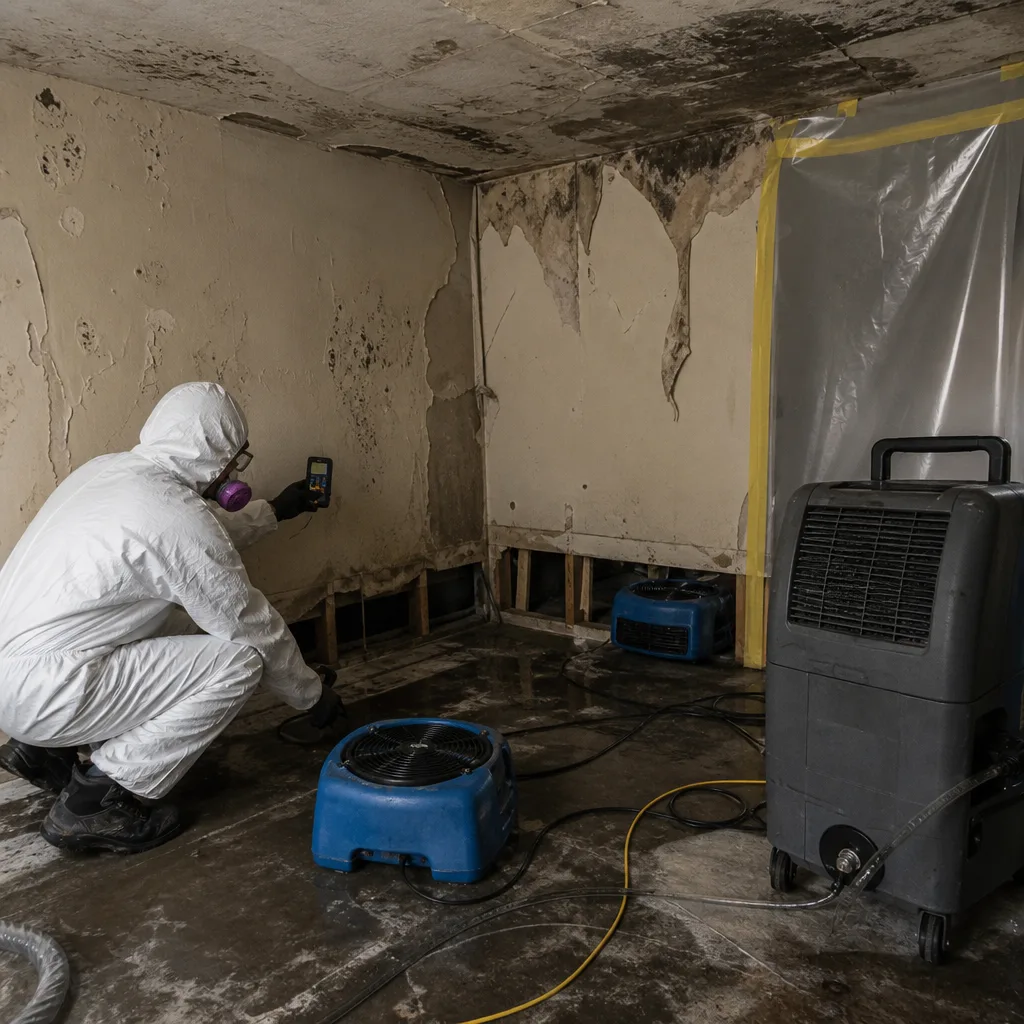 Before
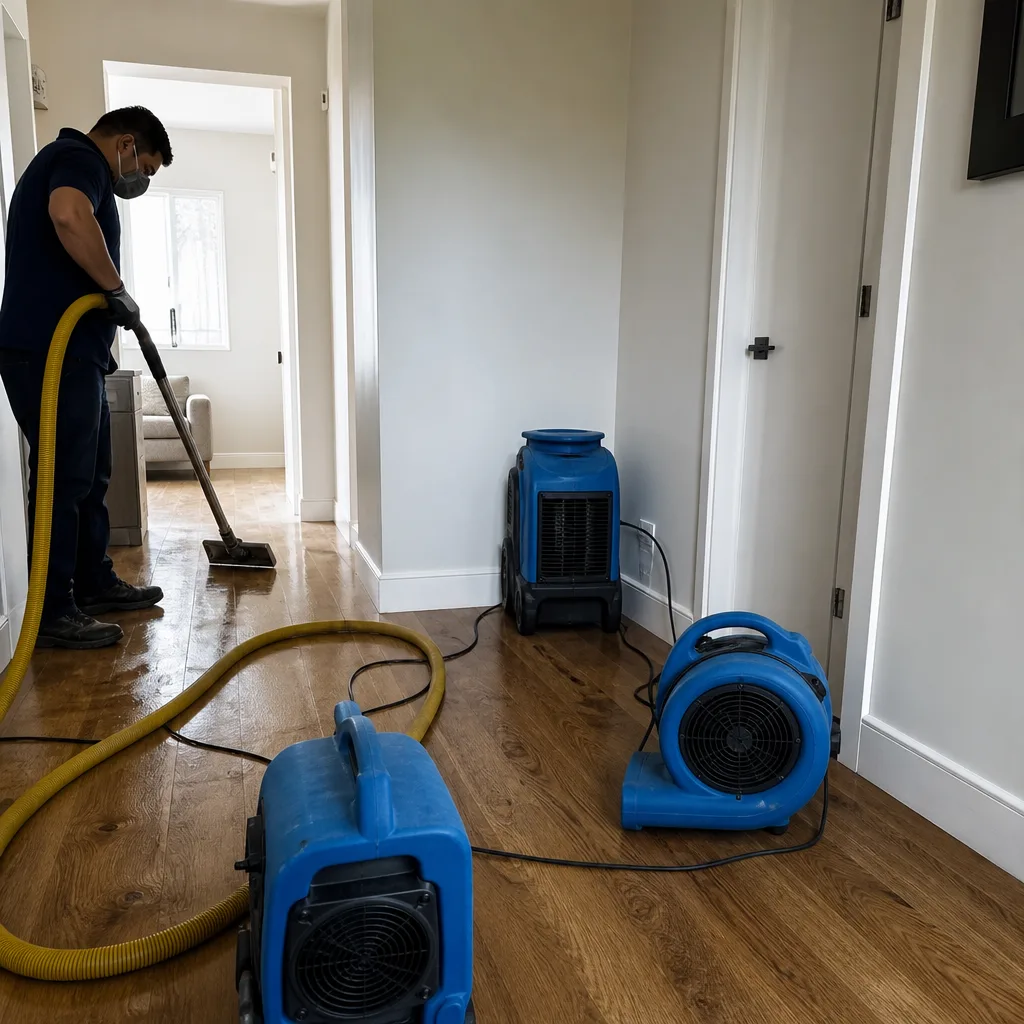 After
AfterSeasonal Damage Restoration Care for Santa Clarita: Year-Round Homeowner’s Guide
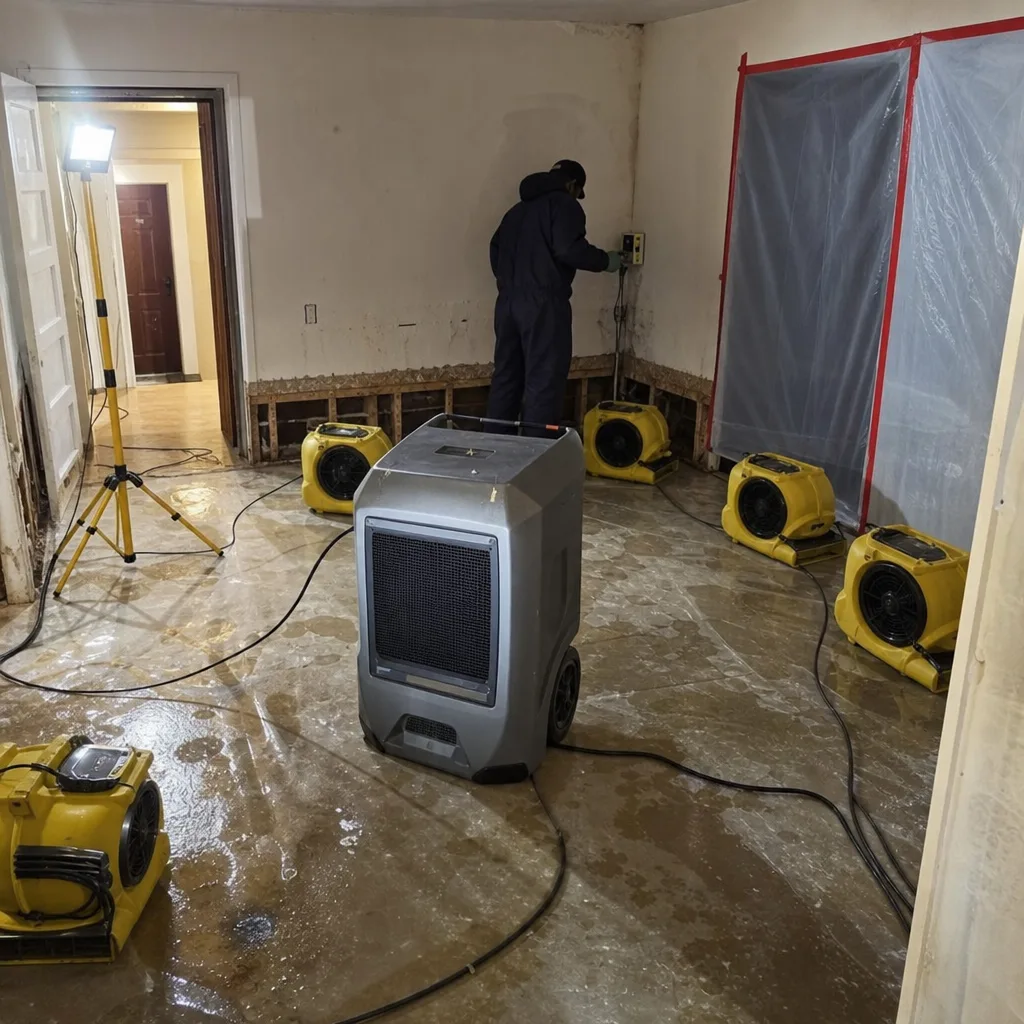
The week after a Santa Clarita wildfire is statistically one of the highest-risk periods for water intrusion in a home. HVAC systems clogged with fine ash lose condensate drainage capacity, and homeowners are still focused on smoke damage, not moisture. We’ve documented this pattern across hundreds of Santa Clarita properties since 2011: the invisible water loss that follows a visible fire event. This guide maps maintenance and response tasks to Santa Clarita’s actual two-phase risk cycle - fire-season dry-out and winter storm surge - rather than the generic four-season calendar that misses the specific failure windows SCV homeowners face. For a deeper look at the full process, see our Complete Guide to Damage Restoration in Santa Clarita.
Quick Answer
Santa Clarita homeowners should focus on two distinct risk phases: October through November for fire-season HVAC and roof debris issues that lead to moisture intrusion, and December through February for storm-surge drainage failures and slab-on-grade foundation seepage. Between these windows, summer HVAC condensate overflow in high-attic tract homes creates the third most common preventable damage source. Each phase has specific inspection tasks, documentation methods, and response thresholds that determine whether a minor maintenance item becomes a five-figure restoration. Our Damage Restoration Cost Breakdown: The Santa Clarita Homeowner’s Reference for 2026 explains how these thresholds affect pricing.
Table of Contents
- The October-November Fire-Season Transition: Your Highest-Risk Window
- December-February Storm Surge: SCV Topography and Drainage
- The 48-72 Hour Post-Rain Window: What to Check and When
- Summer HVAC Season: Condensate Overflow in High-Attic SCV Homes
- How to Document Seasonal Inspections for Claims Evidence
- Year-Round Maintenance Tasks by Property Zone
- What Seasonal Damage Costs to Repair in Santa Clarita
- Common Mistakes to Avoid
- When to Call a Professional
- Frequently Asked Questions
 Before
 After
AfterThe October-November Fire-Season Transition: Your Highest-Risk Window
Most seasonal guides treat October as fall cleanup. In Santa Clarita, it’s the start of fire-season dry-out, and the week following any regional wildfire event creates a concentrated risk window we’ve tracked across Valencia, Saugus, Canyon Country, and Newhall.
The mechanism is specific. Fine particulate from wildfire ash - smaller than 2.5 microns - infiltrates HVAC outdoor condenser coils, evaporator housings, and condensate drain lines. Ash is hygroscopic: it attracts and holds moisture. When Santa Ana conditions shift to the first winter humidity, that ash swells inside drain lines. Condensate that normally gravity-drains to a floor sink or exterior port backs up into the air handler, overflow pan, and eventually ceiling drywall.
We’ve measured this in Santa Clarita tract homes built 1985-2010: condensate lines with partial ash obstruction show 40-60% reduced flow capacity within 72 hours of first post-fire humidity increase. The overflow pan’s emergency shutoff float - required by California Mechanical Code since 2007 - often fails from accumulated debris before it triggers.
Inspection Tasks: Fire-Season Transition
- Condensate line clearing: Blow out the primary drain with low-pressure nitrogen or CO2. Visual inspection through the cleanout port is not sufficient - ash packs in the horizontal runs common in SCV slab-on-grade construction.
- Overflow pan integrity check: Verify the float switch moves freely and the pan drain (if present) is clear. In homes without a secondary drain to exterior, this is a single point of failure.
- Roof debris and gutter assessment: Ash accumulation accelerates gutter corrosion, particularly in galvanized steel systems common in Canyon Country and Sand Canyon installations from the 1990s. Corroded seams fail under first winter rain load, dumping water against fascia and into soffit ventilation paths.
- Exterior HVAC cabinet cleaning: Coil fins require gentle washing - not pressure washing, which drives ash deeper. We document this with pre- and post-cleaning photos for the homeowner’s record.
The Santa Clarita Valley’s bowl topography traps particulate longer than coastal basin areas. Wind patterns from the north and east - the typical fire approach vectors - concentrate ash deposition in Valencia north of McBean Parkway and the hillside zones above Bouquet Canyon Road. Homes in these areas need more frequent post-event inspection.
One maintenance step prevents most fire-season transition failures: schedule HVAC service for the third week of October, before first Santa Ana event if possible, and request documented coil and drain line condition with photo evidence. For the full seasonal checklist, download our Water Damage Restoration Maintenance Checklist for Santa Clarita Homeowners. This creates baseline documentation. If ash intrusion damage develops later, the pre-season record supports your claim position.
December-February Storm Surge: SCV Topography and Drainage
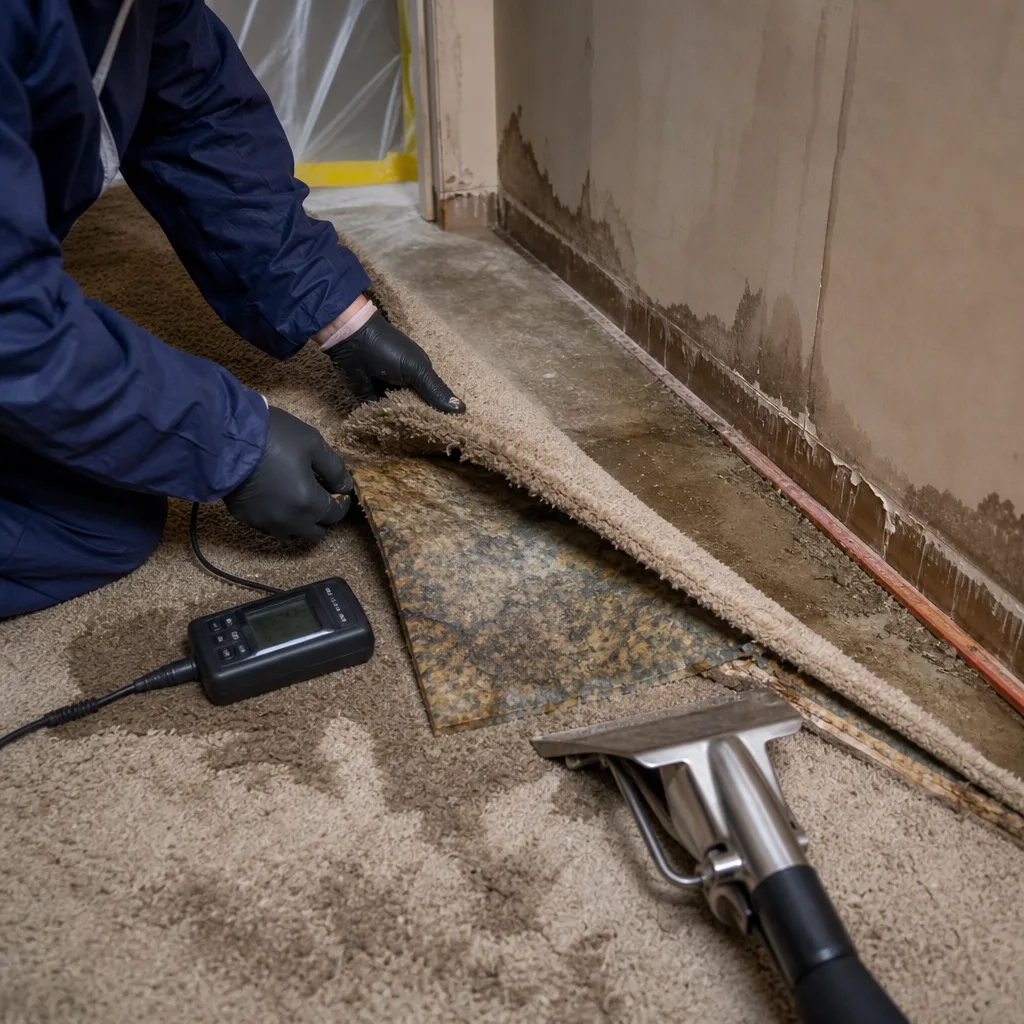
Santa Clarita’s winter storms arrive fast and concentrated. The valley’s steep hillside terrain - 15-35% slopes in Stevenson Ranch, Tesoro del Valle, and the northern Canyon Country ridges - creates sheet flow velocities that overwhelm standard residential drainage designed for flatter coastal conditions.
French drains are the standard hillside solution in SCV, but they have a specific failure pattern we’ve documented repeatedly. The outlet terminus - where drain pipe daylight exits - silts or vegetation-blocks during the eight-month dry season. First winter storm hits, water backs up the perforated pipe, saturates the gravel envelope, and surfaces against foundation walls. Slab-on-grade construction, which describes most Santa Clarita homes built 1970-2005, has no basement sump or sub-slab drainage. Water pressure against the slab edge forces moisture through control joints, plumbing penetrations, and the slab-soil interface.
Storm-Prep Checklist for Hillside Properties
- French drain outlet: Clear daylight exit of silt, roots, and debris. Verify positive drainage away from structure - minimum 2% slope for first 10 feet per Santa Clarita grading code.
- Surface grading: Soil settles over dry season. Re-establish swales and berms to direct sheet flow around, not toward, foundation. This is particularly critical in newer infill areas where landscaping has not matured.
- Foundation moisture barrier: Check visible portions of polyethylene vapor barrier at slab perimeter. UV degradation in Santa Clarita’s intense summer sun causes embrittlement and cracking. Gaps allow direct soil moisture migration.
- Window well and stairwell drains: These are common omission points. Verify drain connection to storm system or daylight outlet, not just gravel fill that becomes a reservoir.
The neighborhood-specific risk in Santa Clarita is concentrated. In our experience, properties above the 1,200-foot contour in Sand Canyon, the upper reaches of Bouquet Canyon, and the west-facing slopes above Valencia Boulevard see the highest storm-surge damage frequency. These areas combine steep gradient, shallow soil over bedrock (limited infiltration), and mature oak canopy that drops debris into drainage systems seasonally.
One indicator that drainage is failing before visible interior damage: efflorescence on exterior foundation walls, or a white mineral deposit line at the slab perimeter. This indicates cyclic wet-dry moisture migration. Document it with dated photos. If interior damage develops later, this pre-existing condition record helps establish causation for insurance purposes.
The 48-72 Hour Post-Rain Window: What to Check and When
Visible water damage is a lagging indicator. The most actionable inspection window is 48-72 hours after rainfall ends, when moisture has migrated but before secondary damage - mold amplification, material distortion, odor - becomes established.
We’ve developed a specific inspection sequence for Santa Clarita properties, ordered by detection sensitivity and damage progression speed. Execute in this order:
- Attic and high-cavity inspection: Check HVAC air handler cabinet, overflow pan, and adjacent ceiling drywall for discoloration or softness. Use a non-penetrating moisture meter on accessible framing - readings above 16% wood moisture content indicate active water presence requiring intervention. In SCV’s dry climate, baseline attic wood moisture runs 8-12%.
- Exterior wall penetrations: Windows, doors, hose bibs, electrical service entries. Look for sealant failure, stucco cracking at penetrations, and interior drywall corner beads that show rust staining or softening. Santa Clarita’s thermal expansion cycle - 40°F winter lows to 110°F summer highs - accelerates sealant fatigue.
- Foundation perimeter and garage slab: Check for water tracking lines, efflorescence, or carpet tack strip rust in finished areas. Garage slabs often show the first evidence because they’re typically at grade with minimal waterproofing.
- Crawl space or sub-floor access: If accessible, inspect vapor barrier condition, standing water, and wood member moisture. Santa Clarita’s older Canyon Country and Newhall homes (pre-1980) often have inadequate crawl space ventilation that traps moisture.
- Secondary spaces: Closets on exterior walls, behind appliances, under stairs. These are low-airflow areas where mold establishes first - typically 72-96 hours post-wetting in Santa Clarita’s moderate winter temperatures.
The documentation protocol matters. Record each inspection point with dated photos, moisture meter readings with location notation, and any anomalies noted. This creates a contemporaneous record. If damage develops and a claim is filed, this documentation establishes the timeline and pre-loss condition that adjusters require.
Threshold for professional assessment: any moisture meter reading above 20% wood moisture content, any visible water staining larger than a dinner plate, or any musty odor in a previously dry space. These indicators suggest water volume or duration beyond surface drying capacity. Water Damage Restoration in Santa Clarita requires documented psychrometric data - temperature, relative humidity, and vapor pressure differential - to establish drying goals that satisfy IICRC standards and insurance review.
Summer HVAC Season: Condensate Overflow in High-Attic SCV Homes
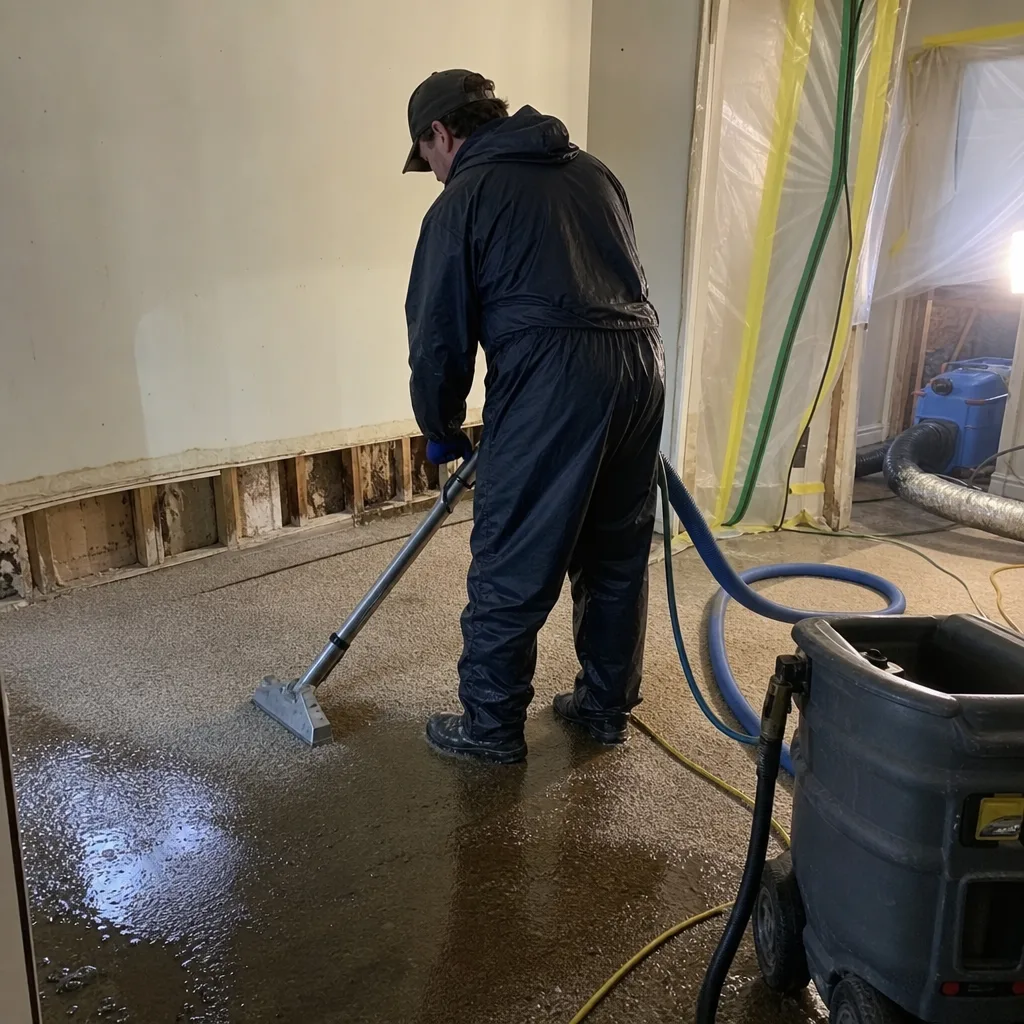
Santa Clarita’s summer cooling load runs May through October, with peak demand in July and August when valley temperatures exceed 105°F. The specific failure pattern involves high-attic HVAC installations common in SCV tract homes built 1990-2010 - particularly in Valencia, Northbridge, and Westridge developments.
These systems place the air handler in the attic, with a secondary condensate pump when gravity drainage to a floor sink isn’t feasible. The pump is the failure point. Condensate volume in peak summer exceeds 20 gallons per day on a 4-ton system in Santa Clarita’s dry heat. Pump float switches foul with algae and dust; check valves stick; discharge tubing degrades in attic heat. When the pump fails, overflow pan capacity is typically 2-3 gallons - insufficient for even one hour of operation.
The one maintenance step that prevents this: annual condensate pump replacement or deep cleaning before Memorial Day. Not inspection - replacement of the float switch and check valve, or full pump replacement if the unit is more than three years old. The cost is $80-$150 in parts; the alternative is $3,000-$8,000 in ceiling, insulation, and flooring restoration.
Additional summer-specific tasks for Santa Clarita:
- Refrigerant line insulation: Check exterior suction line insulation for UV degradation. Bare copper sweats in Santa Clarita’s monsoon humidity spikes (July-August), creating localized moisture on exterior walls and soffits.
- Attic ventilation balance: Verify ridge vent and soffit vent airflow. Attic temperatures above 140°F accelerate HVAC duct deterioration and can trigger thermal expansion leaks at flex duct connections.
- Exterior grade and irrigation: Summer watering schedules often over-saturate foundation perimeters. Adjust drip irrigation to maintain soil moisture at 12-18 inches without ponding. Santa Clarita’s clay-loam soils expand when wet and shrink when dry, creating foundation movement that cracks slab waterproofing.
We document summer HVAC inspections with thermal imaging to identify refrigerant line cold spots and duct leakage. This data becomes part of the homeowner’s annual property record under The Haven Standard documentation protocol.
How to Document Seasonal Inspections for Claims Evidence
Documentation is not an afterthought at DryMark Restoration Santa Clarita - it’s the foundation of every service we provide. The same standard applies to homeowner maintenance records. A well-documented seasonal inspection becomes admissible baseline evidence if damage occurs and a claim is filed.
The Haven Standard requires specific documentation elements on every job we perform. Homeowners should mirror this rigor in their own records:
- Dated photo with location metadata: Enable GPS tagging on your phone camera. Photograph each inspection point from a consistent angle. Include a reference object or measurement scale where size matters.
- Moisture reading log: Record instrument type, calibration date, reading value, material tested, and ambient conditions. Example: “Delmhorst BD-2100, pin mode, 11.2% at living room north wall baseplate, 78°F / 42% RH ambient.”
- Written observation with comparison: Note what you found and what it means relative to normal. “Garage slab west corner: efflorescence line 3 inches above grade, not present in March inspection. Indicates moisture pressure increase - monitor after next rain event.”
- Action taken or scheduled: Document what you did and when follow-up is due. “Cleared French drain outlet, verified flow. Re-inspect after first storm >0.5 inches.”
- Professional assessment record: If you engage a contractor, retain their written scope, photos, and any moisture data. Cross-reference with your own records.
Storage protocol: cloud backup with date-stamped folder structure, plus annual summary document that lists all inspection dates, findings, and actions. This summary is what an adjuster or restoration contractor reviews first. A homeowner who can produce five years of documented seasonal inspections with consistent methodology has significantly stronger claim position than one with memory-based testimony.
We’ve seen this directly affect claim outcomes in Santa Clarita. In a 2022 Valencia hillside property dispute, the homeowner’s five-year photo record of French drain maintenance and grading corrections demonstrated that storm damage resulted from an extreme event exceeding design capacity, not maintenance neglect. The claim was paid in full. Without that record, the same facts supported a denial.
Year-Round Maintenance Tasks by Property Zone
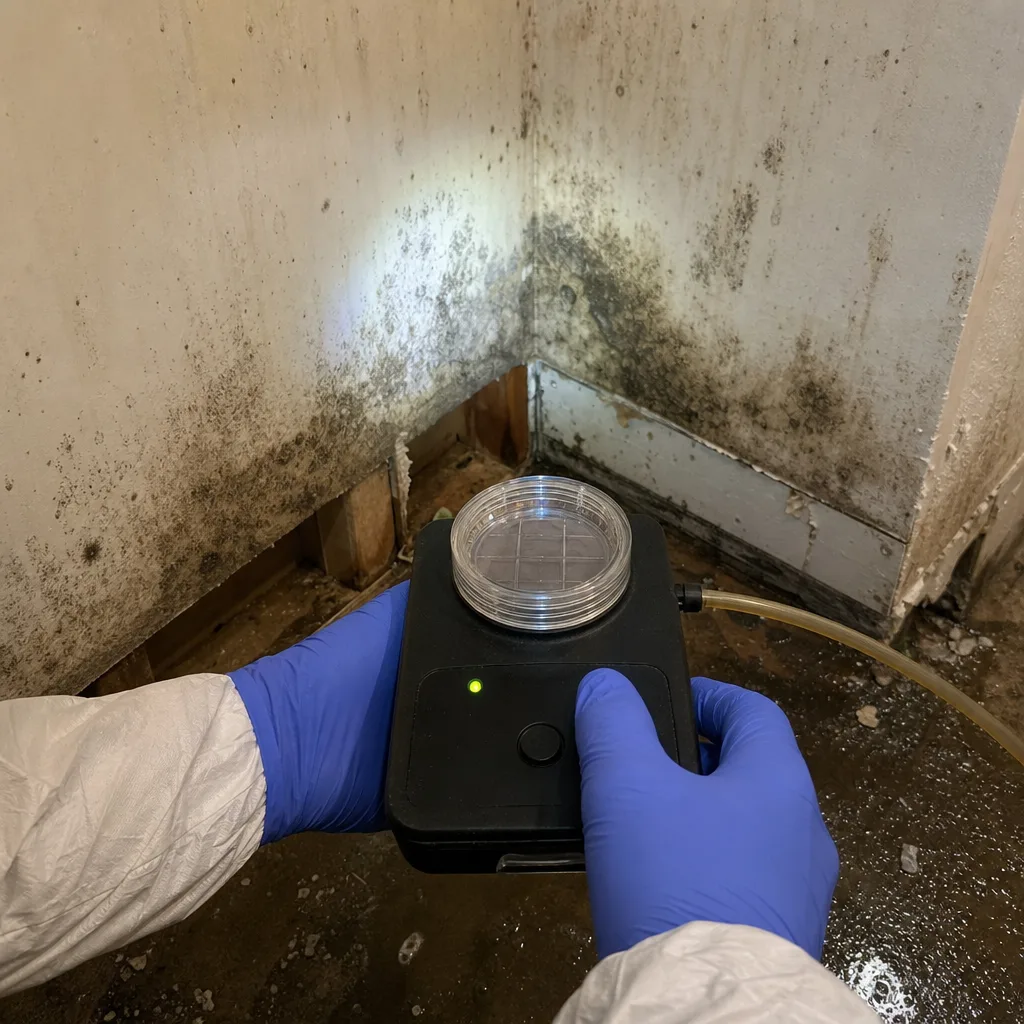
Santa Clarita’s climate creates maintenance needs that don’t align with national seasonal calendars. Organize by property zone rather than by month, with frequency tied to actual local conditions. Visit our blog for more guides & resources tailored to SCV homeowners.
Roof and Exterior
- Post-fire event: Immediate debris and ash clearing, gutter flow verification, sealant inspection at all penetrations.
- Pre-winter (November): Full gutter cleaning, downspout discharge verification, flashing inspection at chimney and wall intersections.
- Post-storm (within 72 hours): Visual damage survey, interior leak check, debris clearing that might block drainage.
HVAC and Mechanical
- Pre-cooling season (May): Condensate pump service or replacement, coil cleaning, refrigerant line insulation check, duct leakage survey if accessible.
- Post-fire season (October-November): Condensate line blowout, coil deep clean, cabinet seal inspection, filter replacement with MERV rating appropriate for ash conditions.
- Continuous: Filter replacement every 60-90 days during active use; Santa Clarita’s dust load exceeds coastal areas.
Foundation and Drainage
- Pre-winter (November): French drain outlet clearing, surface grading restoration, downspout extension verification (minimum 6 feet from foundation).
- Post-rain (48-72 hours): Perimeter inspection for tracking, efflorescence, or soft ground indicating subsurface flow.
- Pre-summer (April): Irrigation audit to prevent over-watering at foundation; adjust for Santa Clarita’s water restrictions and actual plant needs.
Interior and Secondary Spaces
- Quarterly: Moisture meter spot-check of known risk areas - under sinks, behind appliances, at exterior wall baseplates in finished basements or lower levels.
- Post-event (any water intrusion): Documented inspection at 24, 48, and 72 hours; professional assessment if moisture persists.
What Seasonal Damage Costs to Repair in Santa Clarita
Pricing transparency is Haven Standard, Clause 1: a written price before any work starts, every time. These ranges reflect our actual Santa Clarita market experience and serve as planning references. Every job requires site-specific assessment for exact pricing.
| Service Category | Typical Range in Santa Clarita | Factors Affecting Price |
|---|---|---|
| HVAC condensate overflow, limited ceiling area | $2,800 - $5,500 | Square footage affected, insulation type, attic access difficulty |
| French drain failure, foundation perimeter moisture | $4,500 - $12,000 | Linear feet of drain, excavation access, slab penetration needs |
| Post-storm roof leak, interior water damage | $3,200 - $8,500 | Roof repair scope, interior finish materials, mold prevention treatment |
| Seasonal mold amplification, limited area | $2,500 - $6,000 | Affected square footage, HVAC contamination, containment complexity |
| Full seasonal inspection with documentation | $350 - $650 | Property size, access difficulty, report detail level |
These ranges assume prompt response - within the 48-72 hour window - before secondary damage amplifies scope. Delayed response typically increases cost 40-100% due to mold remediation requirements, material replacement versus drying, and structural damage progression.
Our Free Second Opinion on any competitor’s written estimate applies to seasonal damage assessments. Bring another contractor’s scope and pricing; we’ll review against IICRC standards and Santa Clarita market rates at no charge. This service exists because we’ve seen homeowners accept scopes that omit necessary drying verification or specify equipment inadequate for Santa Clarita’s specific conditions.
Common Mistakes to Avoid
- Waiting for visible damage before acting. By the time water stains appear on Santa Clarita’s textured ceilings, insulation is saturated and framing moisture exceeds 20%. The inspection window is 48-72 hours post-event, not when you notice the stain.
- Pressure-washing ash from HVAC coils. This drives particulate deeper into fin spacing and can flatten aluminum fins, reducing heat transfer permanently. Low-pressure rinse with foaming cleaner, followed by gentle water flow in the opposite direction of normal airflow.
- Ignoring the condensate pump until it fails. In Santa Clarita’s high-attic installations, the pump is a wear item with a 3-5 year service life. Annual replacement of the float switch and check valve costs under $150; emergency restoration costs 20-50 times that.
- Clearing French drain inlets but not outlets. The daylight exit is where silt accumulates during the dry season. Inlet grates are visible and get attention; buried outlets in hillside Santa Clarita properties are out of sight and blocked.
- Documenting only damage, not normal condition. Insurance adjusters compare pre-loss and post-loss condition. Five years of “everything looks fine” photos establish baseline better than one photo after you notice a problem.
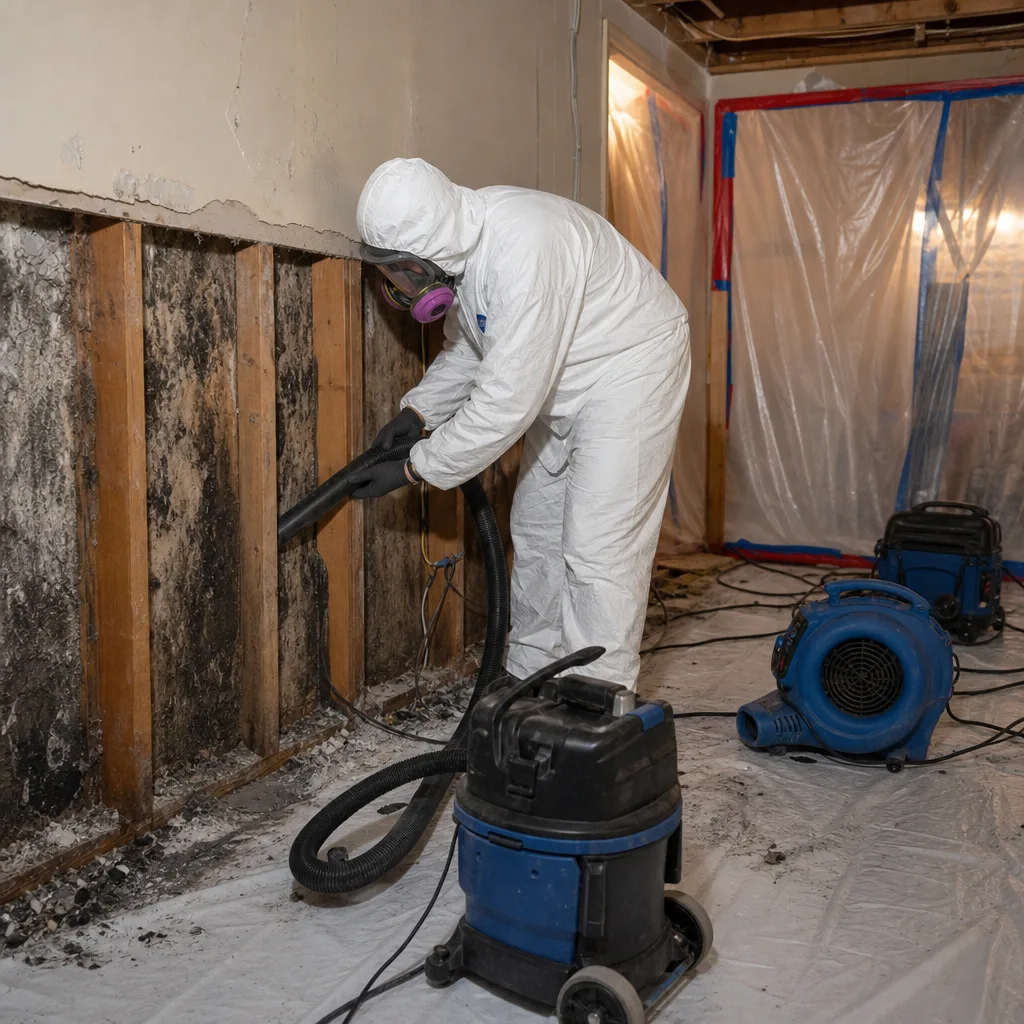
- Using household bleach on mold. This is specifically ineffective on porous materials and can drive moisture deeper while creating a surface appearance of cleanliness. IICRC S520 mold remediation standards specify appropriate antimicrobial application based on material classification and contamination level.
- Assuming hillside drainage was “built right” and needs no maintenance. Santa Clarita’s grading codes have evolved significantly. Pre-2000 hillside construction often lacks current drainage redundancy, and even compliant systems require maintenance as soil settles and vegetation encroaches.
When to Call a Professional
Call for professional assessment when: moisture meter readings exceed 20% in any wood structural member; water staining exceeds one square foot or appears in multiple locations; musty odor follows any water event; HVAC system shows reduced output or unusual noise after ash exposure; or French drain backup is visible at any inlet or surface point.
These thresholds indicate conditions beyond homeowner drying capacity or where specialized equipment - Injectidry hardwood floor drying systems, commercial dehumidification with documented psychrometric targets, or containment for mold assessment - is required to prevent secondary damage.
DryMark Restoration Santa Clarita offers free estimates in Santa Clarita - call (747) 294-2725. Every estimate includes a written scope with line-item pricing before any work begins, Haven Standard, Clause 1. Our documentation protocol produces the daily moisture logs, photo records, and drying verification that turn restoration invoices into payable insurance claims. Live phone coverage is available 24 hours a day, 7 days a week with no voicemail on emergency lines.
Frequently Asked Questions
Typical seasonal water damage restoration in Santa Clarita ranges from $2,800 for limited HVAC overflow ceiling damage to $12,000 for extensive French drain failure with foundation perimeter saturation. Every job requires site-specific assessment for exact pricing under Haven Standard, Clause 1. Call (747) 294-2725 for a written estimate - estimates are free.
Insurance coverage depends on whether damage resulted from a sudden, accidental event or from long-term maintenance neglect. Documented seasonal inspections strengthen your position by establishing that damage exceeded normal wear or design capacity. We coordinate directly with adjusters and provide photo-documented assessments that specify causation. Call (747) 294-2725 to discuss your specific situation.
Live phone coverage is available 24 hours a day, 7 days a week with no voicemail on emergency lines. For active water intrusion - overflowing condensate, roof leak, or drainage backup - we prioritize same-day assessment to stop damage progression and document conditions for insurance. Reconstruction and non-emergency work is scheduled after written scope and pricing agreement.
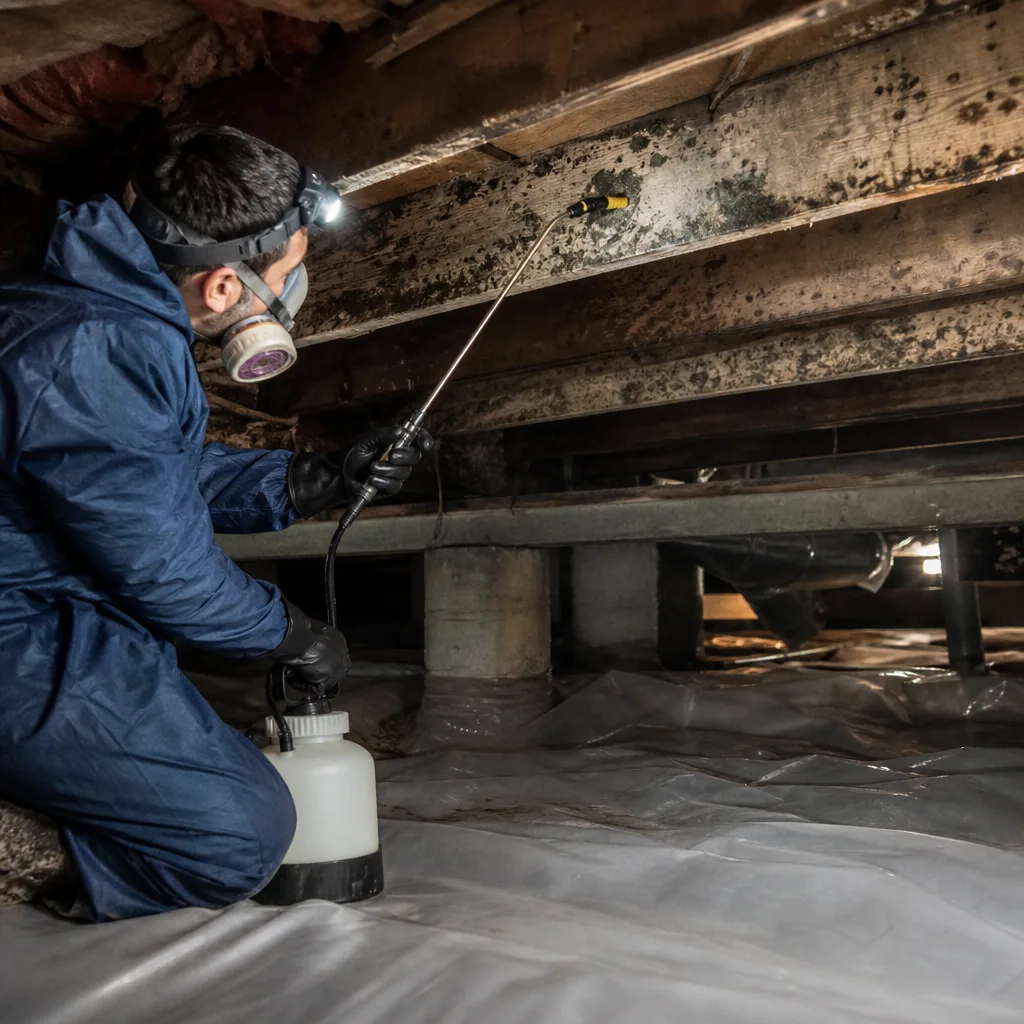
The determination requires moisture measurement, material classification, and contamination area assessment per IICRC S520 standards. Surface cleaning is appropriate for limited, non-porous contamination in the first 48 hours. Porous materials with established growth, or any contamination exceeding 10 square feet, requires contained remediation with negative air pressure and disposal protocols. We provide written assessment with photo documentation before recommending scope. Call (747) 294-2725 for evaluation.
Santa Clarita’s two-phase cycle - fire-season dry-out followed by winter storm surge - creates concentrated risk windows that coastal areas don’t experience. The valley’s bowl topography traps wildfire ash, steep hillside gradients accelerate drainage failure, and the 40°F-110°F annual temperature swing stresses building materials beyond milder coastal conditions. High-attic HVAC installations in SCV tract homes add a third distinct failure pattern. Generic seasonal guides miss these specific interactions.
We coordinate directly with your adjuster as part of our standard service, not as an upsell. This includes photo-documented condition reports, daily drying logs with psychrometric data, written scope amendments if hidden damage is found, and final verification documentation. Our documentation protocol was designed by a former claims adjuster specifically to close the documentation gap that delays or denies homeowner claims. The Haven Standard requires this level of documentation on every job.
Annual condensate pump service or replacement before summer cooling season, combined with post-fire-season HVAC drain line clearing in November. These two actions prevent the highest-frequency, highest-cost preventable damage patterns we see in Santa Clarita: summer attic overflow and winter condensate backup after ash intrusion. Cost: under $300 annually. Typical avoided loss: $5,000-$15,000.
The Bottom Line
Santa Clarita’s damage risk follows a two-phase cycle that generic seasonal guides don’t address. The October-November fire-season transition creates HVAC and roof debris failures. December-February storm surge exploits hillside drainage weaknesses. Summer cooling season drives condensate overflow in high-attic installations. Between these windows, the 48-72 hour post-rain inspection catches damage before it amplifies. Documentation - dated photos, moisture readings, written observations - transforms maintenance effort into claims evidence if damage occurs. The homeowners who fare best are those who treat seasonal maintenance as a documentation discipline, not a chore list. We’ve built our practice on this principle since 2011, and we’ve seen it protect Santa Clarita homeowners through fire seasons, storm years, and the normal wear of desert-margin living.
Written by Alicia Brennan, Owner at DryMark Restoration Santa Clarita, serving Santa Clarita since 2011.