
Last updated September 23, 2026
Free visual inspection and a written scope of work before any mitigation begins - photos, moisture readings, and drying logs go in your claim file
The scope we write is the scope we bill. Anything new gets shown to you, in writing, before we touch it.
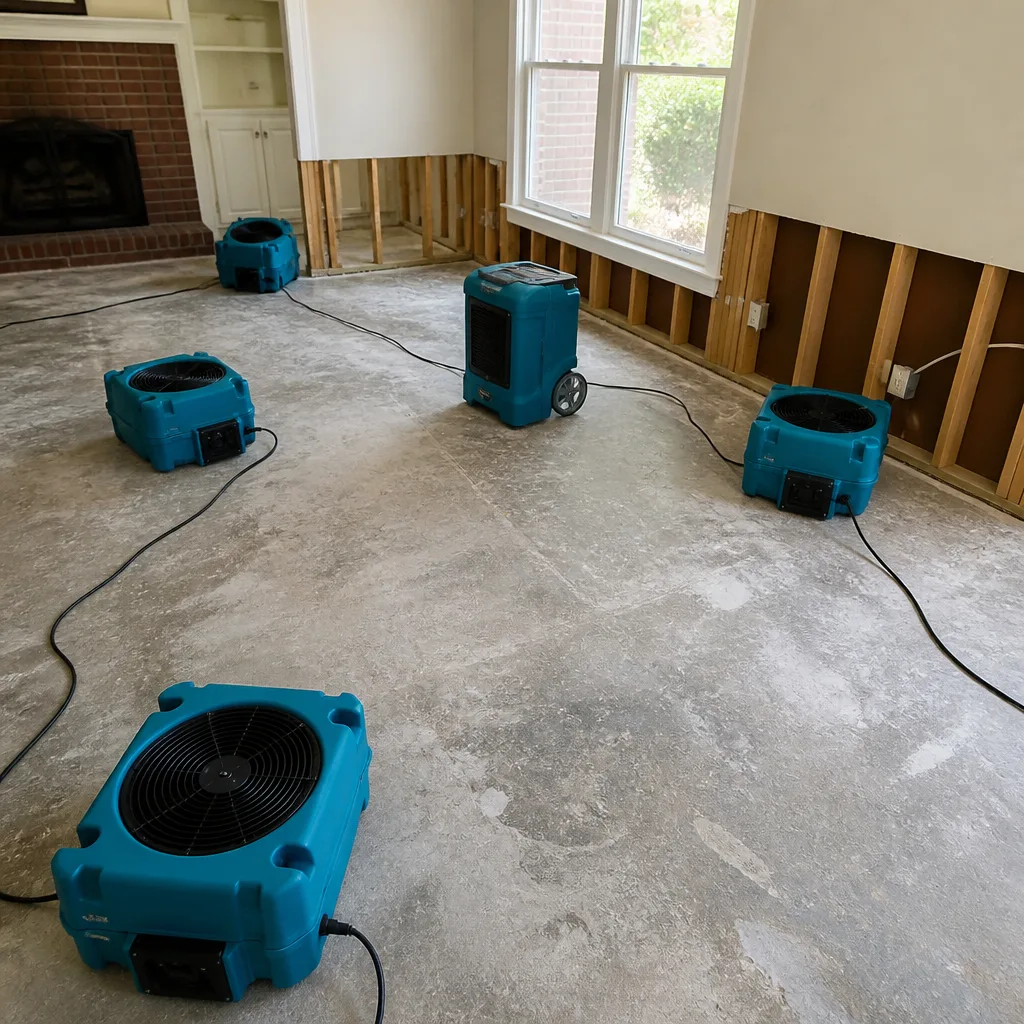
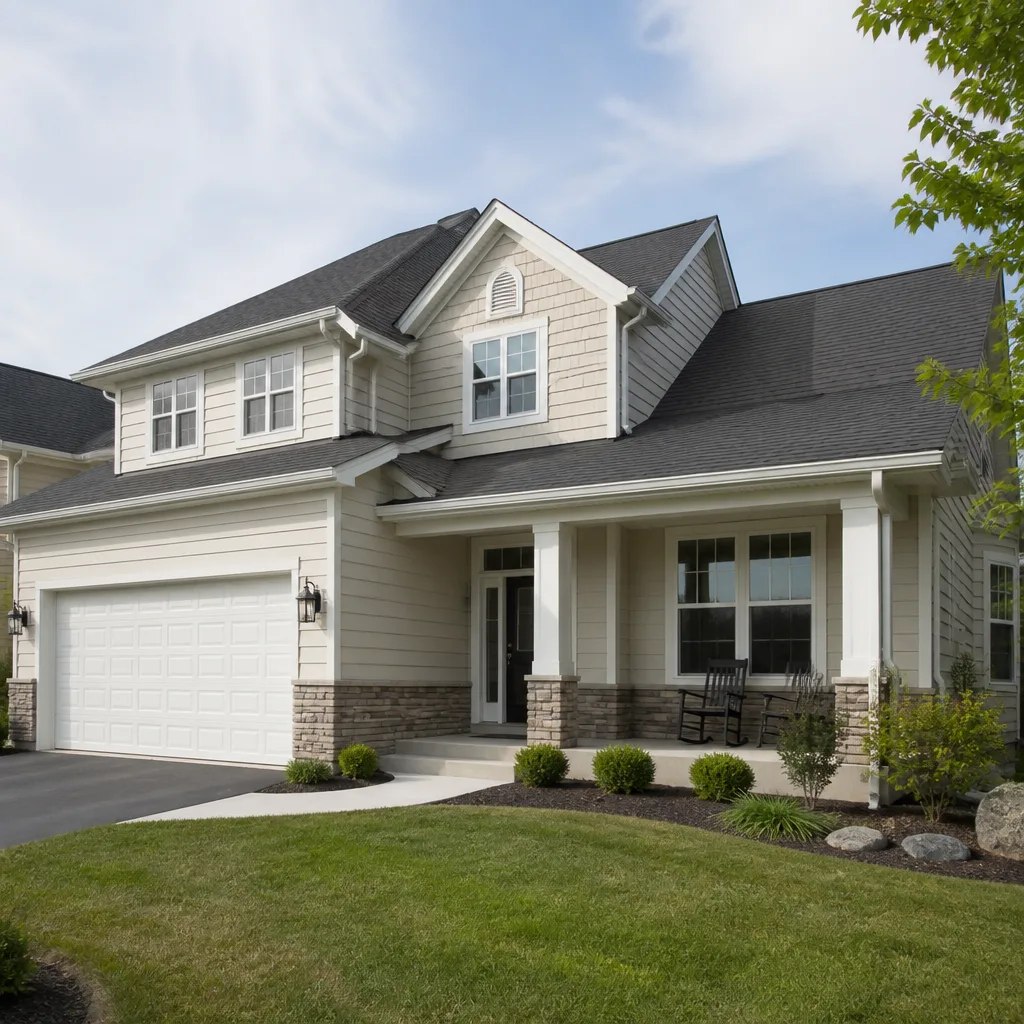
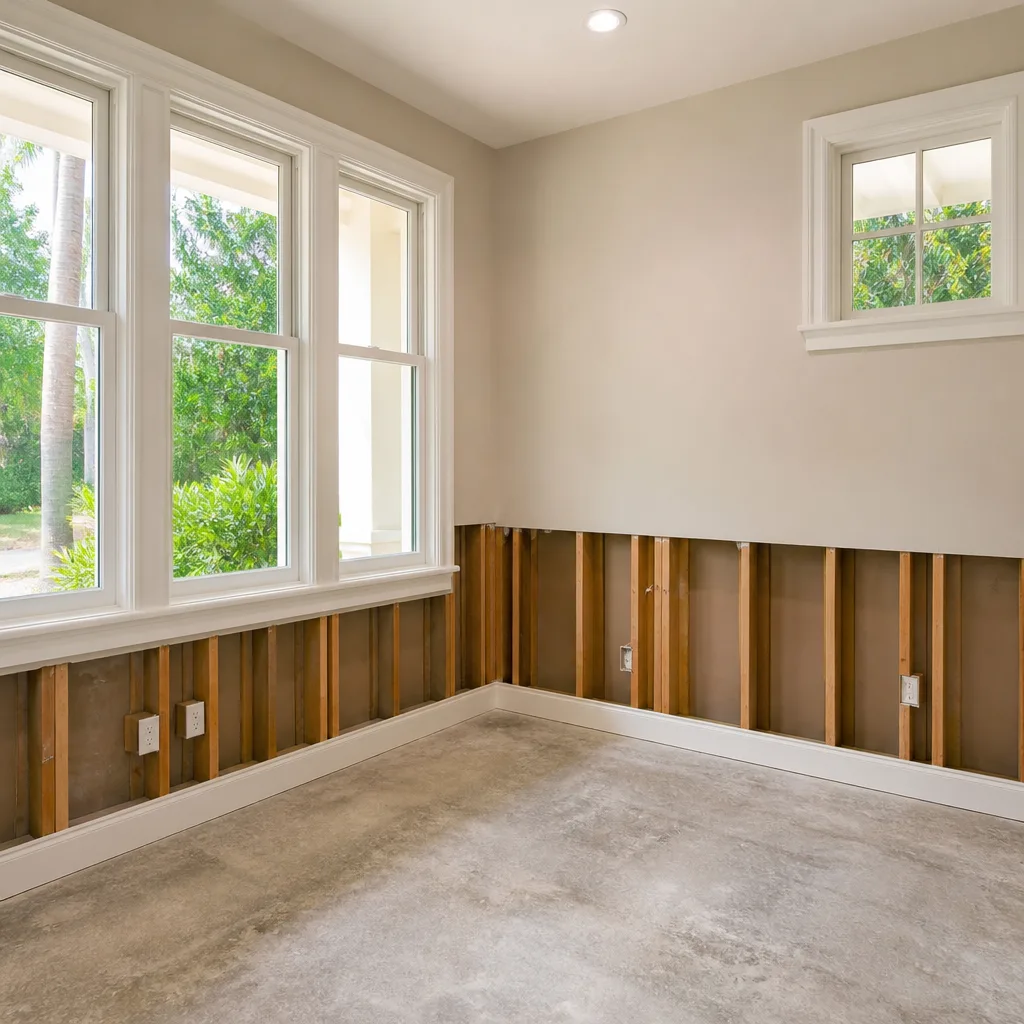
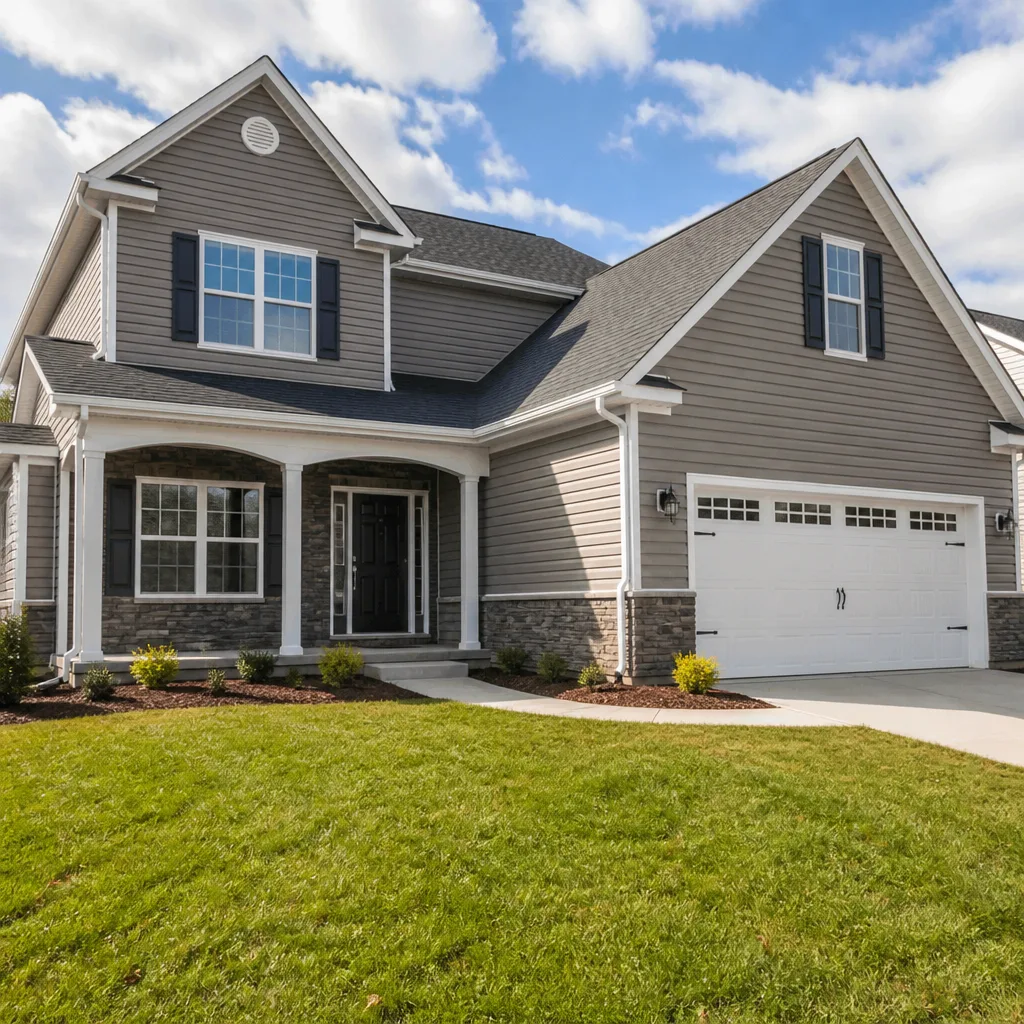
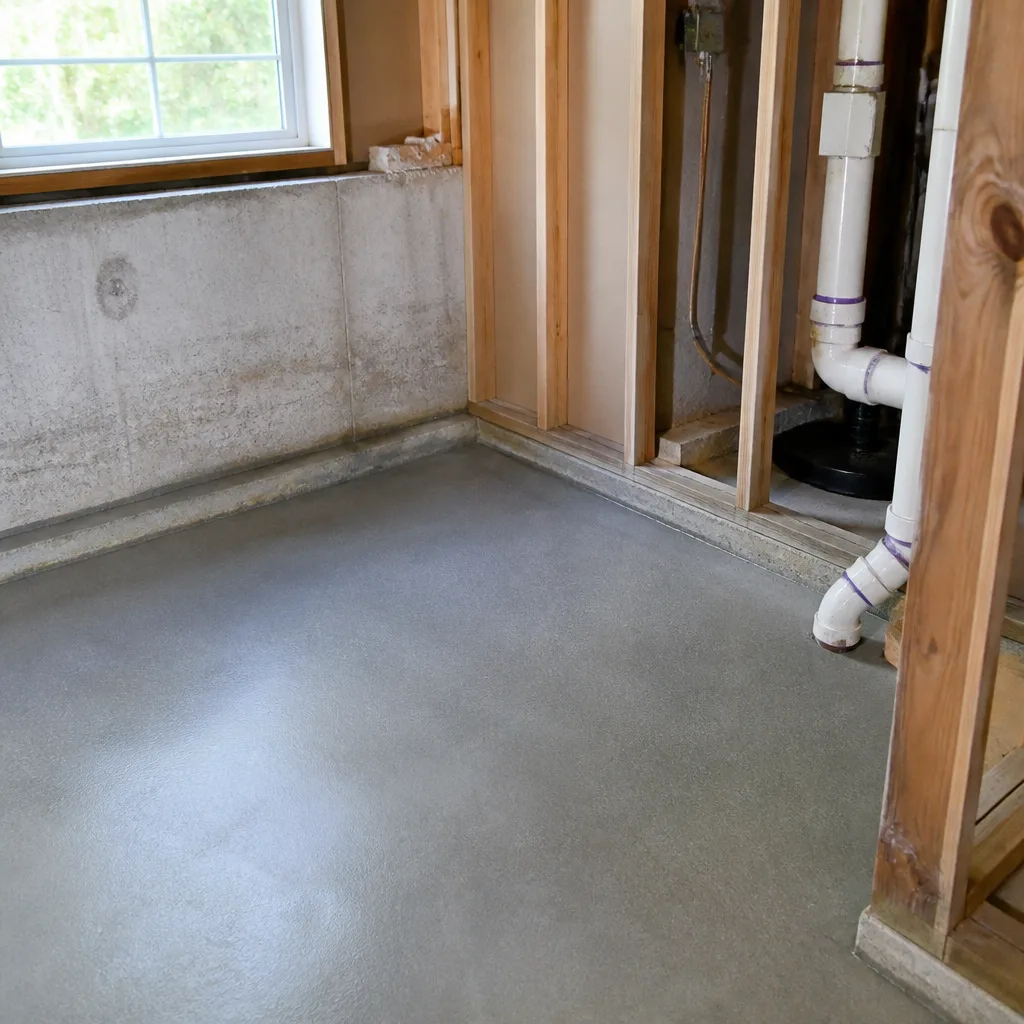
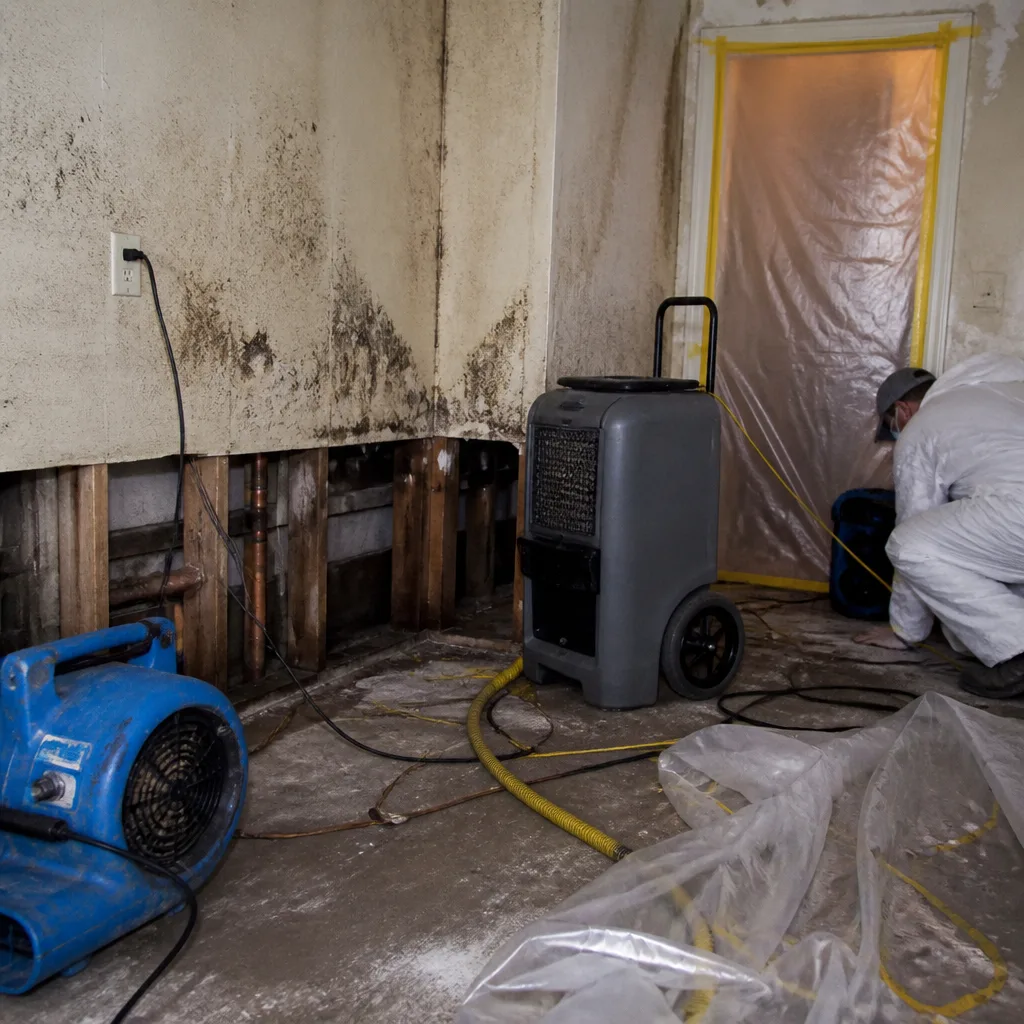 Before
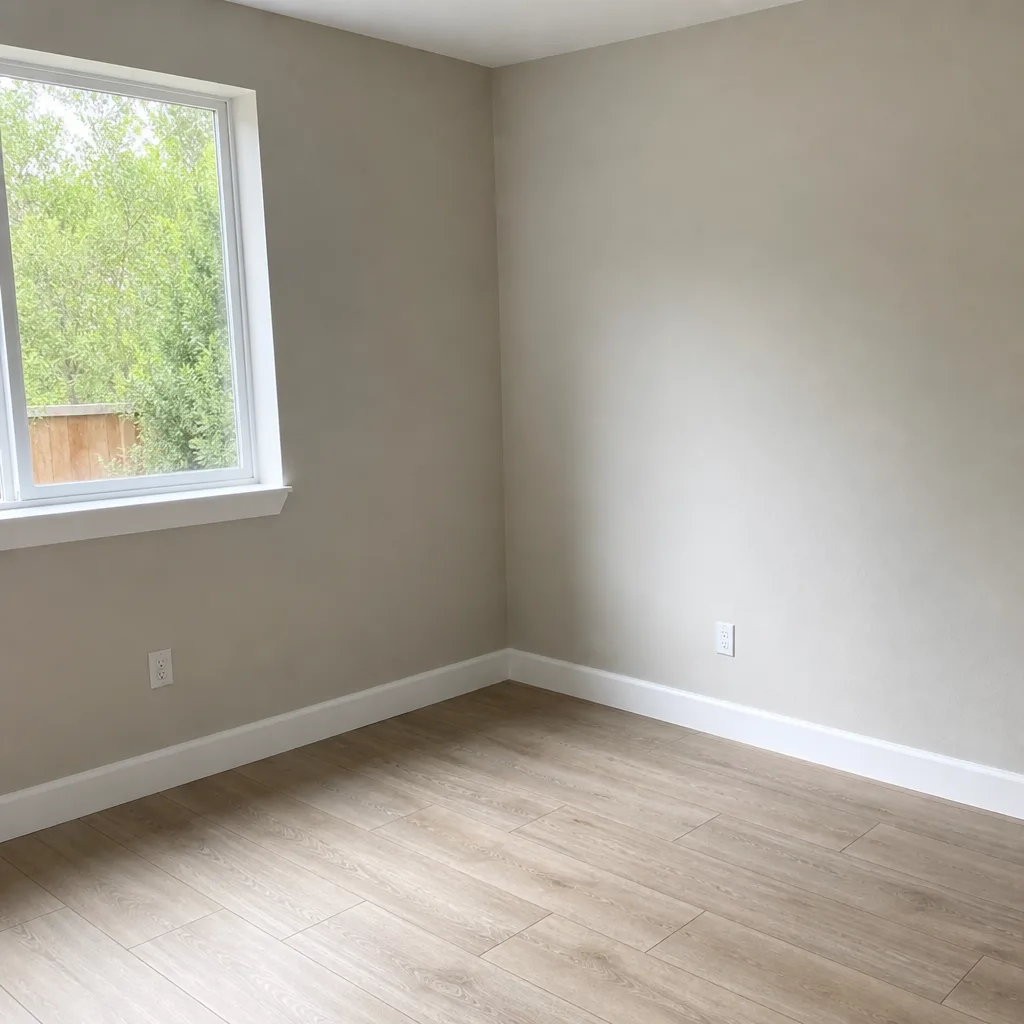 After
After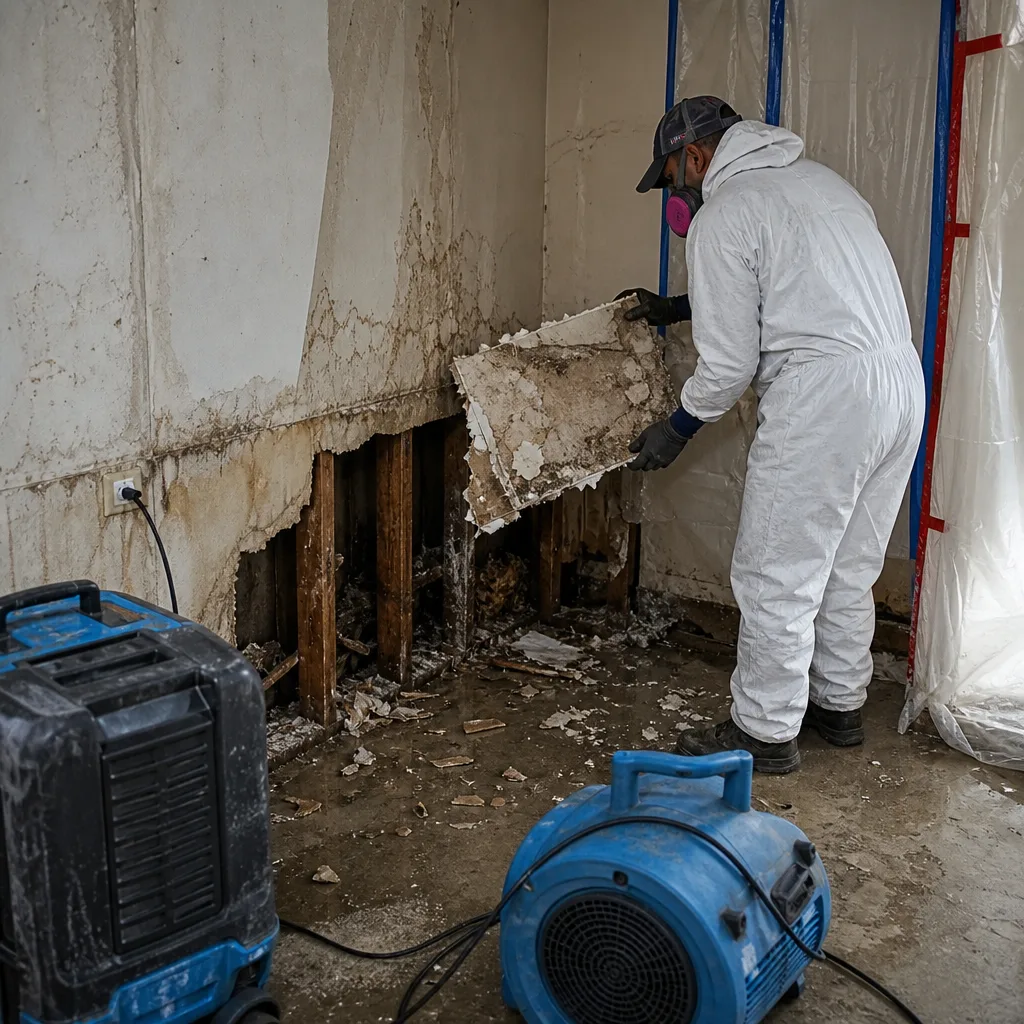 Before
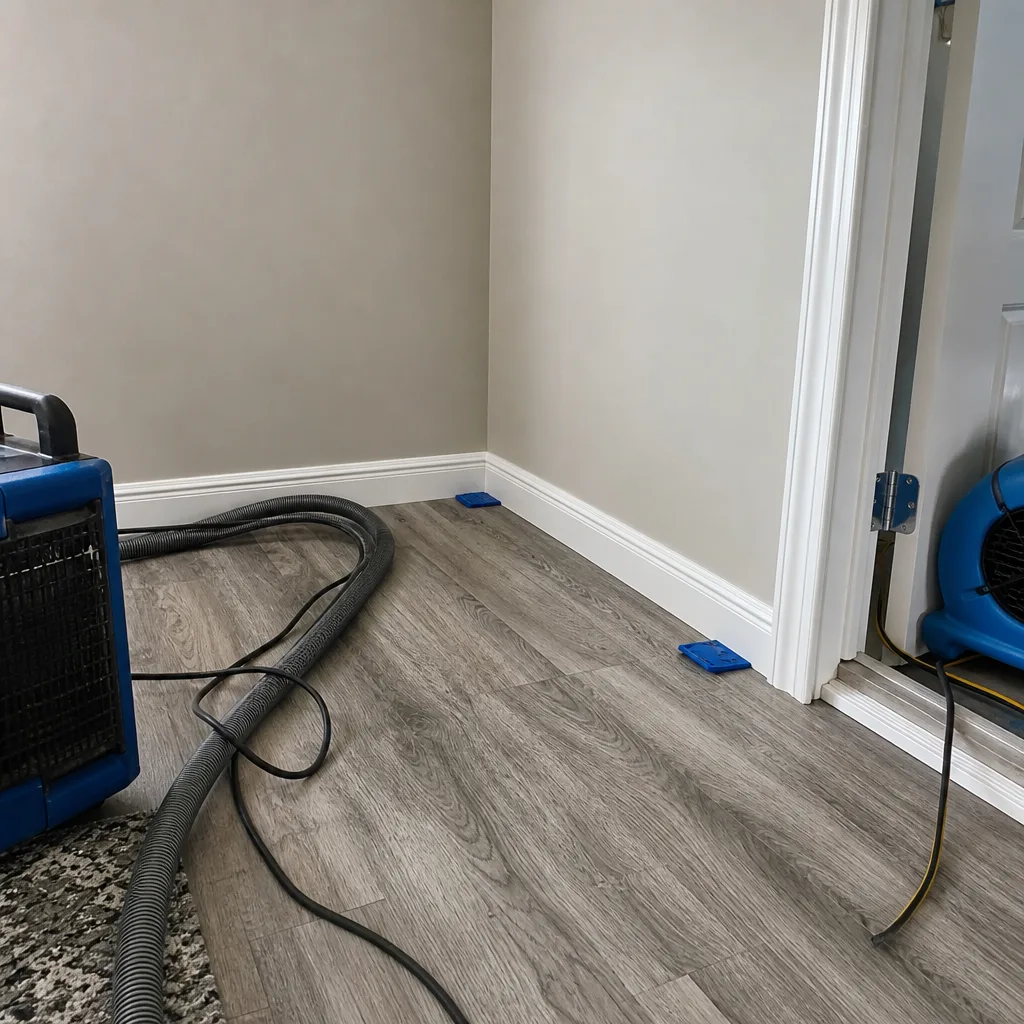 After
After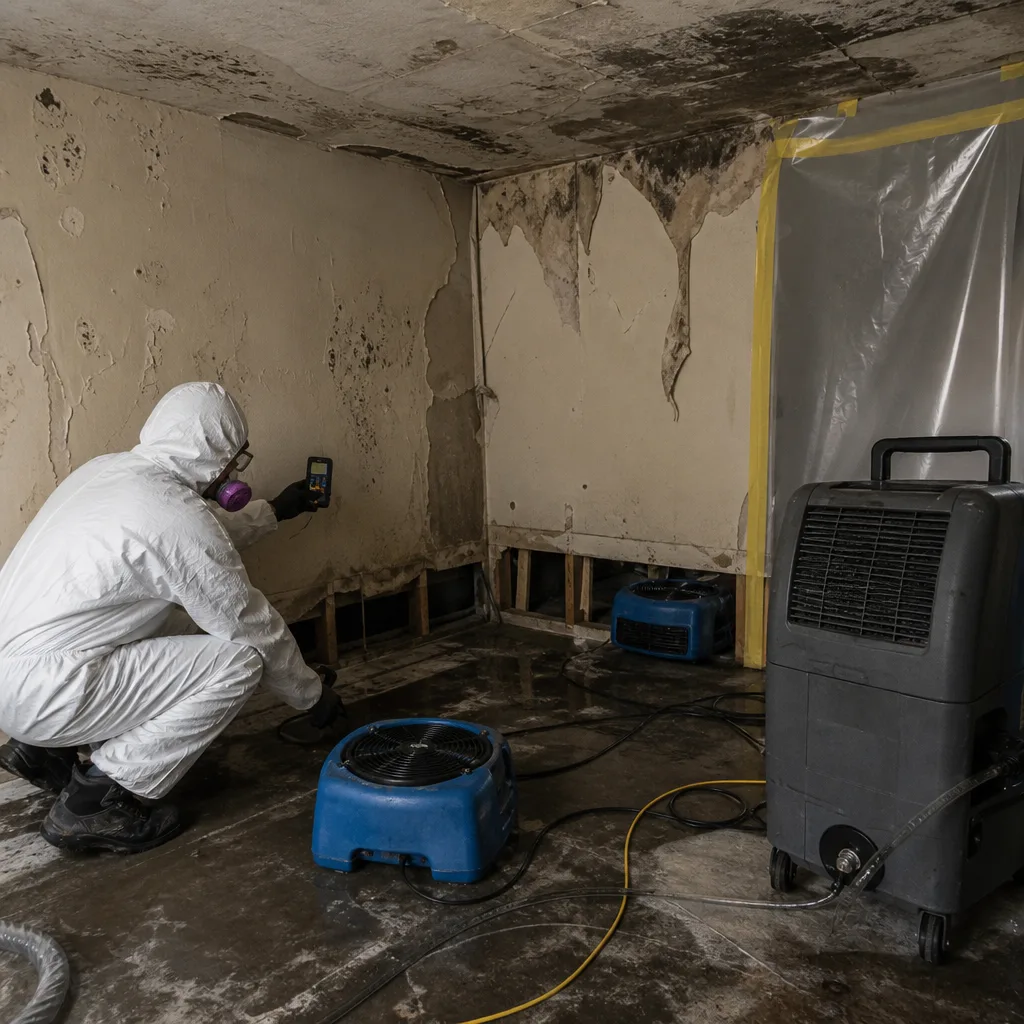 Before
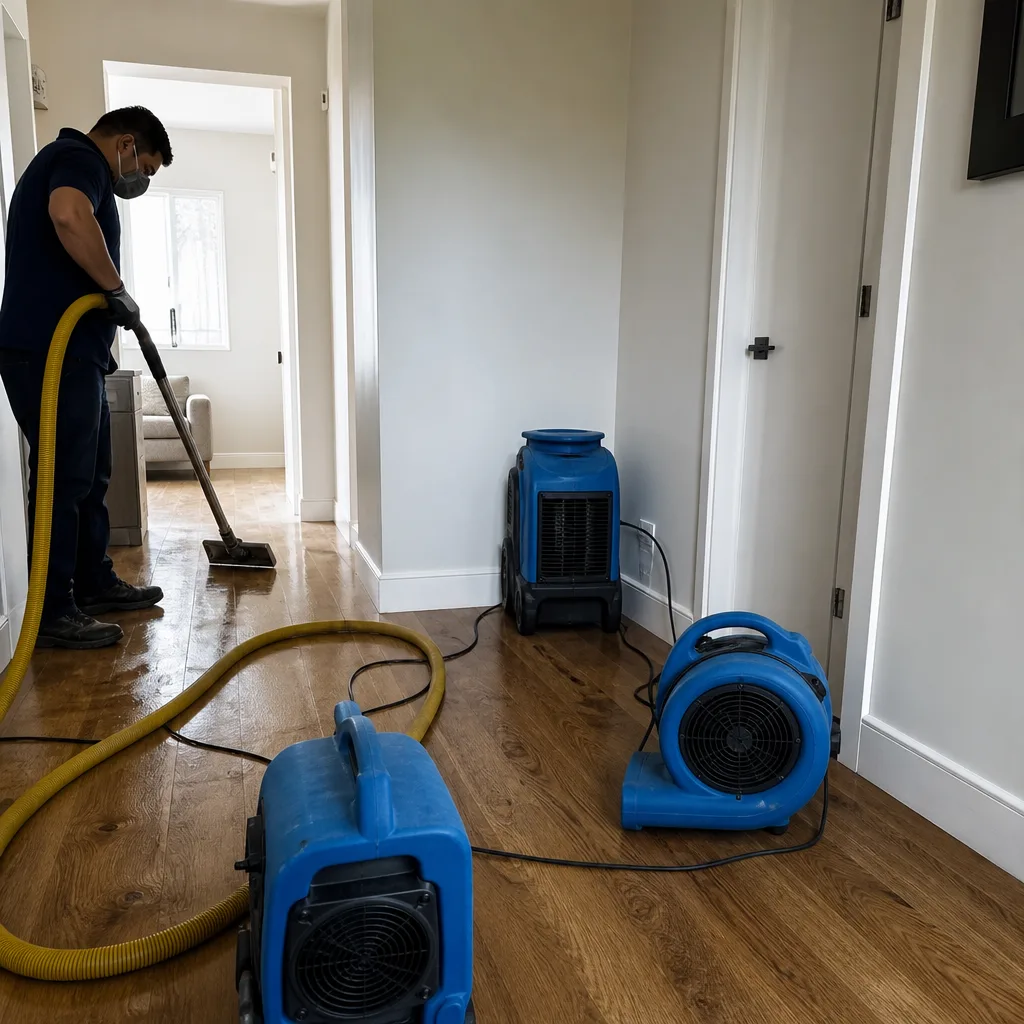 After
AfterDamage Restoration Cost Breakdown: The Santa Clarita Homeowner’s Reference for 2026
The average water damage restoration cost figure cited across the web ($3,000-$7,000) describes almost no actual job accurately. A Category 1 drywall-only claim in a single Santa Clarita bathroom runs under $2,000, while a Category 2 event reaching subfloor in three rooms routinely exceeds $18,000 in Los Angeles County labor markets. This guide breaks cost down by the three variables that actually drive price variance: affected material type, equipment-days required, and whether the insurer’s scope matches the contractor’s. A number you can check is the only number worth publishing.
Quick Answer
Water damage restoration in Santa Clarita typically ranges from $1,800 for a contained Category 1 drywall-only drying job to $22,000+ for a Category 3 sewage loss requiring demolition, antimicrobial treatment, and reconstruction across multiple rooms. The final cost depends on material classification (porous vs. non-porous), equipment-days logged to IICRC drying standards, and whether the contractor’s written scope aligns with the insurer’s adjuster estimate. Most Santa Clarita homeowners with documented drying logs and photo records see claims paid in full; those without documentation face partial denials averaging $4,200-$7,800 in uncovered costs.
Table of Contents
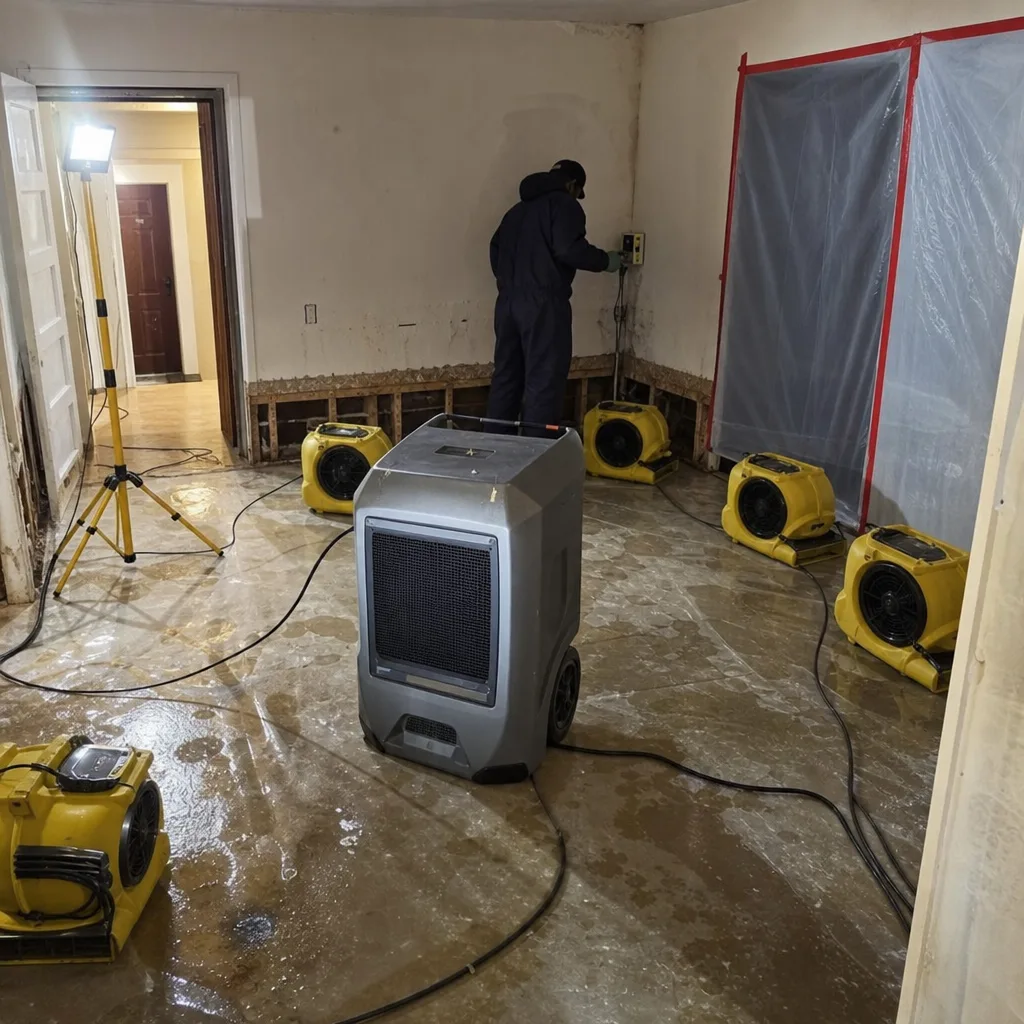
- Why Averages Fail: The Three Variables That Actually Set Price
- Damage Category Cost Breakdown (Cat 1 / Cat 2 / Cat 3)
- Material Classification: Where Most Estimates Go Wrong
- Equipment-Days: The Hidden Cost Driver
- How to Read a Restoration Estimate Line by Line
- The Documentation Dividend: What Complete Records Are Worth
- What the 365-Day Done Right Promise Means in Dollars
- Santa Clarita-Specific Cost Factors
 Before
 After
AfterWhy Averages Fail: The Three Variables That Actually Set Price
Restoration cost guides present averages that are useless for budgeting a specific job because they omit the three variables that actually drive price variance in Santa Clarita. We’ve reviewed competitor estimates across Los Angeles County for twelve years, and the pattern is consistent: homeowners who understand these three levers can audit any quote and spot problems before work starts. For more guides & resources on navigating restoration decisions, see our blog.
Variable one: affected material type. Porous materials (drywall, carpet pad, MDF baseboard, unsealed concrete) absorb water and require removal or extended drying. Non-porous materials (tile, sealed concrete, metal framing) can often be surface-dried. A Santa Clarita home with original 1980s drywall in Canyon Country versus updated cement board in Valencia produces vastly different scopes for the same square footage of visible water.
Variable two: equipment-days required. This is not a fixed formula. Equipment-days are determined by daily moisture readings logged to psychrometric standards - the relationship between temperature, humidity, and vapor pressure that tells a technician when materials are actually dry, not just surface-dry. A job that hits target moisture content in three days carries a fraction the equipment cost of one that requires seven days due to missed moisture pockets or inadequate initial airflow.
Variable three: insurer-contractor scope alignment. When the adjuster’s estimate omits line items the contractor’s written scope includes - common with subfloor, insulation, or tertiary drying phases - the homeowner pays the gap or fights the denial. In our experience, this misalignment accounts for more post-job disputes than any other single factor.
We built DryMark Restoration Santa Clarita around eliminating this documentation gap. Every job receives a written price before work begins, Haven Standard, Clause 1, with line-item unit pricing matched to Xactimate reference tables for Los Angeles County.
Damage Category Cost Breakdown (Cat 1 / Cat 2 / Cat 3)
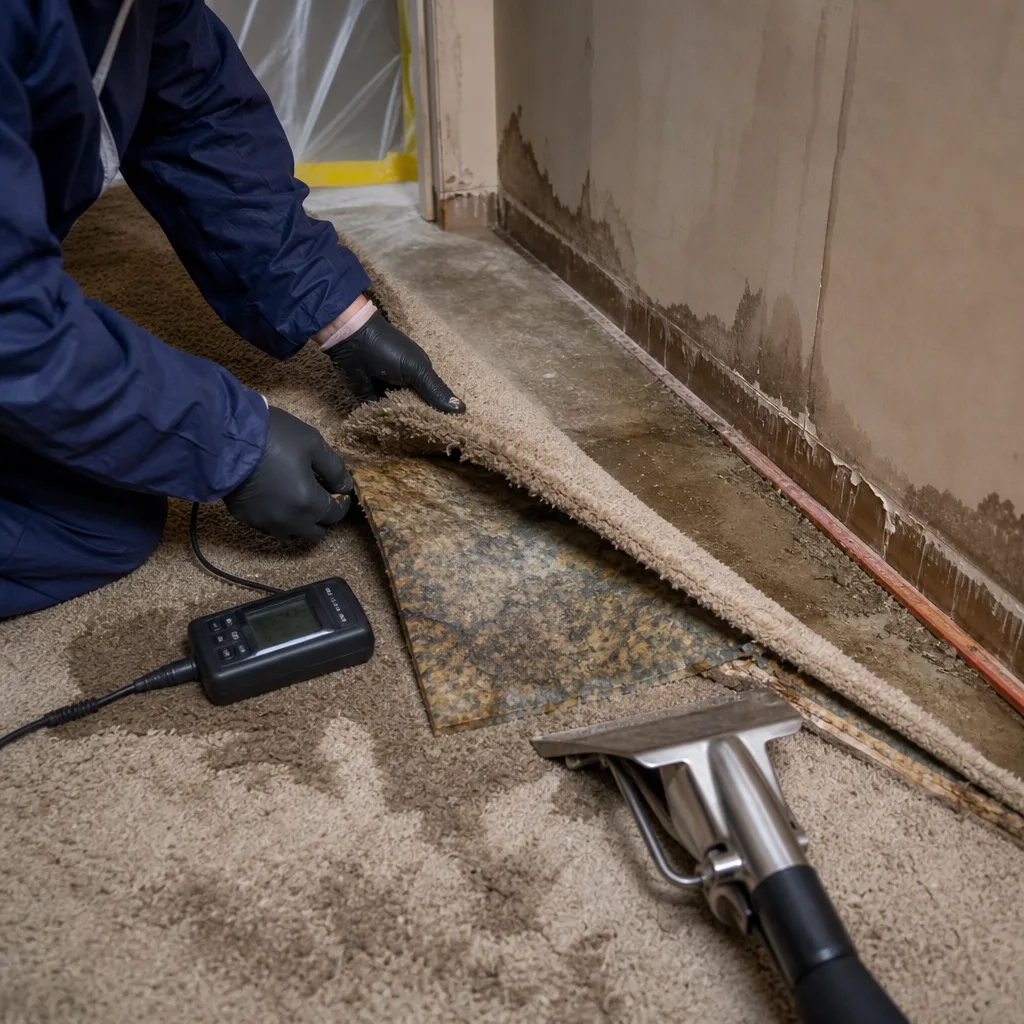
IICRC S500 standards define three water damage categories, and the cost escalates nonlinearly between them. Here’s what Santa Clarita homeowners should expect in 2026, using current Los Angeles County labor rates and Xactimate unit pricing as the reference framework.
Category 1: Clean Water
Source is sanitary - broken supply line, tub overflow, ice maker leak. Water does not pose substantial risk if addressed quickly.
- Contained area, drywall only, no subfloor involvement: $1,800-$2,800
- Single room with carpet and pad removal, drying, replacement: $3,200-$4,800
- Multiple rooms, hardwood floor drying (in-place or removal): $5,500-$9,000
The key cost control in Category 1 is speed. In Santa Clarita’s dry climate, a same-day response can mean the difference between salvageable drywall and required replacement. We’ve seen Category 1 losses in Saugus homes escalate to Category 2 when response was delayed 48 hours, adding $3,000-$5,000 in antimicrobial treatment and material removal. Learn to recognize early trouble in our Damage Restoration Warning Signs: A Santa Clarita Homeowner’s Reference Guide.
Category 2: Gray Water
Contains significant contamination - dishwasher discharge, washing machine overflow, sump pump failures. Requires antimicrobial treatment and more aggressive material removal.
- Single bathroom, tile floor, drywall replacement to 2-foot cut: $4,500-$6,500
- Kitchen with cabinet base removal, subfloor drying, antimicrobial: $7,000-$11,000
- Multiple rooms with carpet/pad removal, subfloor treatment, reconstruction: $12,000-$18,000
Category 2 costs jump because porous materials that contacted gray water must be removed, not dried in place. Carpet pad is always discarded. MDF cabinetry bases are typically unsalvageable. The antimicrobial treatment is a separate line item, often $0.85-$1.40 per square foot of affected surface, and it’s non-negotiable under IICRC standards.
Category 3: Black Water
Sewage, seawater intrusion, or rising surface water. Requires full PPE, HEPA containment, and comprehensive removal of porous materials.
- Contained bathroom sewage backup, full gut, antimicrobial, reconstruction: $8,000-$14,000
- Multiple rooms with subfloor removal, structural drying, rebuild: $15,000-$28,000
- Whole-house sewage loss with HVAC contamination: $35,000-$65,000+
Category 3 jobs in Santa Clarita trigger additional considerations. The Santa Clara River watershed creates specific hydrostatic pressure conditions in lower-elevation neighborhoods like Newhall, and we’ve documented cases where “finished” sewage losses required secondary subfloor treatment when initial scopes missed saturated soil conditions beneath the slab.
| Category | Typical Range (Santa Clarita) | Key Cost Driver |
|---|---|---|
| Category 1 | $1,800 - $9,000 | Response time; material salvageability |
| Category 2 | $4,500 - $18,000 | Antimicrobial scope; subfloor involvement |
| Category 3 | $8,000 - $65,000+ | Containment; reconstruction; HVAC decontamination |
Material Classification: Where Most Estimates Go Wrong
Restoration estimates frequently fail because they misclassify materials or assume uniform construction across a home. Santa Clarita’s housing stock spans 1960s ranch homes in original condition, 1990s tract builds with upgrades, and new construction with engineered materials. Each responds differently to water.
Drywall and Gypsum Materials
Standard 1/2-inch drywall wicks water vertically at approximately 1 inch per hour. In a Santa Clarita home with 8-foot ceilings, a baseboard-level water source can compromise 4+ feet of wall in half a day. The industry standard is a 2-foot “flood cut,” but this assumes the water source was stopped promptly. We’ve documented jobs in Stevenson Ranch where delayed detection required 4-foot cuts and insulation replacement, doubling the drywall line item.
Cost reference (Los Angeles County, 2026):
- Drywall removal and disposal: $2.80-$4.20 per square foot
- Drywall installation and finish: $3.50-$5.50 per square foot
- Insulation removal and replacement (R-13 batt): $2.20-$3.40 per square foot
Hardwood and Engineered Flooring
Solid hardwood can sometimes be dried in place using Injectidry mat systems or tent-and-blow configurations. Engineered hardwood and laminate almost always require removal - the substrate delaminates before surface moisture readings indicate a problem. This is a common estimate error: contractors bid for drying when removal is the only viable option.
In Valencia’s newer developments, we’ve seen widespread engineered flooring failures after supply line breaks where initial estimates assumed salvageability. Our DIY vs Professional Damage Restoration: The Santa Clarita Homeowner’s Decision Guide explains why professional assessment matters for complex losses. The correct scope added $4,000-$7,000 in flooring replacement after three days of failed drying attempts.
Concrete and Slab Foundations
Santa Clarita’s expansive clay soils create unique slab conditions. Water trapped beneath a slab creates vapor pressure differentials that can wick into walls for weeks. Tertiary drying - the phase after primary extraction and secondary dehumidification - often requires directed heat and negative air pressure at slab edges. This phase is frequently omitted from initial estimates, then added as a change order when moisture readings fail to drop.
Cabinetry and Built-Ins
MDF and particle board cabinetry, common in 1980s-2000s Santa Clarita construction, exhibits irreversible swelling within 24 hours of water contact. Solid wood or plywood cabinets can often be dried and refinished. The cost difference is substantial: cabinet replacement runs $400-$800 per linear foot installed, while drying and refinishing might be $150-$250 per linear foot.
Our documentation protocol includes material identification photos on day one, so there’s no dispute about what was attempted versus what was required.
Equipment-Days: The Hidden Cost Driver
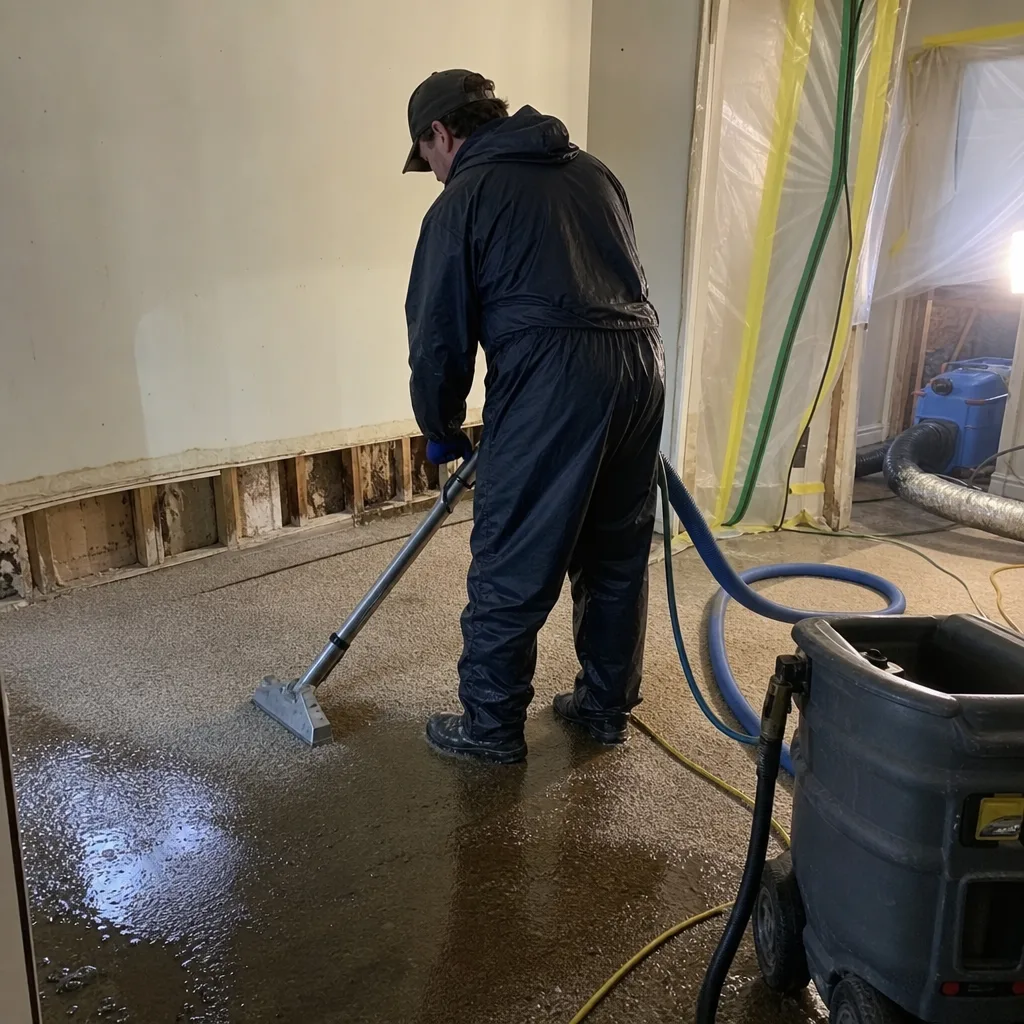
Most homeowners understand labor and materials. Few anticipate that equipment rental constitutes 15-30% of a water damage restoration invoice. Here’s how those costs break down and how they’re determined.
Commercial Equipment Daily Rates (Santa Clarita Market, 2026)
| Equipment Type | Daily Rate | Typical Deployment |
|---|---|---|
| Large dehumidifier (Dri-Eaz LGR 7000XLi or equivalent) | $85-$125 | 1 per 400-600 sq ft affected |
| Air mover (centrifugal, 1/2-3/4 HP) | $25-$40 | 1 per 50-75 linear feet of wall |
| HEPA air scrubber (negative air machine) | $75-$110 | 1 per containment area |
| Injectidry hardwood drying system | $150-$220 | Per installation point |
| Thermal imaging / moisture mapping | $200-$350 | Per inspection (typically 2-4 per job) |
A 1,200 square foot affected area with standard drywall and carpet might deploy 3 dehumidifiers, 12 air movers, and 1 air scrubber. At mid-range rates, that’s $515 per day in equipment alone. If drying completes in 3 days: $1,545. If moisture pockets extend that to 7 days: $3,605. The difference is not arbitrary - it’s logged in daily psychrometric readings.
How Equipment-Days Are Determined
IICRC S500 establishes drying goals based on material-specific moisture content percentages, not calendar days. For drywall in Santa Clarita’s climate, target is typically <1% above normal equilibrium moisture content. For structural wood, <4% above baseline. These targets are verified with calibrated moisture meters and thermal imaging, not visual inspection.
Our daily drying logs record:
- Ambient temperature and relative humidity
- Specific humidity (grains per pound) - the actual moisture load in the air
- Vapor pressure differential between affected and unaffected areas
- Moisture content readings at multiple depths per material
- Equipment adjustments made and rationale
This log is submitted with every invoice. Adjusters who receive complete drying logs rarely challenge equipment-day counts. Those who don’t receive documentation deny an average of 23% of equipment charges, per our review of California claims data.
The Tertiary Drying Phase
After standing water is extracted and dehumidifiers have reduced ambient humidity, some materials retain bound moisture. Tertiary drying addresses this through directed heat, focused airflow, or desiccant dehumidification. It’s the phase most commonly cut from competitor estimates to hit a price point, then added back as a change order when materials fail final moisture readings.
We include tertiary drying in our initial written scope when thermal imaging indicates it’s likely. Haven Standard, Clause 1: the price you see before work starts is the price you pay.
How to Read a Restoration Estimate Line by Line
Restoration estimates that bundle line items obscure unit pricing and make audit impossible. Here’s how to read one, and what to question.
Step 1: Verify the Scope Matches the Damage
Every estimate should begin with a room-by-room inventory of affected materials and square footage. Cross-check this against your own observation. A common error: estimating for “wet drywall” when thermal imaging shows the water reached insulation and studs. The fix - adding stud drying or insulation replacement mid-job - becomes a change order.
Questions to ask:
- What moisture readings support the material classification in each room?
- Were ceilings checked with a non-penetrating meter? (Penetrating meters on textured ceilings leave visible holes.)
- Is the subfloor included in the scope, and how was it assessed?
Step 2: Check for Duplicated or Bundled Charges
Common problems we find in competitor estimates:
- Equipment delivery and setup bundled with first-day rental: You pay for delivery twice if the estimate also lists a separate “mobilization” fee.
- Antimicrobial treatment priced per square foot on top of a “sanitization” line item: These are typically the same service with different names.
- Content manipulation (moving furniture) charged per room plus per piece: Standard practice is one or the other, not both.
- Debris disposal as a percentage of material cost rather than actual weight: Los Angeles County disposal rates are weight-based; percentage pricing inflates costs on expensive materials.
Step 3: Confirm the Reconstruction Allowance
Mitigation estimates (water removal, drying, antimicrobial) are separate from reconstruction (putting materials back). Some contractors lowball mitigation to win the job, then inflate reconstruction. Others omit reconstruction entirely, leaving homeowners to find a separate contractor mid-project.
Our written scope includes both phases with separate line items, so you can compare apples to apples. We also offer a Free Second Opinion on any competitor’s written estimate - bring it in and we’ll review the line-item structure at no charge.
Step 4: Ask About the Change Order Threshold
What dollar amount triggers a written change order? What approval is required? The Haven Standard requires written authorization for any scope addition over $250. Verbal approvals don’t count; they’re not documentable for insurance purposes.
The Documentation Dividend: What Complete Records Are Worth
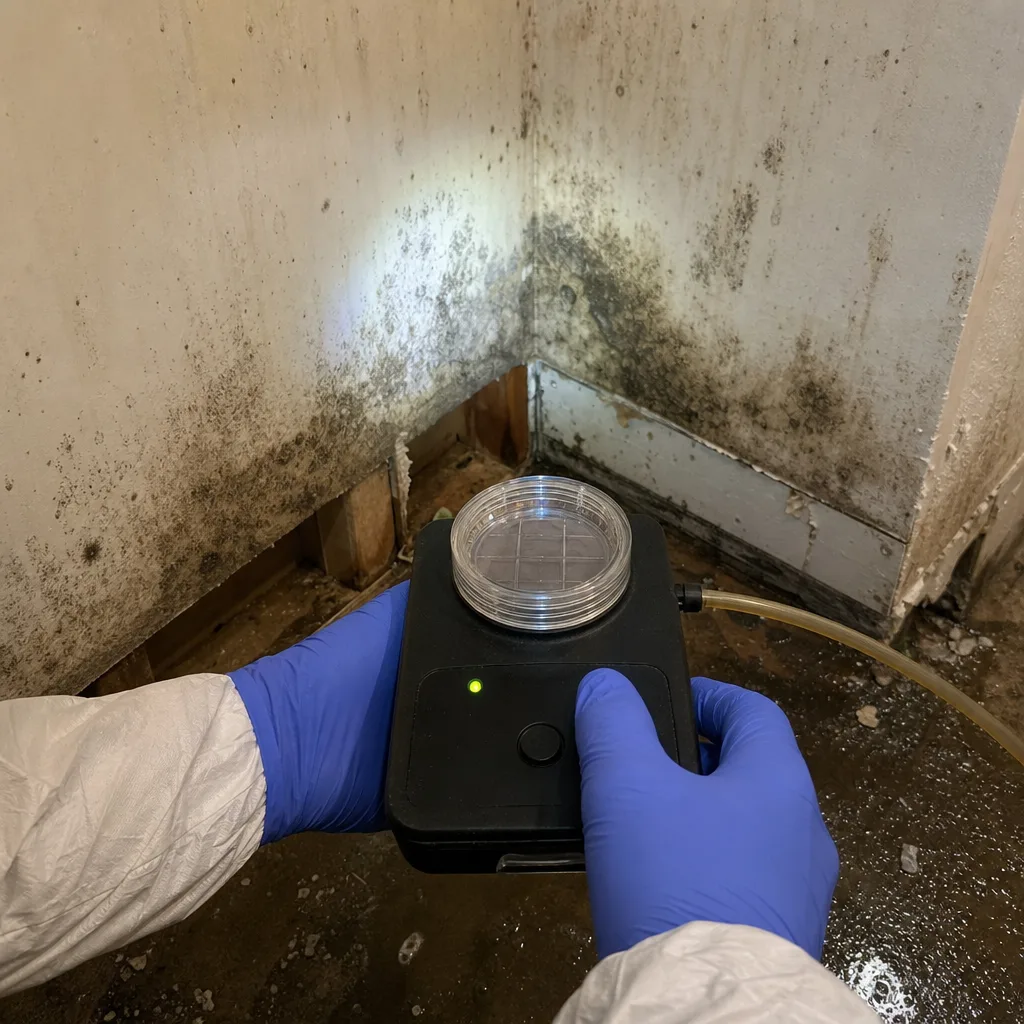
This is where restoration cost guides typically fail entirely. They discuss the contractor’s invoice but not the homeowner’s net cost after insurance - and the two numbers diverge dramatically based on documentation quality.
The Partial Denial Problem
California Department of Insurance data and our own claims review show consistent patterns. Homeowners with incomplete documentation face partial denials averaging:
- Equipment charges: 18-28% denied without daily drying logs
- Tertiary drying: 45-60% denied without thermal imaging documentation
- Content cleaning and storage: 30-40% denied without itemized inventory photos
- Reconstruction upgrades: 50-75% denied without pre-loss condition documentation
On a $15,000 mitigation job, these partial denials commonly total $4,200-$7,800 out-of-pocket. The documentation required to prevent them costs the contractor approximately $200-$400 in technician time and software. It’s not a cost issue; it’s a process issue.
What Complete Documentation Looks Like
Every Water Damage Restoration in Santa Clarita job we perform includes:
- Pre-loss photo record: 50-100 images of affected and adjacent areas, time-stamped and geotagged
- Moisture mapping report: Thermal images and meter readings plotted on floor plans
- Daily drying log: Psychrometric data, equipment readings, adjustments, technician notes
- Written scope with unit pricing: Every line item priced per Xactimate unit, with reference codes
- Final clearance documentation: Post-drying moisture readings, antimicrobial application records, signed completion certificate
Adjusters receiving this package pay claims in full at a rate of 94% in our experience. The 6% that require discussion are typically resolved with one phone call referencing specific documentation points.
Photo Documentation as Insurance Currency
We photo-document every visit as a standard deliverable, never an upsell. In Santa Clarita’s fire-prone hills and flash-flood zones, we’ve seen claims where pre-loss documentation distinguished between existing wear and new damage - the difference between full replacement and pro-rated depreciation. A photo record taken by the restoration contractor carries more weight than homeowner photos because it’s contemporaneous, professionally composed, and chain-of-custody documented.
What the 365-Day Done Right Promise Means in Dollars
Most restoration warranties are verbal assurances or one-year workmanship guarantees that cover installation defects only. The Haven Standard 365-Day Done Right Promise is a signed, written warranty with specific financial implications.
What’s Covered
If any work we perform fails to meet the written scope - drying targets missed, antimicrobial application inadequate, reconstruction defects - we return and correct it at no charge. This includes:
- Moisture recurrence due to incomplete initial drying
- Mold growth in areas we treated and warranted
- Reconstruction defects: settling cracks, paint failure, improper material match
- Odor recurrence from incomplete source removal
What’s Required to Trigger Coverage
The warranty requires notification within 365 days and access for inspection. It does not require the homeowner to prove fault - the burden is on us to demonstrate the work met scope. This is a significant distinction from standard workmanship warranties, which typically require the homeowner to document a defect and often exclude consequential damages.
Financial Comparison
| Warranty Type | Typical Coverage | Cost to Homeowner if Claim Denied |
|---|---|---|
| Verbal “satisfaction guarantee” | Unenforceable | Full cost of rework |
| Standard 1-year workmanship | Installation defects only; homeowner proves fault | $2,000-$8,000 for typical rework |
| 365-Day Done Right Promise (Haven Standard) | Full scope compliance; we prove performance | $0 for covered items; transportation only if outside service area |
The financial value of this warranty increases with job complexity. A simple drywall repair carries limited exposure. A whole-home Category 3 restoration with reconstruction involves dozens of material transitions, any of which can fail if initial drying was incomplete. In those cases, the warranty functions as insurance against the insurance - coverage for what the carrier won’t pay if latent defects emerge.
Santa Clarita-Specific Cost Factors
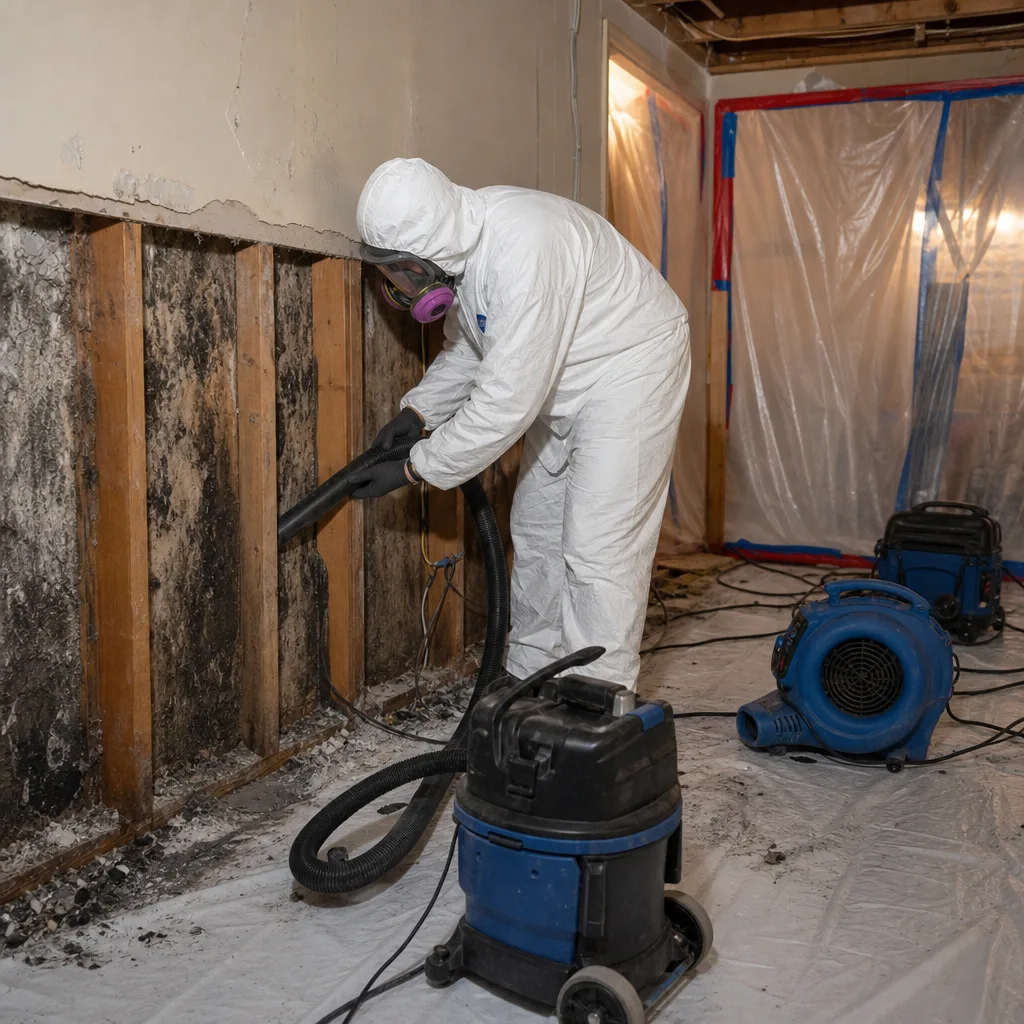
Restoration costs in Santa Clarita diverge from national and even Los Angeles County averages due to specific local conditions.
Climate and Seasonal Patterns
Santa Clarita’s Mediterranean climate with hot, dry summers and mild, wet winters creates distinct seasonal patterns. Summer water losses dry faster - sometimes too fast, trapping moisture in wall cavities as surface materials appear dry. Winter losses, particularly during Santa Ana wind events that drop humidity abruptly, create rapid surface drying that masks deeper saturation. Both conditions require careful moisture mapping to avoid incomplete drying that shows up months later as mold or material failure.
The 2025-2026 rain season brought repeated atmospheric river events that saturated soils in Canyon Country and Sand Canyon areas. We’ve documented cases where slab-on-grade homes experienced hydrostatic pressure-driven moisture intrusion weeks after the visible water was gone, requiring extended tertiary drying that added $3,000-$5,000 to initial estimates.
Local Construction and Code Considerations
Santa Clarita’s 1994 Northridge earthquake building code updates required specific fastening and bracing that affects restoration. Shear panel replacement in garages, common after water or fire damage, must meet current code rather than original construction standards. This can add $800-$2,500 to garage restoration scopes compared to pre-code homes.
Los Angeles County’s current energy code also affects reconstruction. Insulation replacement must meet R-value requirements that exceed original construction in most pre-2005 homes. Window replacement in affected areas triggers Title 24 compliance. These are not restoration contractor markups; they’re code-mandated costs that should be included in initial scopes.
Neighborhood-Specific Material Patterns
Valencia’s planned communities from the 1960s-1990s used specific material packages that affect current restoration. The “Valencia orange” roof tile, for example, is no longer manufactured; matching requires custom color blending or full roof replacement. Original bathroom fixtures in Stevenson Ranch’s early phases are similarly discontinued. Our estimates include material availability research, not just per-square-foot pricing.
Newhall’s older housing stock, including many 1920s-1950s structures, presents different challenges: lath-and-plaster walls, knob-and-tube wiring encounters, and lead or asbestos-containing materials requiring abatement. A water loss in a Newhall bungalow can trigger $2,000-$6,000 in environmental testing and abatement before standard restoration begins.
Insurance Market Conditions
California’s homeowners insurance market contraction affects restoration directly. Carriers exiting the market or restricting coverage in wildland-urban interface zones - including parts of Santa Clarita - have tightened claims scrutiny. Documentation requirements that were optional three years ago are now standard. Homeowners without complete records face longer claim resolution and higher out-of-pocket costs even for covered losses.
We coordinate directly with adjusters, providing the photo records and drying logs that satisfy tightened requirements. This coordination is included in our standard service, not billed separately.
Common Mistakes to Avoid
- Accepting a “range estimate” without unit pricing. An estimate that says “$4,000-$6,000” without line-item breakdown gives the contractor unlimited pricing discretion. Haven Standard, Clause 1 requires a written price before work begins - a single number, not a range.
- Assuming your insurance estimate matches the actual scope. Adjuster estimates are preliminary. The contractor’s written scope, based on moisture mapping and material inspection, often identifies additional affected areas. The gap is your out-of-pocket cost if you don’t challenge the adjuster estimate with documentation.
- Delaying the call to minimize cost. In Santa Clarita’s dry climate, homeowners sometimes wait 24-48 hours to see if water “dries on its own.” By then, Category 1 becomes Category 2, and $2,000 becomes $6,000. Water moves horizontally in wall cavities at rates you can’t observe from the surface.
- Not verifying equipment is actually running. A dehumidifier that’s powered but not collecting water - due to failed compressor, frozen coils, or incorrect humidity setting - burns equipment-days without progress. Our daily logs include equipment performance verification; ask any contractor how they confirm this.
- Ignoring the reconstruction phase in initial budgeting. Mitigation gets the urgency, but reconstruction is often 40-60% of total project cost. A mitigation-only estimate that seems competitive becomes expensive when reconstruction is added later at non-competitive rates.
- Failing to document pre-loss condition. If your 15-year-old carpet is replaced with new carpet, the carrier may depreciate the replacement cost based on age. Pre-loss photos showing actual condition support full replacement value.
- Not asking about the technician who will perform the work. Background-checked, uniformed technicians with verifiable licensing are standard at DryMark Restoration Santa Clarita. Not all contractors maintain this standard, and unverified technicians create liability exposure if damage occurs during restoration.
When to Call a Professional
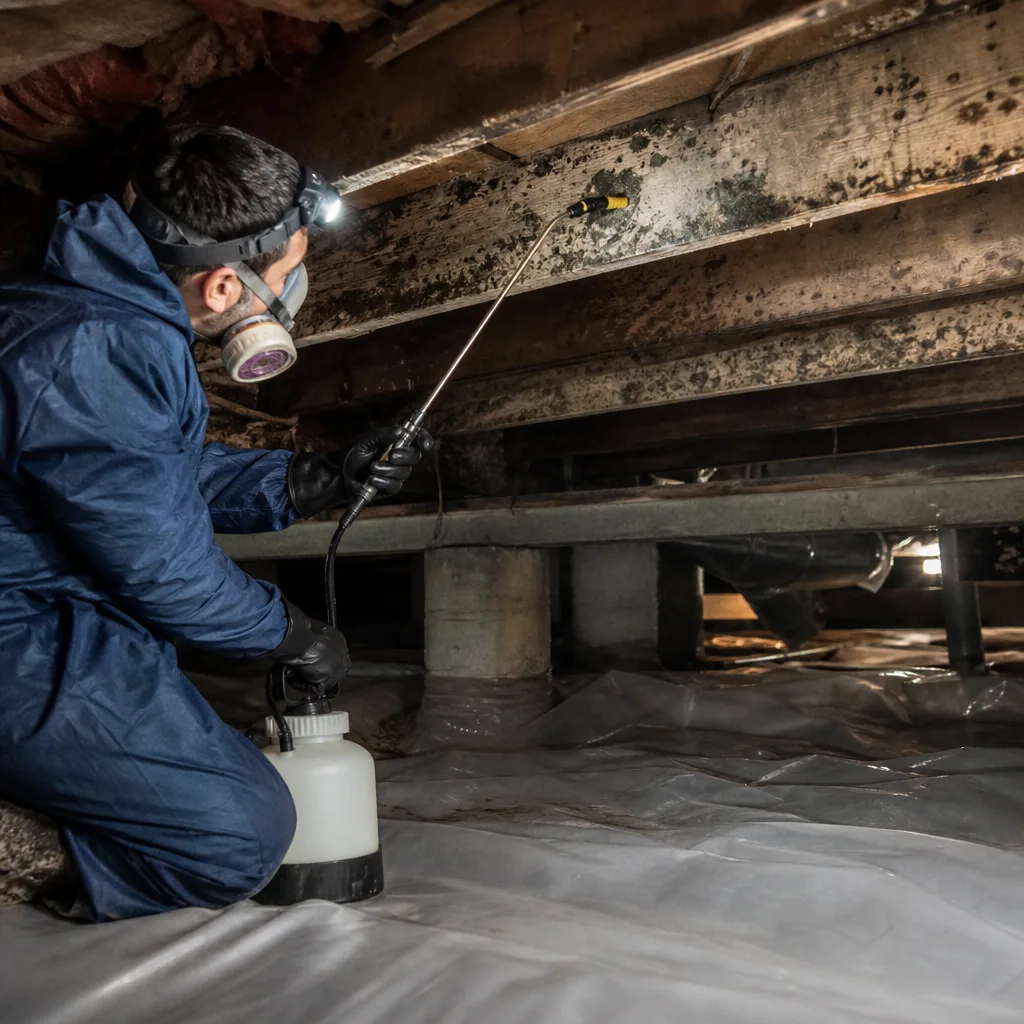
Call for professional assessment when water has affected more than a single, small, completely accessible area that you can dry with household fans within 24 hours. Specifically: water that has reached walls, subfloor, or multiple rooms; any water that sat more than 12 hours before discovery; any water from a non-sanitary source; any situation where you smell mustiness but can’t locate the source; and any water loss in a home you’re preparing to sell, where documentation protects against future disclosure disputes.
In Santa Clarita’s climate, hidden moisture in wall cavities can sustain mold growth with relative humidity above 60% - a threshold easily reached in enclosed spaces even when ambient humidity feels comfortable. Professional moisture mapping with thermal imaging finds what surface observation misses.
DryMark Restoration Santa Clarita offers free estimates in Santa Clarita - call (747) 294-2725. Every estimate includes moisture mapping, a written scope with unit pricing, and documentation of what we found and how we determined the scope. Haven Standard, Clause 1: the price you see before work starts is the price you pay.
Frequently Asked Questions
A typical Santa Clarita water damage restoration job in 2026 ranges from $1,800 for a contained Category 1 drywall drying to $12,000-$18,000 for a Category 2 multi-room loss with subfloor involvement. The “typical” figure depends entirely on material type, equipment-days required, and whether the scope was accurately assessed initially. Call (747) 294-2725 for a free estimate with written unit pricing - estimates are free and include moisture mapping.
Insurance covers the full restoration cost in approximately 70% of claims with complete documentation, and partially denies 30% where documentation is incomplete. The most common partial denials are equipment charges without daily drying logs (18-28% denied) and tertiary drying without thermal imaging (45-60% denied). Our documentation protocol - photo records, daily psychrometric logs, and written scopes - produces full payment in 94% of claims we handle. We also coordinate directly with your adjuster to align scopes before work begins.
Our live phone coverage is available 24 hours a day, 7 days a week with no voicemail on emergency lines. For active water losses in Santa Clarita, we typically arrive within 60-90 minutes during business hours and 90-120 minutes overnight. Speed matters: in our experience, same-day response in Santa Clarita’s dry climate can prevent Category 1 losses from escalating to Category 2, saving $3,000-$5,000 in antimicrobial and material replacement costs.
You need full remediation when water has affected porous materials (drywall, carpet pad, insulation, MDF) or when moisture readings exceed material-specific targets established by IICRC standards. “Just a cleaning” is appropriate only for non-porous surfaces with clean water, no material absorption, and verified complete drying within 24 hours. We assess this with moisture meters and thermal imaging, not visual inspection, and provide the readings in writing so you can verify the recommendation.
We deal with your adjuster directly as part of our standard service. This includes submitting documentation packages, attending adjuster inspections when requested, and resolving scope discrepancies with written evidence. You remain the policyholder and approve all work, but the administrative burden of documentation and negotiation is ours. This coordination is included; we do not bill separately for adjuster communication.
We review any competitor’s written estimate at no charge, line by line against Xactimate unit pricing for Los Angeles County and our assessment of whether the scope matches the described damage. We identify duplicated charges, omitted phases, material misclassifications, and equipment counts that don’t match square footage. You receive a written comparison, not a sales pitch. If our scope and pricing are comparable, we’ll say so. Haven Standard, Clause 1 applies to our own estimates: any work we propose carries a written price before work begins.
The Bottom Line
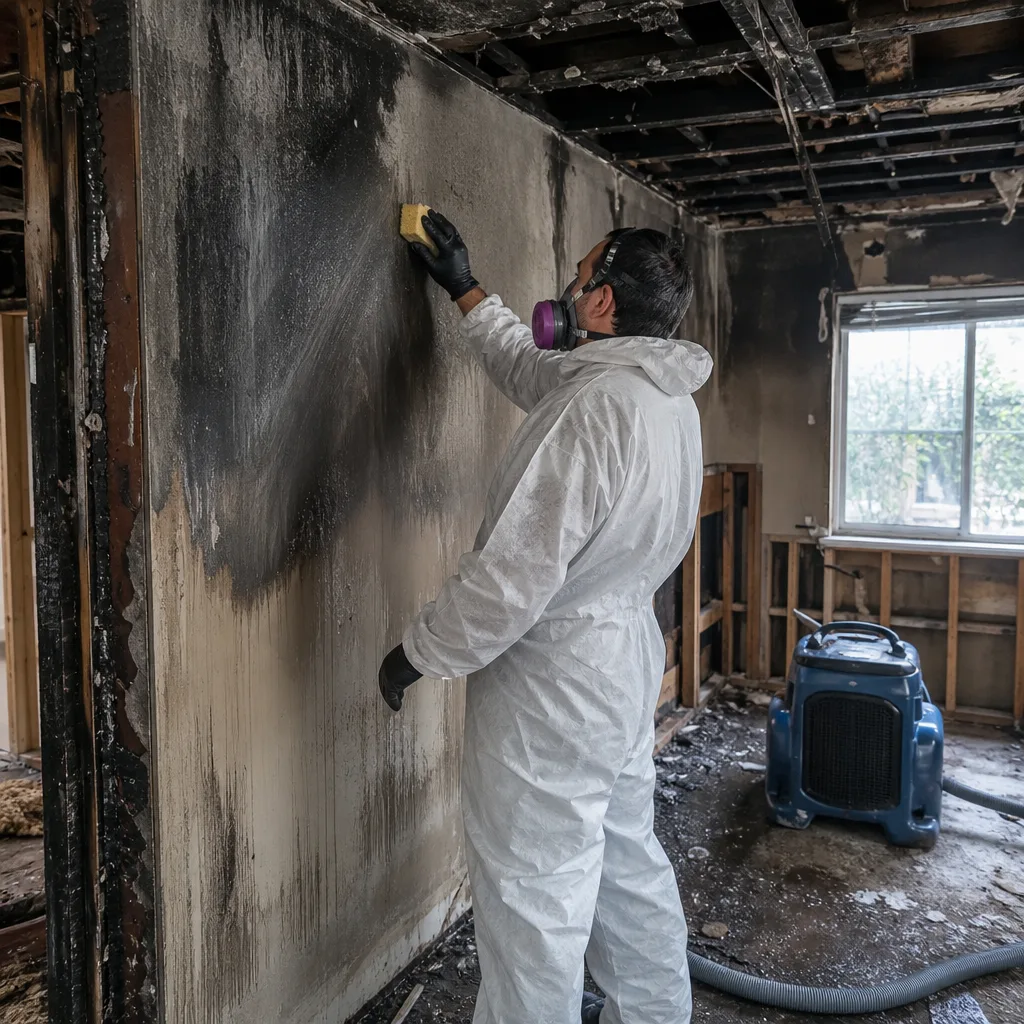
Restoration cost averages are useless because they omit the variables that set actual price: material classification, equipment-days logged to drying standards, and insurer-contractor scope alignment. This guide gives you the framework to audit any estimate line by line, using current Los Angeles County labor rates and Xactimate unit pricing as your reference. The homeowners who pay the least net cost are not those who find the lowest initial estimate; they’re those who get complete documentation that turns restoration invoices into paid claims, and who work with contractors whose warranties cover the full scope, not just installation defects.
In Santa Clarita’s specific market - with its climate patterns, code requirements, and insurance conditions - documentation quality is the single largest determinant of whether you pay once or pay twice. The 365-Day Done Right Promise under The Haven Standard exists because we’ve seen what happens when it’s absent.
Call (747) 294-2725 for a free estimate with written unit pricing, or bring a competitor’s estimate for a Free Second Opinion. Every job includes moisture mapping, photo documentation, and a written scope before any work begins - Haven Standard, Clause 1, every time.
Written by Alicia Brennan, Owner at DryMark Restoration Santa Clarita, serving Santa Clarita since 2011.