
Last updated September 23, 2026
Free visual inspection and a written scope of work before any mitigation begins - photos, moisture readings, and drying logs go in your claim file
The scope we write is the scope we bill. Anything new gets shown to you, in writing, before we touch it.
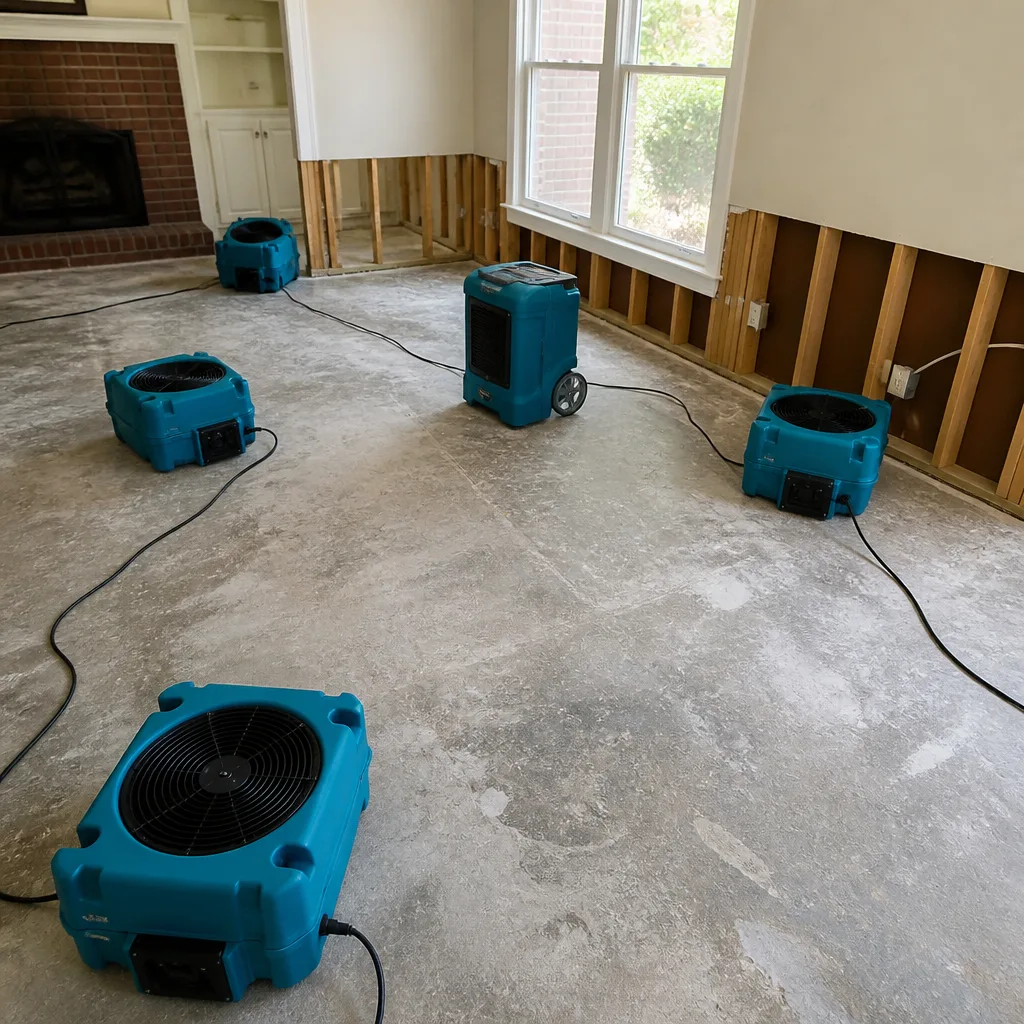
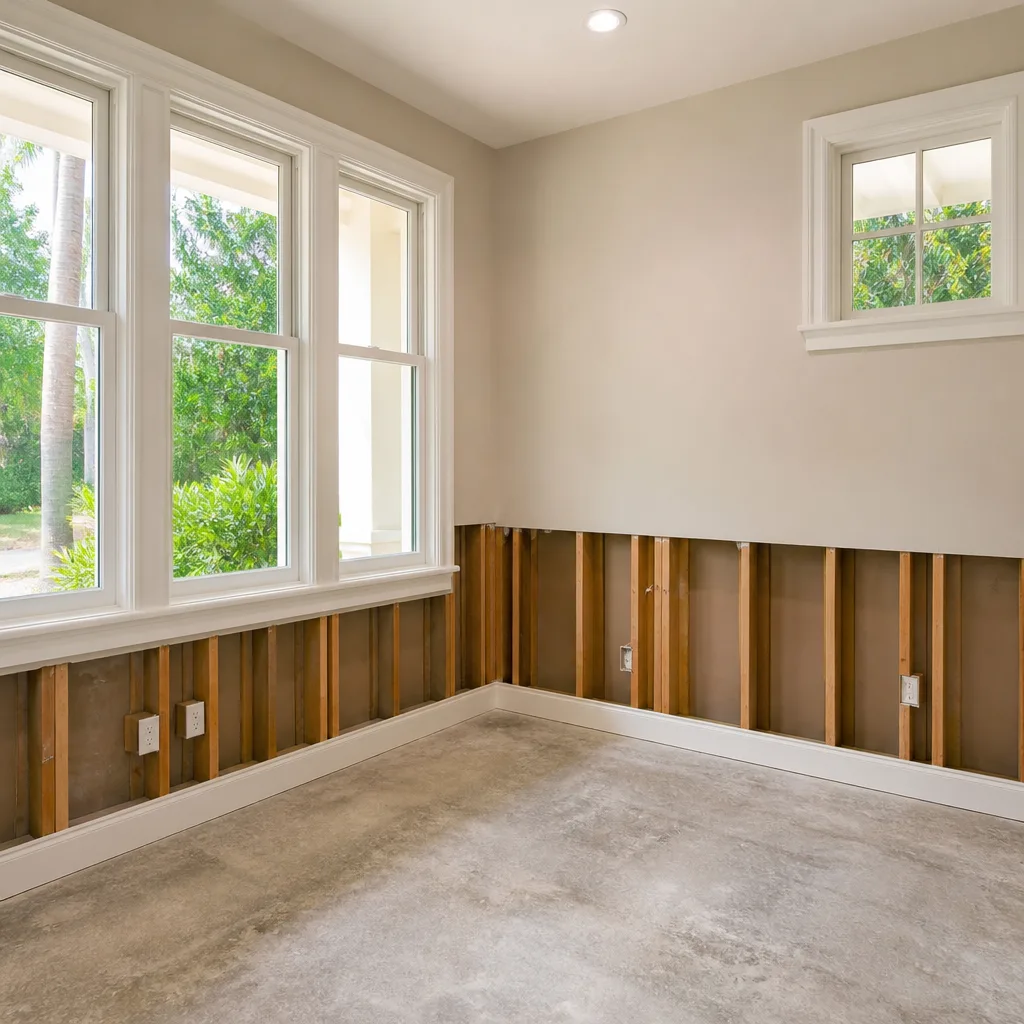
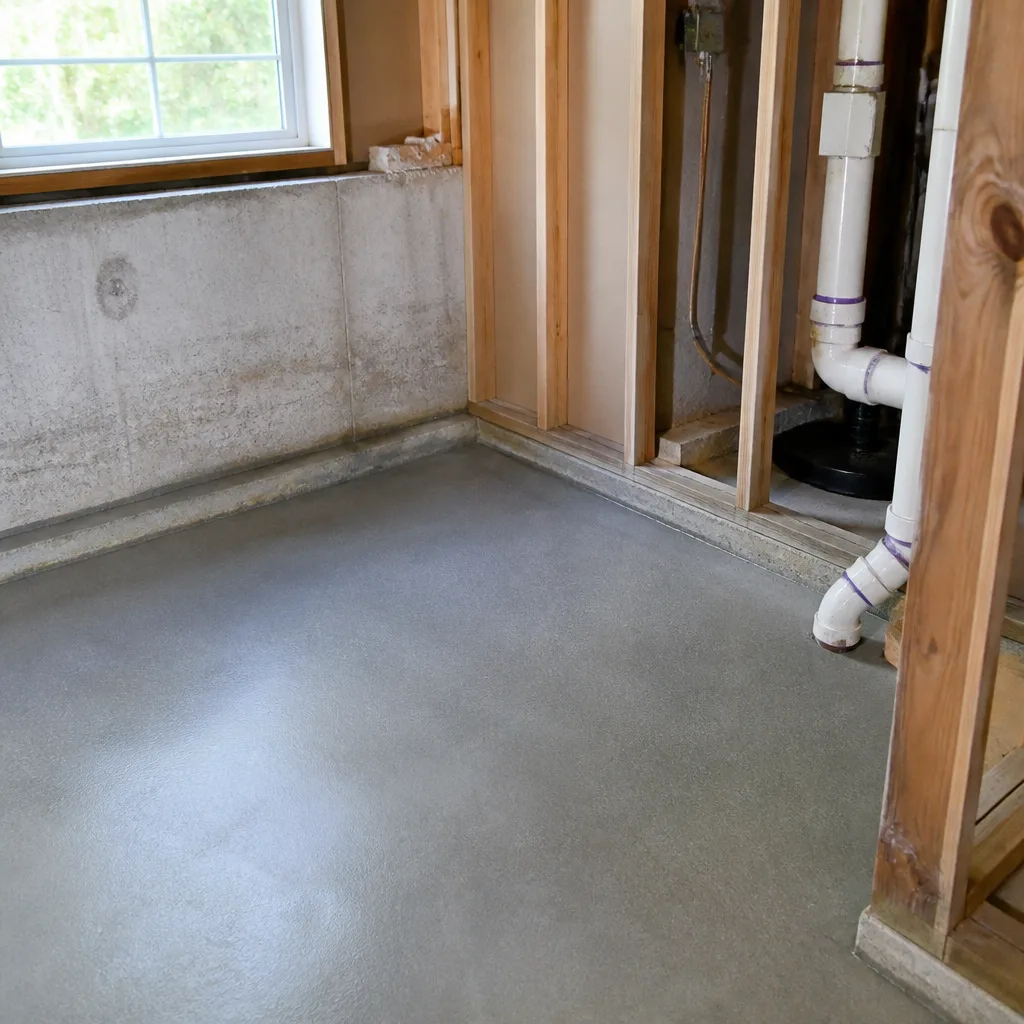
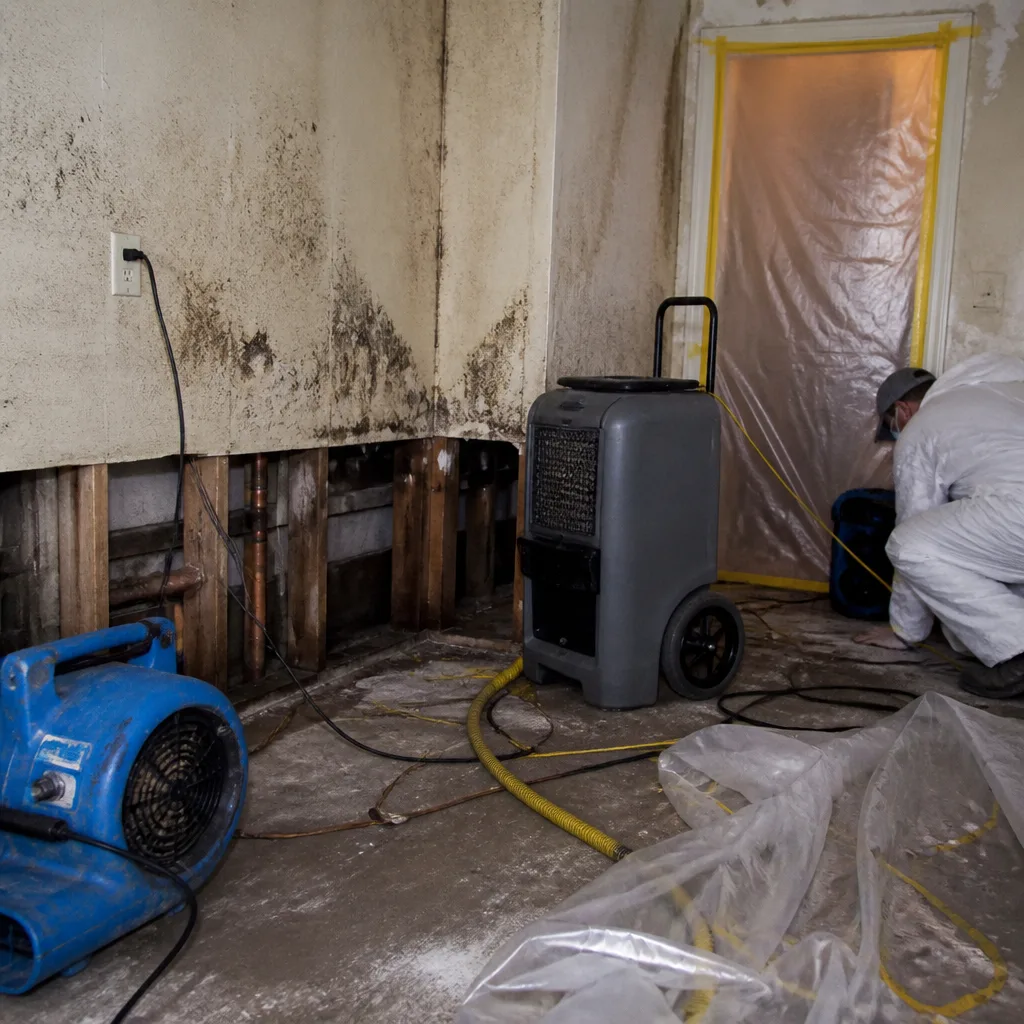 Before
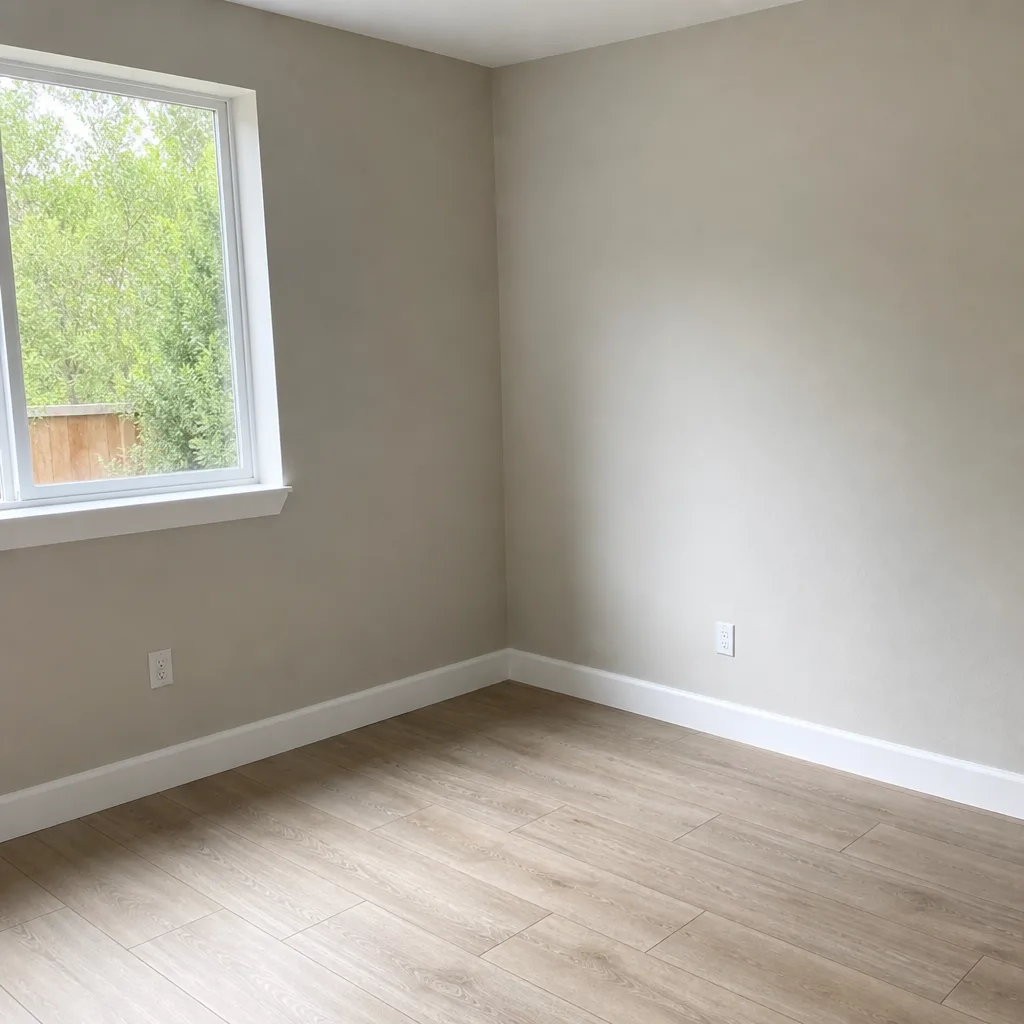 After
After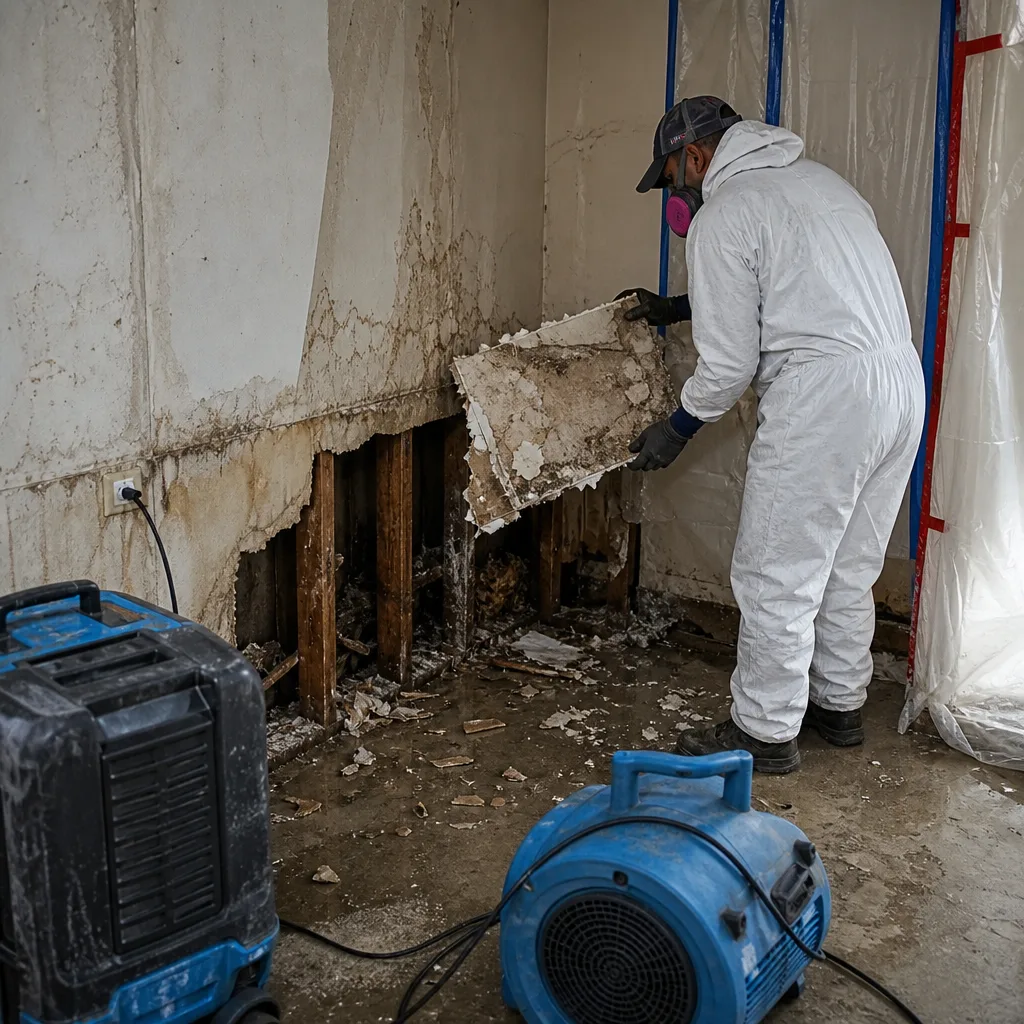 Before
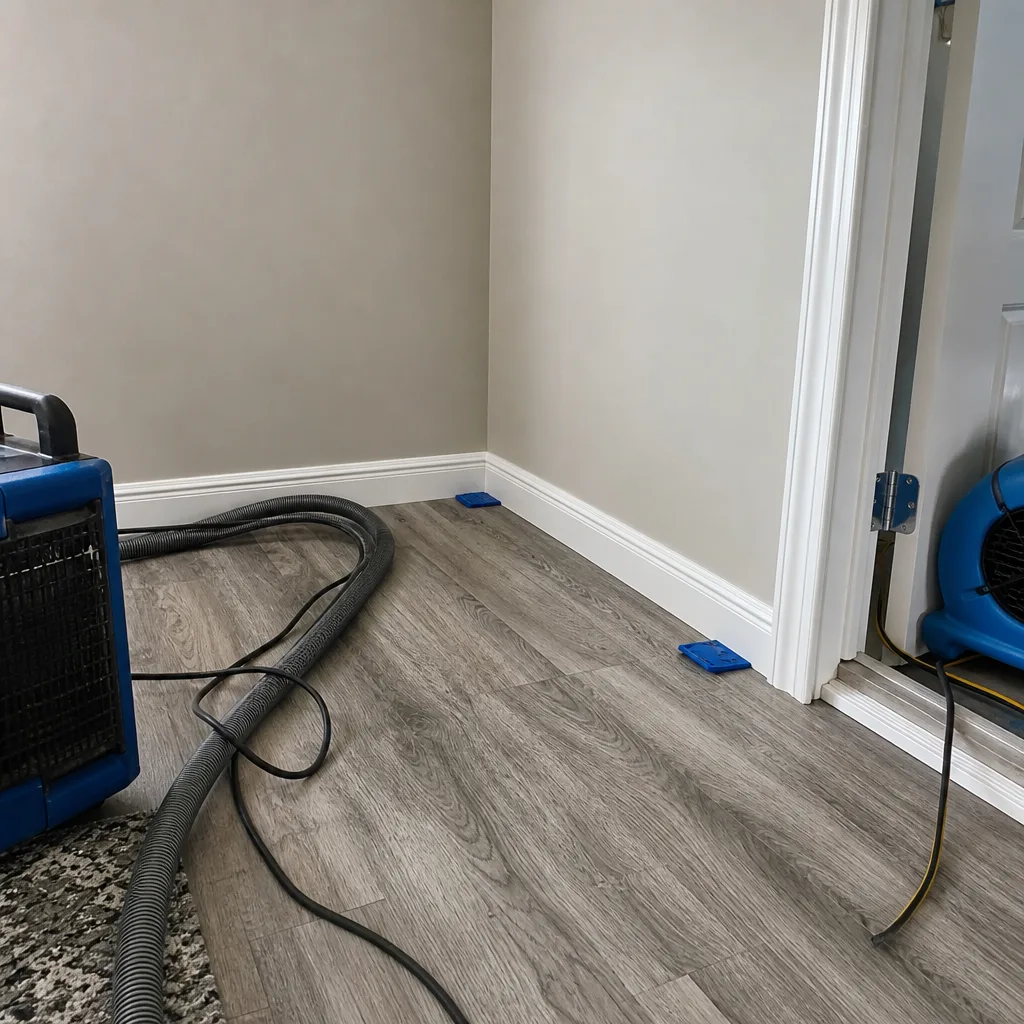 After
After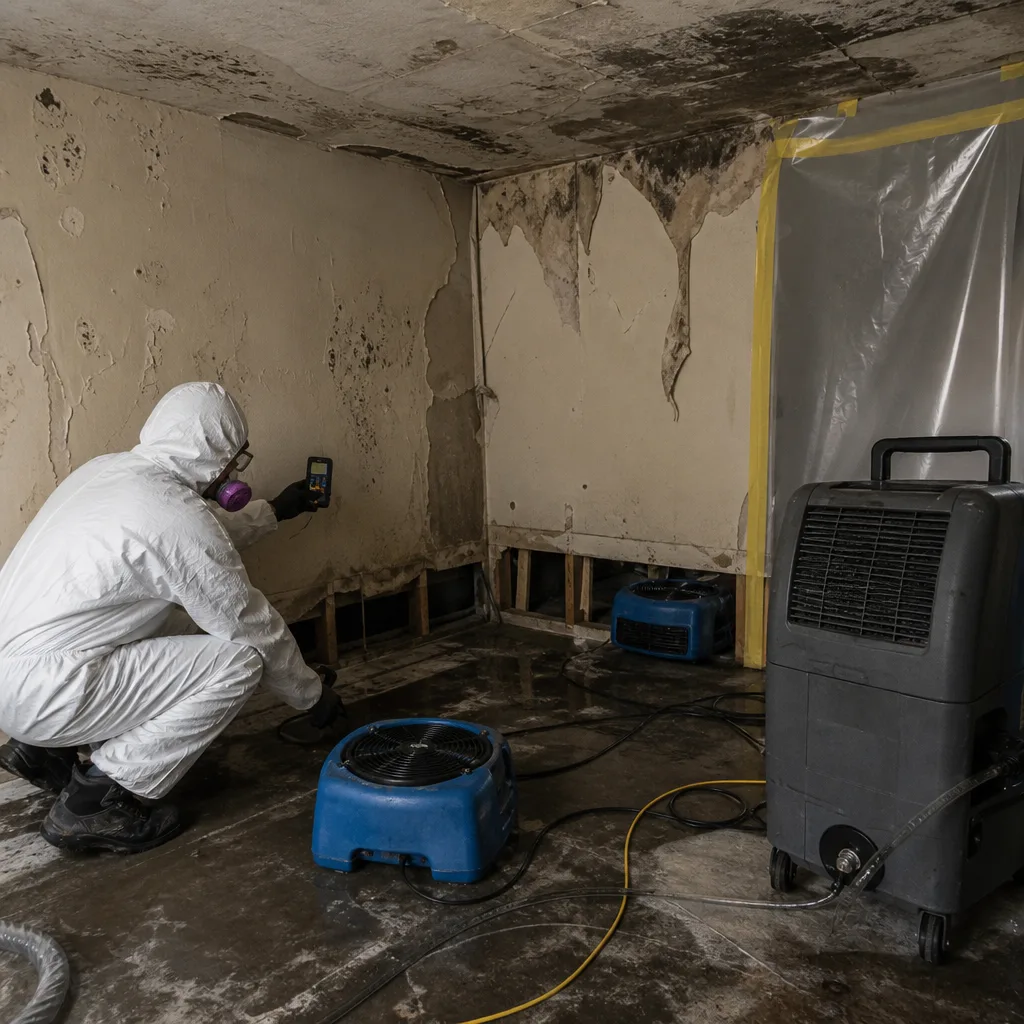 Before
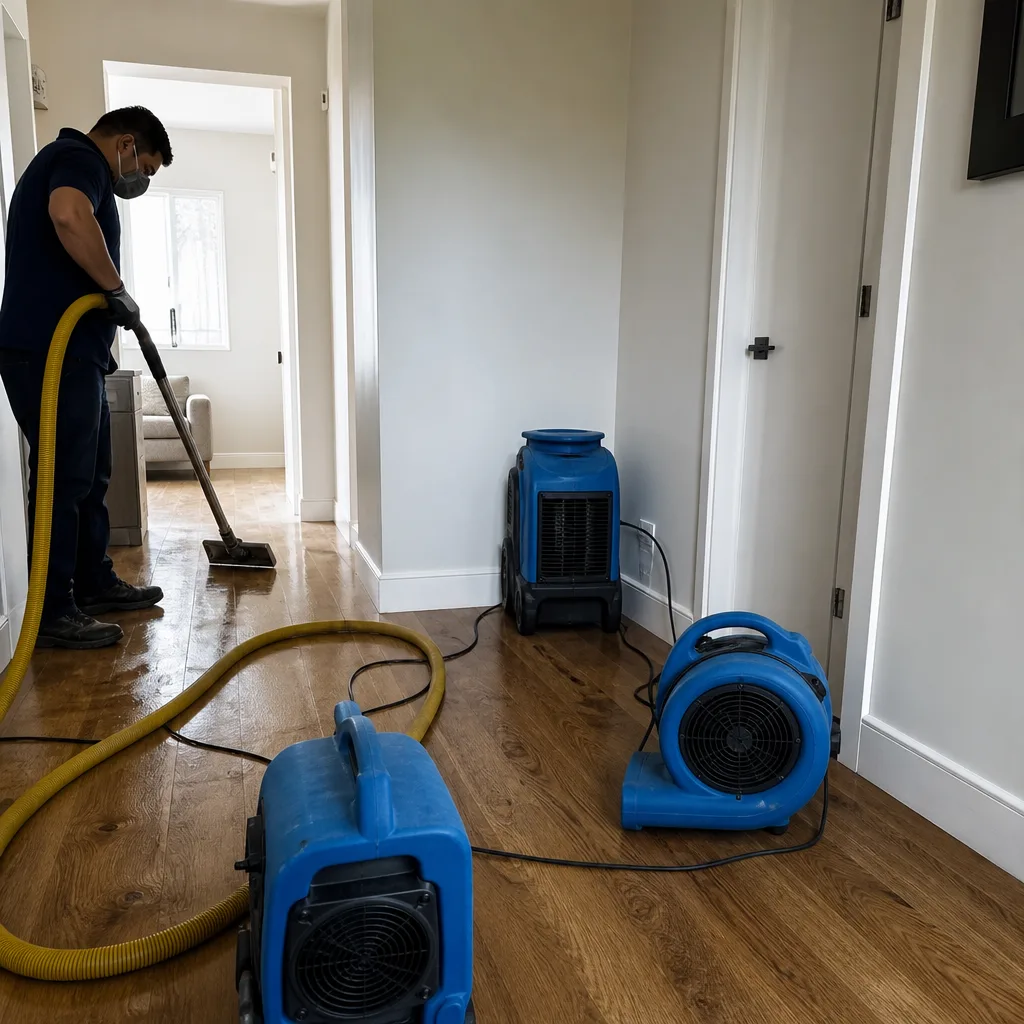 After
AfterThe Complete Guide to Damage Restoration in Santa Clarita
A restoration crew can leave your Santa Clarita home looking spotless and still produce a claim that your insurer rejects. In our experience reviewing competitor files for second opinions, the work itself is rarely the problem. The failure is in the paperwork: drying logs with gaps, moisture readings taken at inconsistent intervals, or scopes that describe what was done without proving why it was necessary. An insurance re-inspector doesn’t walk through your living room to admire the new drywall. They audit the documentation chain that connects the first moisture reading to the final clearance certificate. If that chain has a broken link, the homeowner pays the difference. This guide and our more guides & resources show you exactly what a complete, defensible restoration looks like on paper, so you can hold any contractor to a standard that protects your claim.
Quick Answer
Damage restoration in Santa Clarita is the complete process of returning a property to its pre-loss condition after water, fire, mold, storm, or biohazard damage, documented through written scopes, daily drying logs, photo records, and clearance testing that satisfies insurer re-inspection. A properly executed restoration in this market typically runs 3-14 days for mitigation alone, with rebuild timelines extending based on permit requirements and material availability. See our guide to Damage Restoration Permits, Codes & Inspections in CA: What You Need to Know for details. The critical difference between a successful claim and a disputed one is not the quality of the visible repair but the completeness of the documentation produced at each stage.
Table of Contents
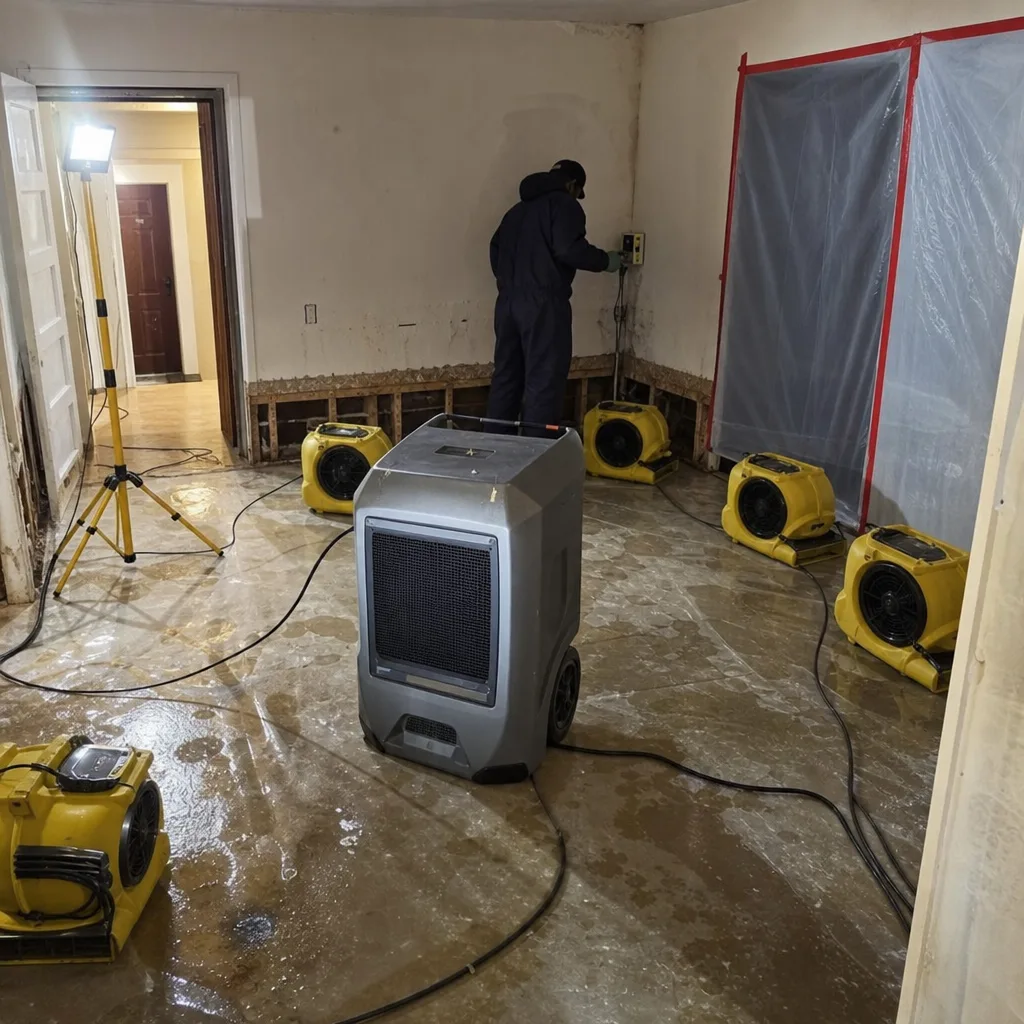
- What Defensible Restoration Looks Like on Paper
- The Six-Stage Sequence: What Skipping a Step Costs
- How Santa Clarita’s Inland Heat Changes Drying Math
- Clearance Thresholds: The Exact Numbers Before Rebuild
- Anatomy of a Compliant Drying Log
- The One-Page Homeowner Checklist for Day One
- Common Mistakes to Avoid
- When to Call a Professional
- Frequently Asked Questions
 Before
 After
AfterWhat Defensible Restoration Looks Like on Paper
Most homeowners in Santa Clarita evaluate a restoration contractor the way they’d evaluate a remodeler: they look at the finished surface. But restoration is fundamentally an insurance transaction, and insurance transactions run on documentation. A defensible restoration file contains five documents, each with a specific purpose and each inspectable by a third party.
The written scope. This is the foundational document, produced before any equipment is deployed or any material is removed. It identifies the loss category (Category 1, 2, or 3 water; Class 1-4 damage), lists affected materials by room and square footage, specifies the drying plan including equipment type and count, and states the price. Haven Standard, Clause 1 requires this document to be signed before work begins. No scope, no work. The scope is what prevents the “we found more damage” conversation that doubles your bill after the crew is already inside.
The photo record. Every visit, every angle, every material condition. Not a phone snapshot of the wet carpet. A systematic record: wide shots establishing room context, close shots of moisture meter readings with the reading visible in frame, shots of equipment placement with serial numbers legible, and shots of any material that is removed. These photos are dated, often with a timestamp from a documentation app, and they are delivered to the homeowner as a standard deliverable, not held hostage for payment.
The daily drying log. This is where most competitor files fall apart. A proper log records psychrometric data (temperature, relative humidity, specific humidity, dew point) at consistent intervals, moisture content readings for each affected material, equipment serial numbers and runtime hours, and any adjustments to the drying plan with the technician’s rationale. We’ll break this down in detail below.
The clearance documentation. Before rebuild begins, affected materials must demonstrate moisture content at or below established dry standards for that material type in that geographic region. This isn’t a technician’s verbal “looks good.” It’s a written record of meter readings, often with third-party lab verification for mold or contamination.
The warranty and completion certificate. Under The Haven Standard, this includes the 365-Day Done Right Promise, a signed statement that all work was performed to IICRC and applicable RIA standards, and a final photo record showing completed conditions.
We’ve reviewed competitor estimates where the entire “documentation” consisted of a one-page invoice with a line item for “dry out.” That file would not survive a re-inspection. The homeowner would be left negotiating with their insurer alone, or paying out of pocket.
The Six-Stage Sequence: What Skipping a Step Costs
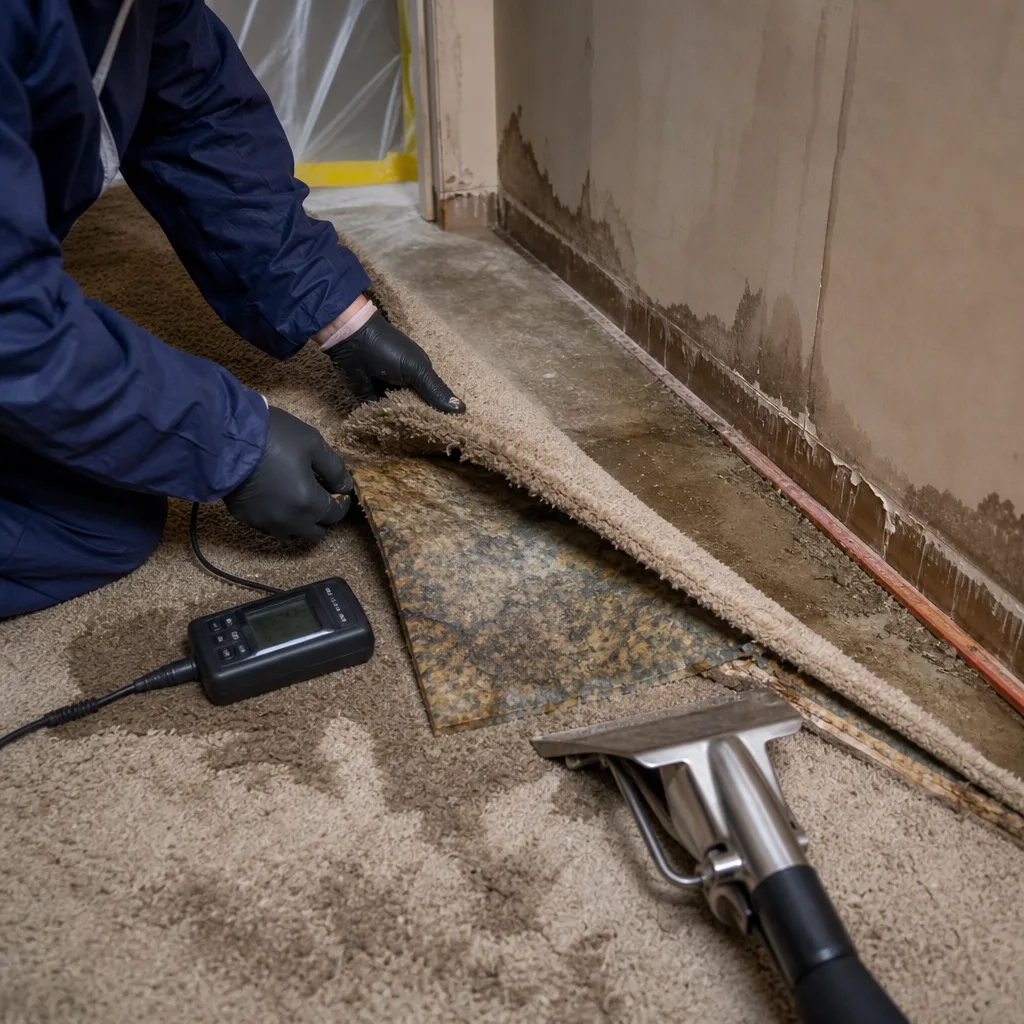
Restoration is not a single service. It’s a sequence of distinct phases, each with its own documentation requirements and each producing deliverables that the next phase depends on. Skip a stage, or produce incomplete documentation at any stage, and the claim develops a weakness that an adjuster or re-inspector will find.
- Assessment and moisture mapping. A technician uses thermal imaging and pinless moisture meters to identify the full extent of water migration, not just the visible wet spot. In Santa Clarita’s older neighborhoods like Newhall and Canyon Country, we’ve seen water travel 30 feet along slab joints before surfacing. The assessment produces a moisture map, a sketch or digital overlay showing readings by location. Without this map, the scope underestimates affected area, and the insurer later disputes equipment days.
- Written scope and pricing. Based on the moisture map, the contractor produces the written scope described above. This is the document that locks the price. Haven Standard, Clause 1: no work starts without it. In our experience, the most common source of homeowner complaints is scope-creep pricing, where a verbal estimate doubles once demolition exposes “unexpected” conditions. A written scope with defined contingencies prevents this.
- Mitigation: extraction, demolition, and drying. This is the visible work: water extraction, removal of unsalvageable materials, deployment of drying equipment. But the work itself is only half the deliverable. The other half is the daily drying log, which we’ll examine in detail in the next section. Mitigation continues until materials reach clearance thresholds, not until the contractor’s schedule needs the equipment elsewhere.
- Monitoring and adjustment. Drying is not “set it and forget it.” Psychrometric conditions change daily. A technician must visit, record readings, and adjust equipment configuration, air movement patterns, or dehumidifier capacity based on the data. In Santa Clarita, where daytime temperatures can swing 40 degrees seasonally, this monitoring is especially critical. A drying plan that worked in January may be insufficient in August.
- Clearance testing and documentation. Before any rebuild begins, affected materials must pass documented clearance. This means moisture content readings at or below the dry standard for that material, in that region, at that time of year. For structural wood in Southern California, this typically means 12-15% moisture content. For drywall, 0.5% above the reading from an unaffected control sample in the same structure. Skip clearance, and you risk trapping moisture behind new finishes, which produces mold, which produces a second claim, which your insurer may deny as resulting from incomplete initial work.
- Reconstruction and final documentation. Rebuild is scoped separately from mitigation, priced in writing, and scheduled like any construction project. It is not an emergency service. The final deliverable is the completion certificate, photo record, and signed warranty. This closes the documentation loop that opened with the initial moisture map.
We’ve seen homeowners in Valencia and Saugus skip from mitigation to rebuild because a contractor was “ready to start” and the homeowner wanted their kitchen back, ignoring Damage Restoration Warning Signs: A Santa Clarita Homeowner’s Reference Guide. Six months later, mold behind the new cabinets required full demolition again. The original contractor was out of business. The insurer denied the second claim. The documentation gap at stage five became a $40,000 out-of-pocket loss.
How Santa Clarita’s Inland Heat Changes Drying Math
Santa Clarita sits in a high desert transition zone, roughly 35 miles inland from the Pacific. Summer daytime temperatures routinely exceed 95°F, with relative humidity dropping below 20%. Winter nights can fall to the high 30s, with humidity spikes during rain events. This climate profile affects evaporation rates in ways that national IICRC drying tables, calibrated to more temperate regions, do not fully capture.
Psychrometrics is the study of air and moisture relationships. The key metric for drying is vapor pressure differential, the difference between the vapor pressure in the wet material and the vapor pressure in the surrounding air. A larger differential means faster evaporation. Santa Clarita’s hot, dry summers create aggressive differentials, which can accelerate surface drying while masking deeper moisture pockets. A technician who relies on surface feel, or who takes readings only at the material face, may conclude drying is complete when the core remains wet.
We’ve documented this specifically in Santa Clarita slab-on-grade construction common in Stevenson Ranch and Westridge. Summer heat drives rapid surface evaporation from concrete, but slab moisture can remain elevated for weeks if the vapor barrier was compromised during original construction. Our drying logs from these jobs show surface concrete at 70-75% relative humidity while core readings at 2-inch depth remain at 90%+. Without deep probing meters and adjusted dehumidification capacity, this condition goes undetected.
The practical implication: standard IICRC drying timelines, which assume moderate climate conditions, may underestimate equipment days for Santa Clarita jobs in summer or winter extremes. A contractor using generic timelines from a national franchise manual may pull equipment too early, leaving moisture that compromises the claim and the structure. Our approach is to calibrate drying plans to local psychrometric data, document the calibration in the written scope, and adjust based on daily log readings, not calendar days.
Equipment selection matters here. In high-temperature, low-humidity conditions, standard refrigerant dehumidifiers lose efficiency above 90°F. We deploy low-grain refrigerant (LGR) units from Phoenix and Dri-Eaz, or desiccant systems when conditions warrant, to maintain extraction capacity. The equipment serial numbers, model specifications, and runtime hours are recorded in the drying log, so an insurer can verify that appropriate technology was deployed for the conditions.
Clearance Thresholds: The Exact Numbers Before Rebuild
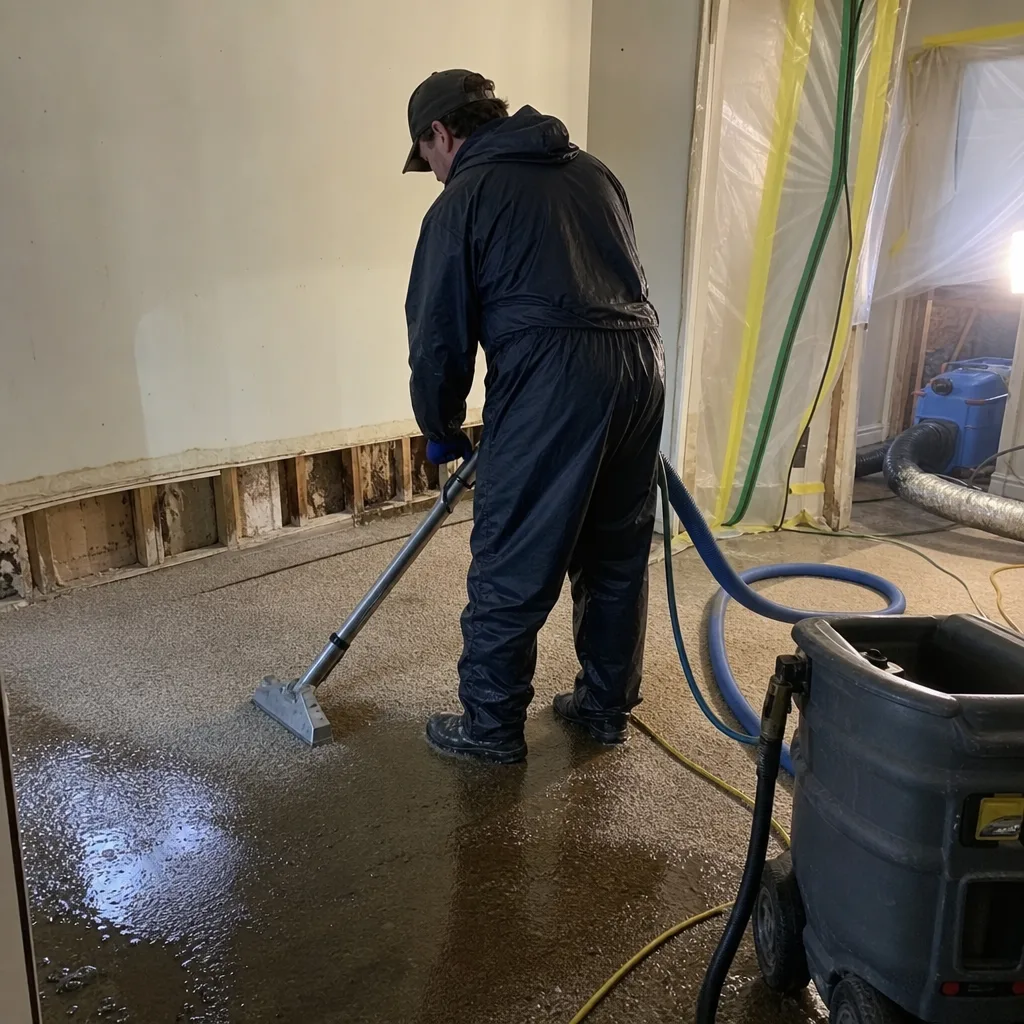
“Dry” is not a subjective condition. For restoration documentation to survive re-inspection, it must demonstrate that materials reached specific moisture content thresholds, measured with calibrated instruments, recorded with date-time stamps, and compared to established baselines.
Here are the thresholds we document before authorizing rebuild on any Santa Clarita job:
- Structural wood (framing, subfloor, joists): 12-15% moisture content, measured with a pin-type meter at multiple depths. Readings must be within 2% of an unaffected control sample from the same structure, or within the regional equilibrium moisture content (EMC) range for Los Angeles County, which is 10-13% annually.
- Drywall (gypsum wallboard): 0.5% or less above the reading from an unaffected control sample in the same structure, measured with a pinless meter or a pin meter with insulated pins to avoid false readings from core material. Surface readings alone are insufficient; the paper facing can read dry while the gypsum core remains elevated.
- Concrete slab: 75% relative humidity or below at 40% slab depth, per ASTM F2170, or 3.0 lbs/1000 sq ft/24 hours or below per ASTM F1869. In Santa Clarita’s inland climate, we prefer RH testing for slabs because surface evaporation rates can distort calcium chloride results.
- Carpet and pad: Salvageable only in Category 1 water losses with immediate extraction. If retained, must reach moisture content within 2% of original manufacturing specification, documented with a moisture sensor and a thermo-hygrometer reading of the subfloor beneath.
- Cavity and hidden spaces: Must demonstrate equivalent readings to exposed surfaces. We use Injectidry systems and wall cavity drying attachments with directed airflow, and we take readings through minimal access holes to verify that interior stud bays have reached equilibrium.
These thresholds are not our invention. They derive from IICRC S500 (water damage), S520 (mold remediation), and regional building science data. What distinguishes a defensible file is not knowing the numbers but documenting that they were met, with what instrument, on what date, at what time, and by which technician. A clearance certificate without this specificity is a piece of paper, not proof.
In Santa Clarita specifically, we adjust the EMC baseline seasonally. During Santa Ana wind events, which can drop indoor humidity to 10% for days, wood may read below standard EMC. We document the atmospheric condition and compare to historical data for that neighborhood, so an insurer doesn’t question artificially low readings. During winter rain patterns, when humidity spikes, we allow additional drying days rather than force a premature clearance.
Anatomy of a Compliant Drying Log
The daily drying log is the most audited document in any restoration claim. It’s also the most commonly deficient. We’ve reviewed competitor logs that consist of a technician’s handwritten note: “Checked house, drying good.” That file fails re-inspection. Here’s what a compliant log contains, and why each element matters.
Header information: Job address, claim number (if assigned), date, technician name and license number, and weather conditions. Weather matters because exterior conditions affect interior psychrometrics, especially in Santa Clarita where daily temperature swings exceed 30°F in shoulder seasons.
Equipment inventory: Every unit on site, identified by manufacturer, model, and serial number. “Dehumidifier” is insufficient. “Phoenix 200 HT, S/N 456789” is compliant. Runtime hours from the unit’s hour meter, recorded at each visit. This allows an insurer to verify that equipment was actually running, not just present.
Psychrometric readings: Temperature (°F), relative humidity (%), specific humidity (grains/lb), dew point (°F), and vapor pressure (inches Hg) recorded at a consistent location, typically the geometric center of the affected area. Readings taken at different locations on different days create data that cannot be trended.
Moisture content readings: For each affected material, by room, with the meter type and calibration date noted. Pinless meters for broad screening, pin meters for verification at depth. Readings mapped to the original moisture map, so progression is visible. A reading without location context is meaningless.
Drying plan adjustments: Any change to equipment count, position, or type, with the technician’s rationale. “Added second air mover in kitchen due to elevated RH readings behind refrigerator cavity.” This demonstrates professional judgment and protects against claims of over-equipment.
Material removal and disposal: What was removed, when, and why. “Removed 12 sq ft drywall at north kitchen wall, 4 ft high, due to Category 3 contamination and structural saturation above 30% MC.” This connects demolition decisions to documented conditions.
Technician signature and time: Not a stamp, not a printed name. A signature with time in and time out.
We produce these logs daily, deliver them to the homeowner as part of our standard service, and archive them for seven years. An insurer can request them at any time, and they will support the invoice they accompany. A handwritten note on a clipboard cannot do this.
For water damage restoration in Santa Clarita, this documentation is what separates a payable claim from a disputed one. Our equipment from Dri-Eaz, Phoenix, and Injectidry generates data that populates these logs automatically in many cases, reducing transcription error and producing timestamped records that satisfy even the most rigorous adjuster audit.
The One-Page Homeowner Checklist for Day One
Before you sign with any restoration contractor in Santa Clarita, verify that they can produce each item on this list. If they cannot, or if they treat any item as unusual, you are not dealing with a documentation-first company. This checklist is derived from the files that survive re-inspection and the files that do not.
- Written scope before work begins. Ask to see a sample scope from a previous job (with identifying information redacted). It should identify loss category and class, list affected materials by room with square footage, specify equipment type and count, and state the total price. Haven Standard, Clause 1. No exceptions.
- Photo documentation commitment. Ask how photos are delivered and when. The answer should be: a digital album, dated, with every visit represented, delivered as a standard part of service. Not available for an extra fee. Not “we’ll take some if needed.”
- Daily drying log sample. Ask what the log contains. If the answer is “we check the equipment,” ask for specifics. The correct answer includes psychrometric data, moisture content readings by material and location, equipment serial numbers, and technician signature.
- Clearance standard in writing. Ask what moisture content threshold must be met before rebuild. The answer should be a specific number or range, referenced to IICRC standard or regional EMC, not “until it’s dry” or “our technician will tell you.”
- Technician verification. Ask if technicians are background-checked, licensed, and identified by name before arrival. The Haven Standard requires this. You should know who is entering your home, and their license should be verifiable with the state.
- Warranty documentation. Ask for the warranty in writing before work begins. It should specify duration, coverage, and the process for invoking it. A verbal “we guarantee our work” is not a warranty.
- Insurance coordination experience. Ask how the company coordinates with adjusters. The answer should include: direct adjuster communication, photo documentation formatted for claim submission, and familiarity with your insurer’s documentation requirements. Not “we’ll give you the bill and you deal with it.”
- Equipment specification. Ask what drying equipment is used and why. The answer should include specific manufacturers (we use Dri-Eaz, Phoenix, XPOWER, B-Air, and Injectidry depending on the application) and the rationale for selection based on your specific conditions.
We’ve had homeowners in Sand Canyon and Bouquet Canyon use this checklist to evaluate multiple contractors. The ones who pass it consistently produce claims that pay without dispute. The ones who don’t often leave the homeowner holding an invoice that their insurer questions for months.
Common Mistakes to Avoid
- Accepting a verbal estimate for emergency work. In Santa Clarita’s competitive restoration market, some contractors lead with speed and emotion: “We can start now, just sign here.” The signature authorizes work without a written scope, and the final bill often exceeds the verbal figure by 50-200%. Haven Standard, Clause 1 exists because we’ve seen this pattern repeat since 2011.
- Allowing rebuild before documented clearance. The pressure to return to normal is intense, especially for families with children in Santa Clarita’s school districts. But rebuild over wet materials guarantees future problems. Demand the clearance readings in writing. If a contractor says “it’ll dry behind the wall,” find another contractor.
- Ignoring Santa Clarita’s slab-specific risks. Many homeowners assume concrete is impervious. In reality, Santa Clarita’s expansive soil and occasional slab vapor barrier failures create conditions where slab moisture remains elevated for weeks. Surface dryness means nothing without core verification.
- Failing to document pre-existing conditions. Before any work begins, photograph everything: floors, walls, baseboards, personal property. Restoration work is disruptive, and without a baseline record, disputes about what damage existed before the loss versus what the crew caused are impossible to resolve fairly.
- Choosing equipment based on noise or appearance. A loud air mover is not necessarily an effective one. A compact dehumidifier may look unobtrusive but lack the capacity for your job. Ask for the equipment specification and the psychrometric rationale for its selection. Professional-grade equipment from recognized manufacturers (Dri-Eaz, Phoenix, Injectidry) should be standard, not an upgrade.
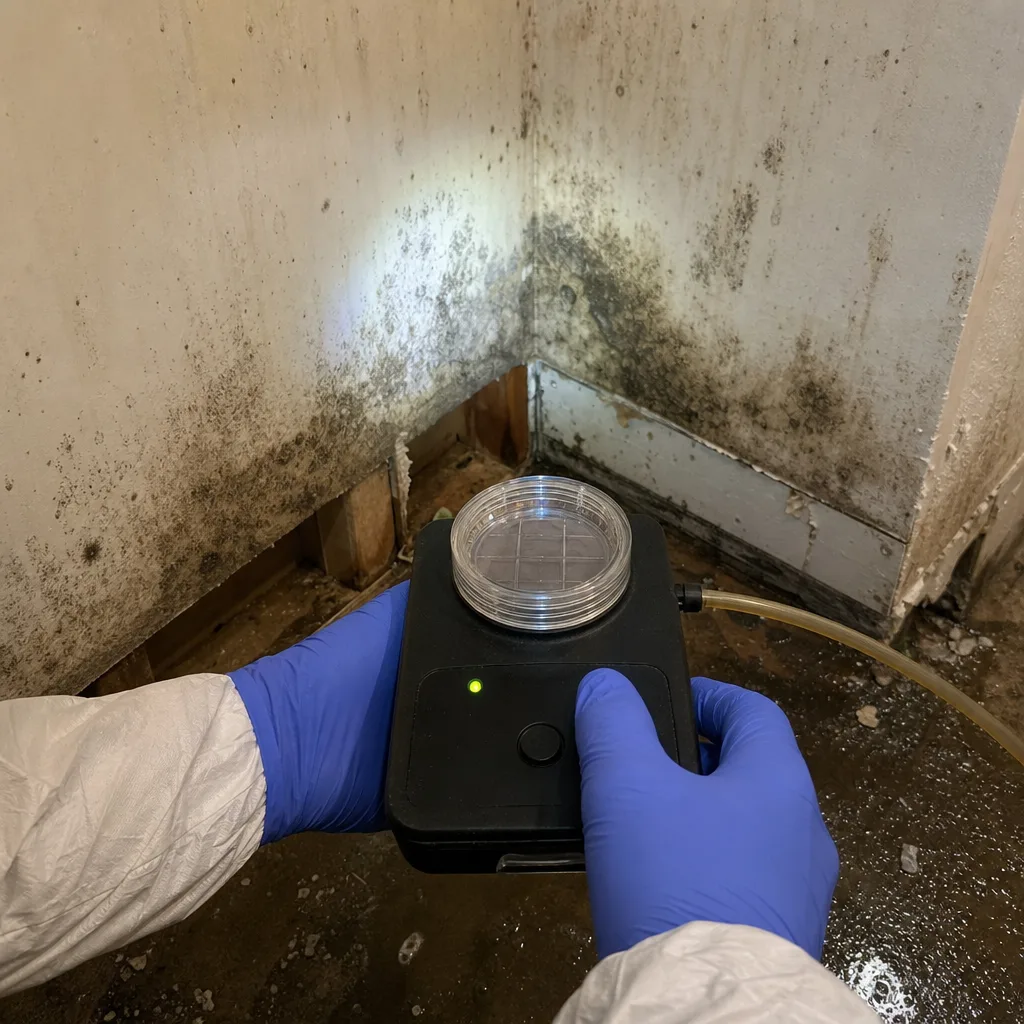
- Neglecting to verify mold clearance after water damage. In Santa Clarita’s warm climate, mold colonization can begin within 48-72 hours of water intrusion. Even when drying is successful, airborne spore testing or ERMI/HERSTMI-2 dust analysis may be necessary for health-sensitive occupants or insurer requirements. This is a separate clearance from moisture content, and it requires its own documentation.
- Assuming all restoration companies document equally. They do not. The gap between a company that produces complete files and one that produces invoices is vast. Use the checklist above. Ask direct questions. The quality of the answer predicts the quality of the file.
When to Call a Professional
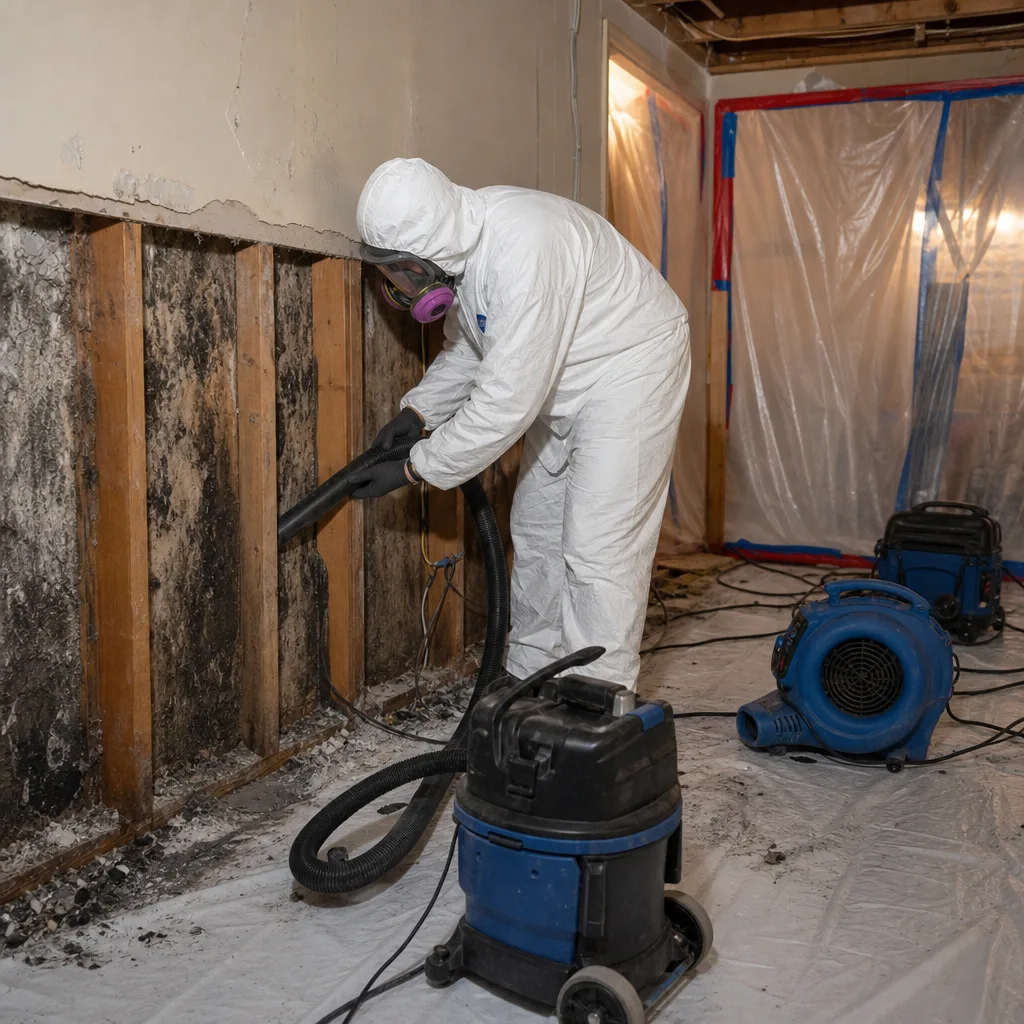
Some damage scenarios permit temporary homeowner action while awaiting professional response. Others require immediate professional intervention due to safety risk, contamination potential, or documentation urgency for insurance purposes.
Call a professional immediately for: Category 2 or 3 water (gray or black water, including any sewage backup); water affecting electrical panels, outlets, or wiring; fire damage of any extent, due to smoke residue toxicity and structural assessment requirements; mold growth covering more than 10 square feet, which exceeds OSHA guidelines for unprotected occupant remediation; any biohazard or crime scene condition; and storm damage with structural compromise, including roof or wall breaches.
For Category 1 water (clean source, no contamination) affecting a small, defined area with no structural or electrical involvement, you may extract standing water and begin air circulation while contacting a professional for assessment. But begin documentation immediately: photos, moisture readings if you have a meter, and notes on timing and source. The first hours determine whether your claim is straightforward or disputed.
DryMark Restoration Santa Clarita offers free estimates in Santa Clarita and across the Santa Clarita Valley. For emergency response or a free second opinion on any competitor’s written estimate, call (747) 294-2725. Live person answers every call, 24 hours a day, 7 days a week. No voicemail on emergency lines.
Frequently Asked Questions
Water damage mitigation in Santa Clarita typically ranges from $1,200 for a contained Class 1 loss affecting a single room to $8,500+ for a Class 3 or 4 loss with extensive demolition and multi-day drying. For detailed pricing factors, see our Damage Restoration Cost Breakdown: The Santa Clarita Homeowner’s Reference for 2026. Fire and smoke restoration generally starts at $3,500 for light soot and odor treatment and can exceed $25,000 for structural rebuild after significant fire damage. Mold remediation runs $15-$30 per square foot of affected area, with containment and air filtration adding to base costs. Every job is quoted in writing before work begins under Haven Standard, Clause 1. Call (747) 294-2725 for an exact quote - estimates are free.
Most Santa Clarita homeowners policies cover sudden and accidental water damage, fire damage, and storm damage, subject to your deductible and policy limits. Coverage disputes arise most often from documentation gaps, not from the damage itself. A complete file - written scope, daily drying logs, photo record, and clearance documentation - produces payment at policy limits. An incomplete file produces delays, partial payment, or denial. We coordinate directly with adjusters and provide documentation formatted for claim submission. Call (747) 294-2725 to discuss your specific policy and loss.
For emergency water, fire, storm, sewage, and biohazard situations, DryMark Restoration Santa Clarita maintains live phone coverage and emergency dispatch. Response time depends on current call volume, your location within the Santa Clarita Valley, and traffic conditions on I-5 or SR-14. We do not promise specific arrival times because we will not make commitments we cannot guarantee. We do commit that a live person will answer your call, gather essential information, and dispatch according to priority and proximity. For reconstruction and non-emergency rebuild services, work is scheduled after written scope and pricing, typically within 3-10 business days depending on permit requirements and material availability.
Visible mold on a hard surface, in an area smaller than 10 square feet, with no underlying moisture problem, can sometimes be addressed with appropriate cleaning and moisture control. But mold on porous materials (drywall, insulation, carpet, wood), mold resulting from water damage, or any mold growth accompanied by musty odor or occupant health symptoms requires professional remediation per IICRC S520. In Santa Clarita’s warm climate, surface cleaning without addressing hidden colonization and moisture source virtually guarantees recurrence. We offer free assessment and will specify exactly what is required, with a written scope before any work begins.
Mitigation is the emergency work to stop ongoing damage, remove contaminated materials, and dry affected structures to prevent secondary damage. It is time-sensitive, equipment-intensive, and documented with daily drying logs. Reconstruction is the rebuild of removed materials and restoration of finished surfaces. It is construction work, scoped and priced separately, scheduled in advance, and not subject to emergency response timelines. Your insurer may assign different adjusters or apply different deductibles to each phase. We document each phase separately to support clear claim handling.
We do, if you authorize us. Our documentation - photo records, drying logs, written scopes, and clearance certificates - is formatted for direct adjuster submission. We communicate scope, progress, and completion to your adjuster as the work proceeds, which prevents the delays that occur when an adjuster receives a single large invoice with no supporting detail. You remain the policyholder and final decision-maker, but you do not need to become a documentation expert to get your claim paid. This coordination is standard service, not an additional fee.
Bring any competitor’s written estimate to DryMark Restoration Santa Clarita for a free second opinion. We will review the scope for completeness, the pricing for market accuracy in Santa Clarita, and the documentation commitments for defensibility. We’ve identified estimates that understated affected area by 40%, that specified insufficient equipment for the loss class, or that contained no documentation commitments at all. The review is free, with no obligation. Call (747) 294-2725 to schedule.
The Bottom Line
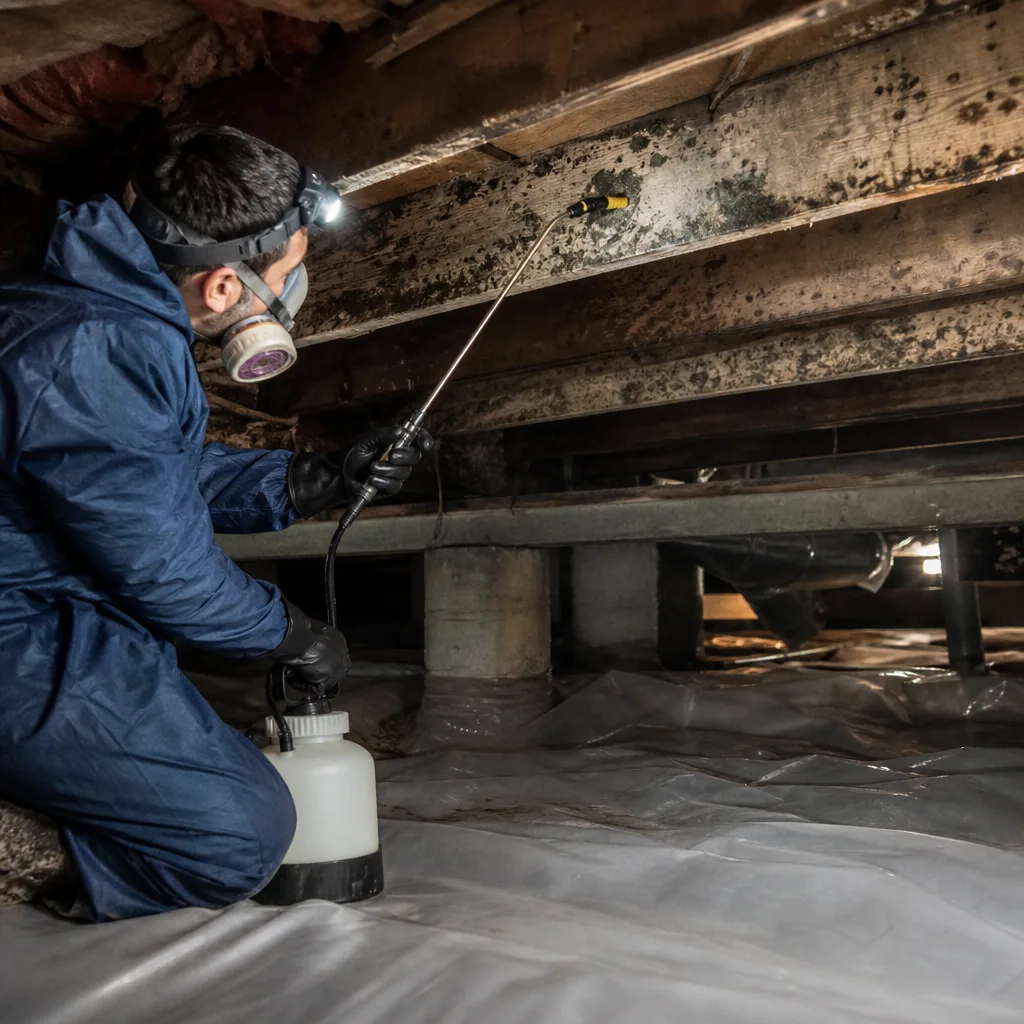
A restoration job in Santa Clarita is only as good as the documentation that accompanies it. The physical work matters, but the physical work is visible and verifiable by inspection. What determines whether your insurer pays, whether your home stays dry, and whether you’re protected if something goes wrong is the paper trail: the written scope signed before work begins, the daily drying log with equipment serial numbers and psychrometric data, the photo record on every visit, the clearance readings at specific thresholds, and the signed warranty with a real address and a real person standing behind it. Use the checklist. Ask the questions. Accept nothing less than documentation you can hold in your hand and submit to any adjuster without revision. That’s what The Haven Standard requires, and that’s what your claim deserves.
Written by Alicia Brennan, Owner at DryMark Restoration Santa Clarita, serving Santa Clarita since 2011.