Free visual inspection and a written scope of work before any mitigation begins - photos, moisture readings, and drying logs go in your claim file
The scope we write is the scope we bill. Anything new gets shown to you, in writing, before we touch it.
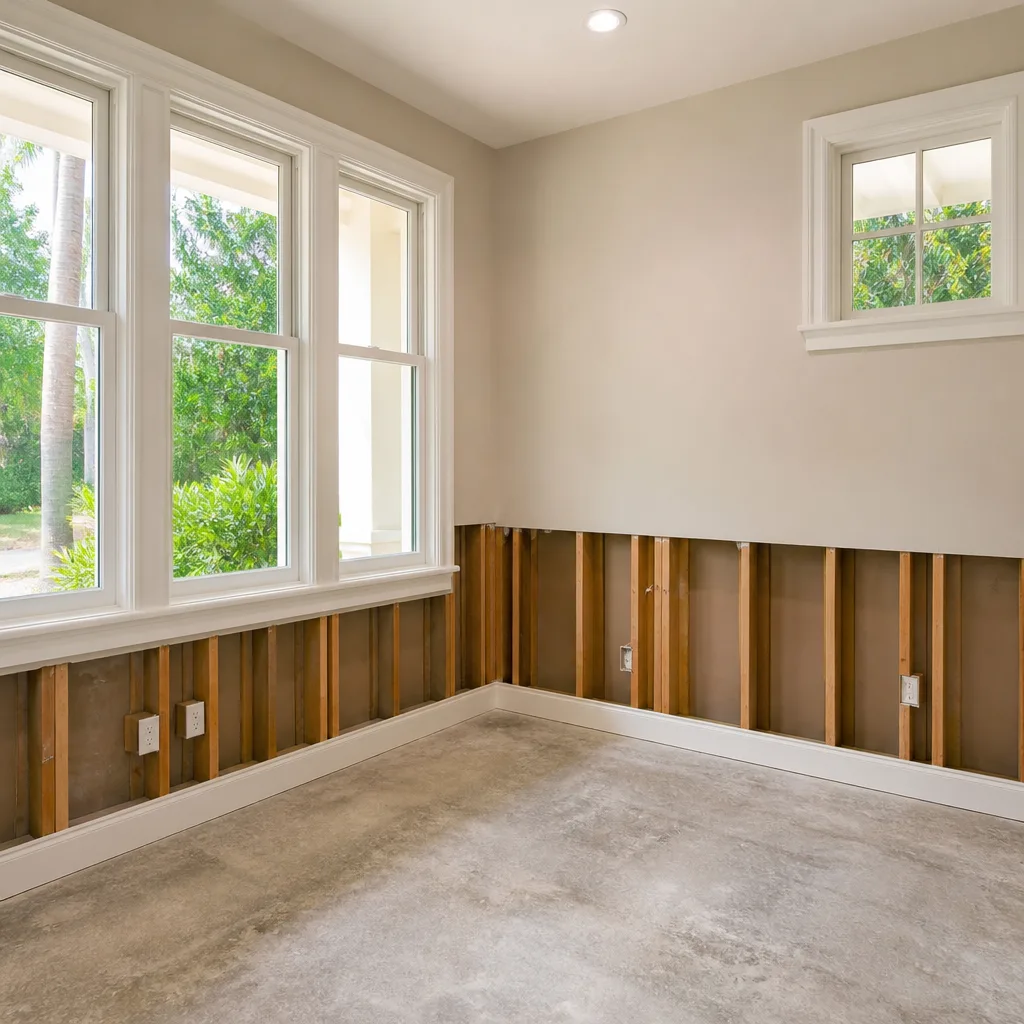
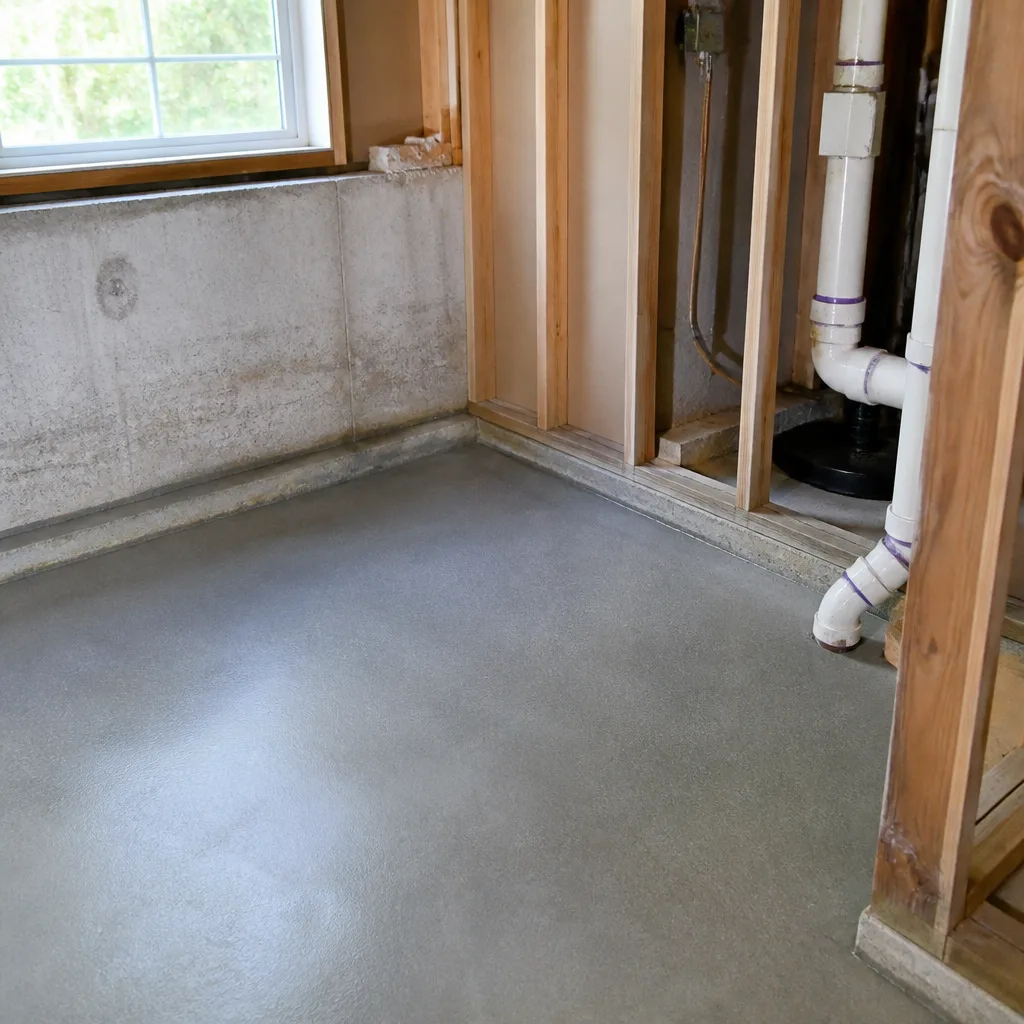
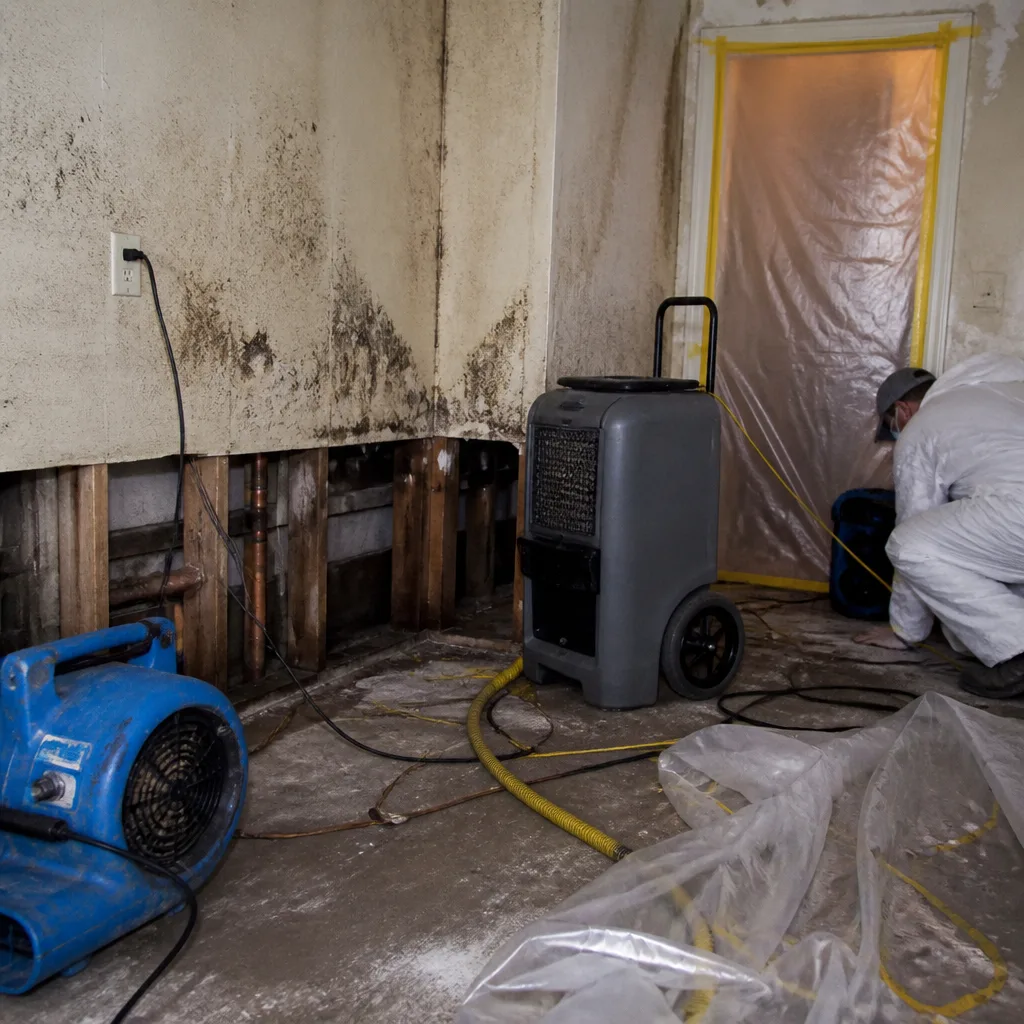 Before
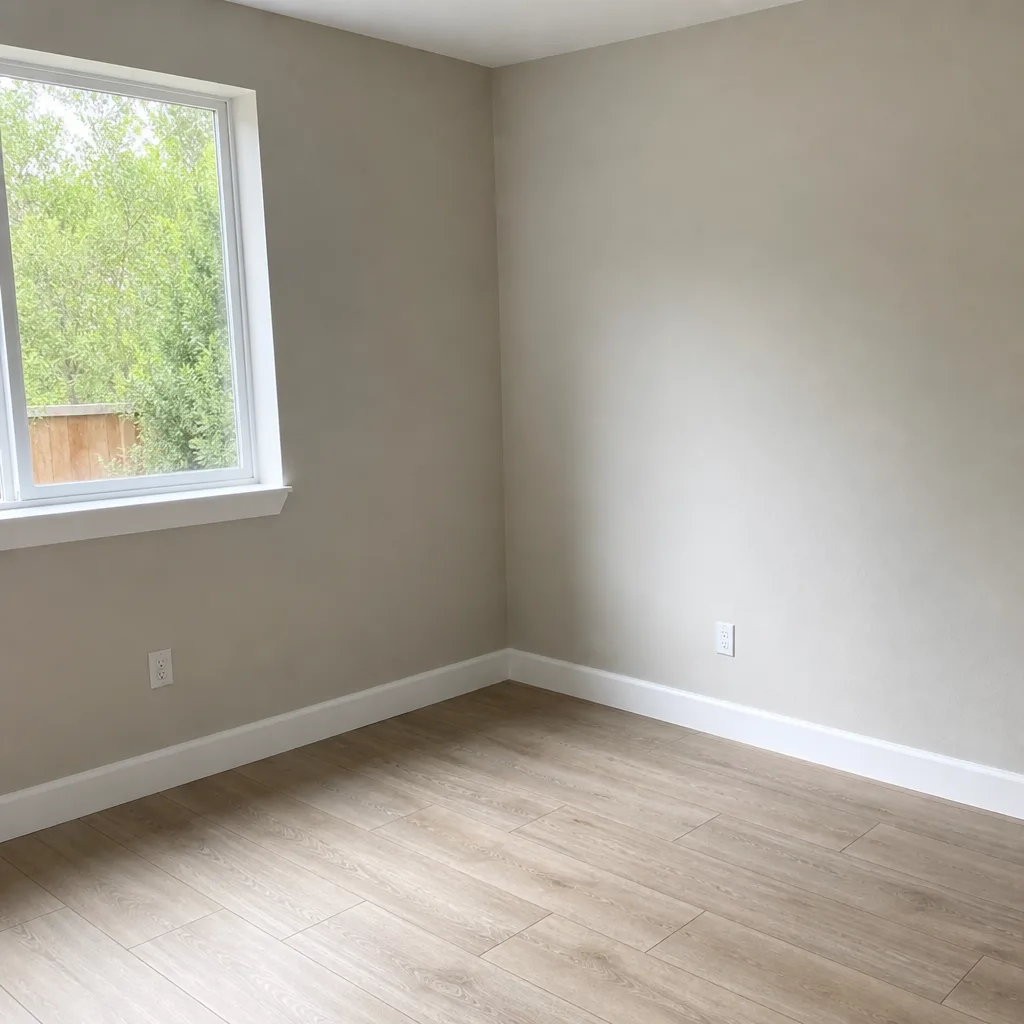 After
After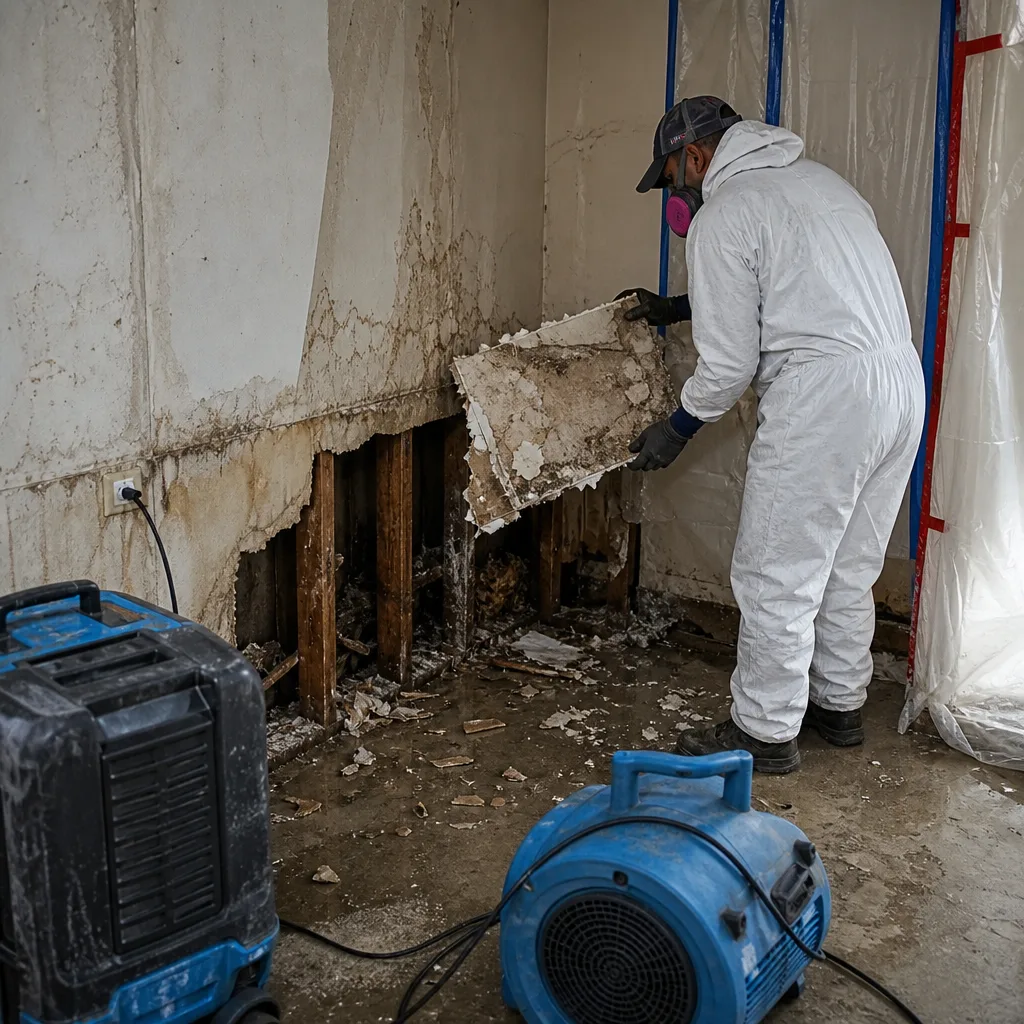 Before
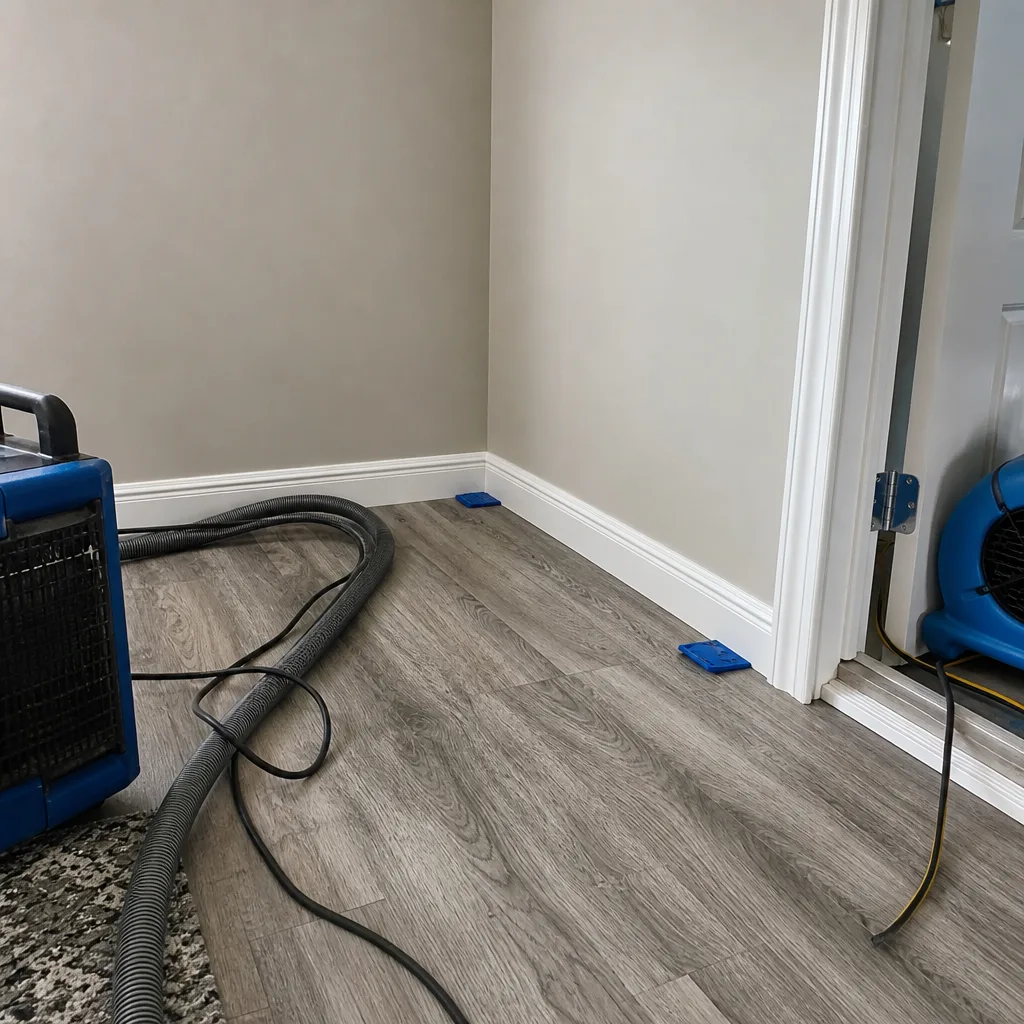 After
After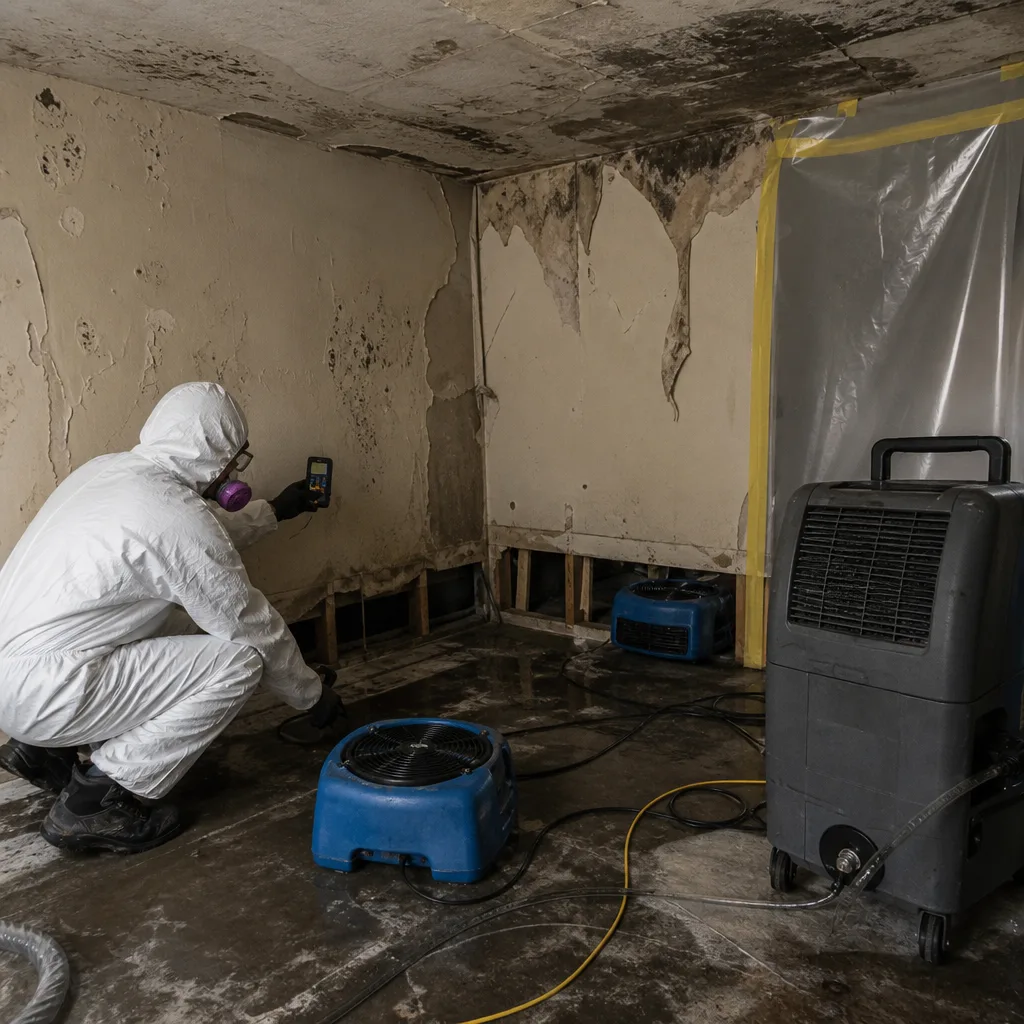 Before
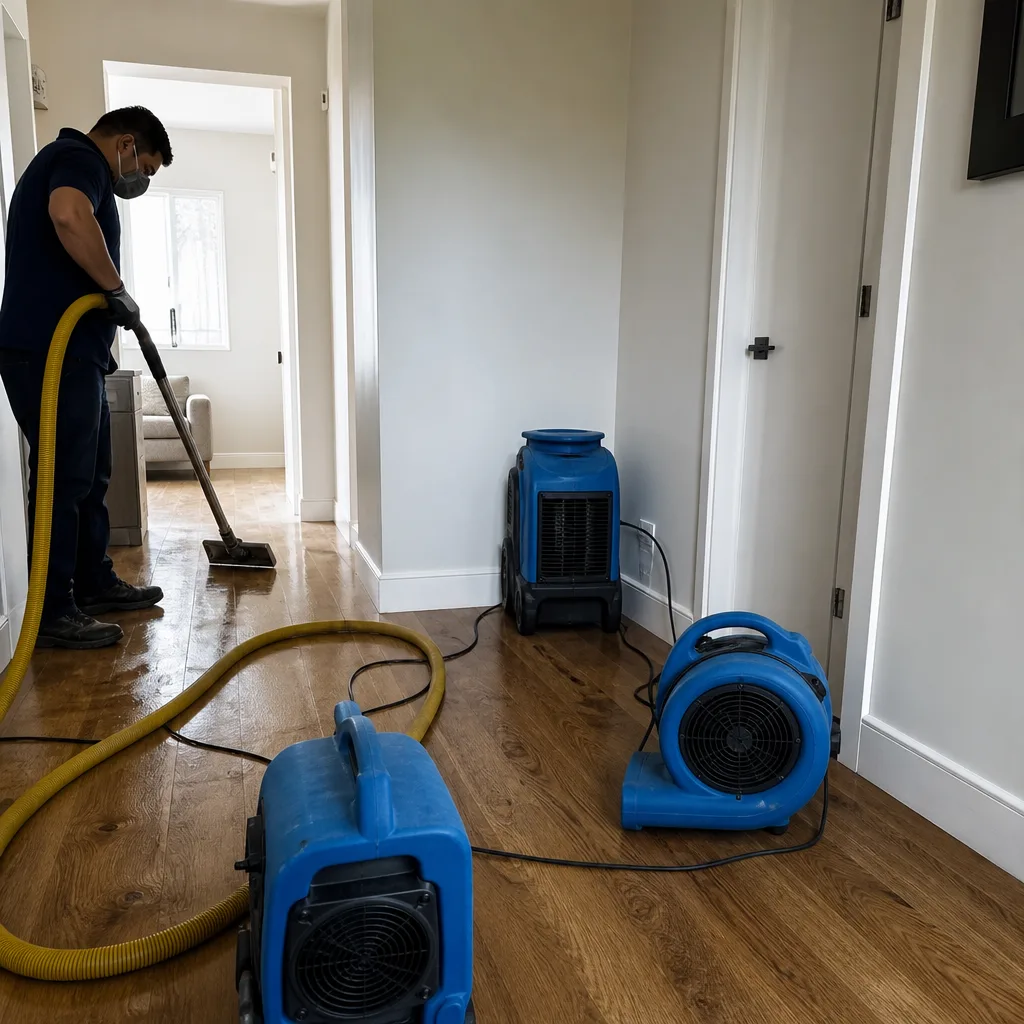 After
After24/7 Emergency Fire & Smoke Damage Restoration in Reseda
Fire and smoke damage restoration in Reseda typically costs $4,200-$18,500 depending on the affected square footage, with emergency board-up and stabilization starting at $800-$2,400. Most Reseda homeowners with active insurance policies see out-of-pocket costs limited to their deductible after we document the loss. Call (747) 294-2725 - a live person answers, 24 hours a day, and crews are dispatched from our Los Angeles office into Reseda within 45 minutes of your call.
The first hour after a fire determines how far smoke migrates through your HVAC system and how deeply acidic soot etches into finishes. Reseda’s slab-foundation ranch homes, built tight in the 1950s-1970s, trap smoke in wall cavities that newer construction would vent more readily. Waiting even one night lets soot settle into porous surfaces and turns a contained cleanup into a whole-house deodorization job. That’s why our Fire & Smoke Damage Restoration team runs emergency lines with live dispatch - no voicemail, no callback queues while smoke is still moving.
We provide a free visual inspection on arrival, document every room with photo records, and deliver a written price before any work begins. Haven Standard, Clause 1.
Understanding Fire & Smoke Damage Restoration Severity in Reseda Properties
Fire damage in Reseda falls into three severity bands that dictate equipment, timeline, and cost. A light smoke event - kitchen grease fire, contained to one room, no structural involvement - produces dry soot (carbon particulate, pH 4.5-5.5) that responds to HEPA vacuuming and solvent cleaning. Moderate damage involves wet smoke from slow-burning synthetics, leaving sticky, acidic residue that requires alkaline cleaners and often media blasting on framing. Heavy damage means structural compromise: charred studs, compromised roof assemblies, or slab-edge damage where fire suppression water has pooled against Reseda’s earthquake-stressed foundations.
Smoke migration follows pressure differentials and HVAC pathways. In Reseda’s single-story ranch homes with attic ductwork, smoke travels surprisingly far - we’ve traced soot to bathrooms three rooms from the fire origin. The 1994 Northridge Earthquake epicenter in Reseda itself complicates this further: post-quake repairs often left gaps in fireblocking and vapor barriers that smoke exploits. Our crews probe wall cavities with borescopes before finalizing any scope, because what reads as surface soot on 1995-vintage drywall may mask deeper contamination behind compromised firestops.
Tertiary damage - the water used to extinguish the fire - adds a separate category. Category 3 water, contaminated with ash and combustion byproducts, demands antimicrobial treatment and controlled drying before reconstruction. In Reseda’s slab homes, this water follows 1994-era foundation cracks to sub-floor spaces that standard moisture meters miss. We deploy thermal imaging and probe-based psychrometric readings to find it.
Why Reseda Property Owners Choose DryMark Restoration Santa Clarita
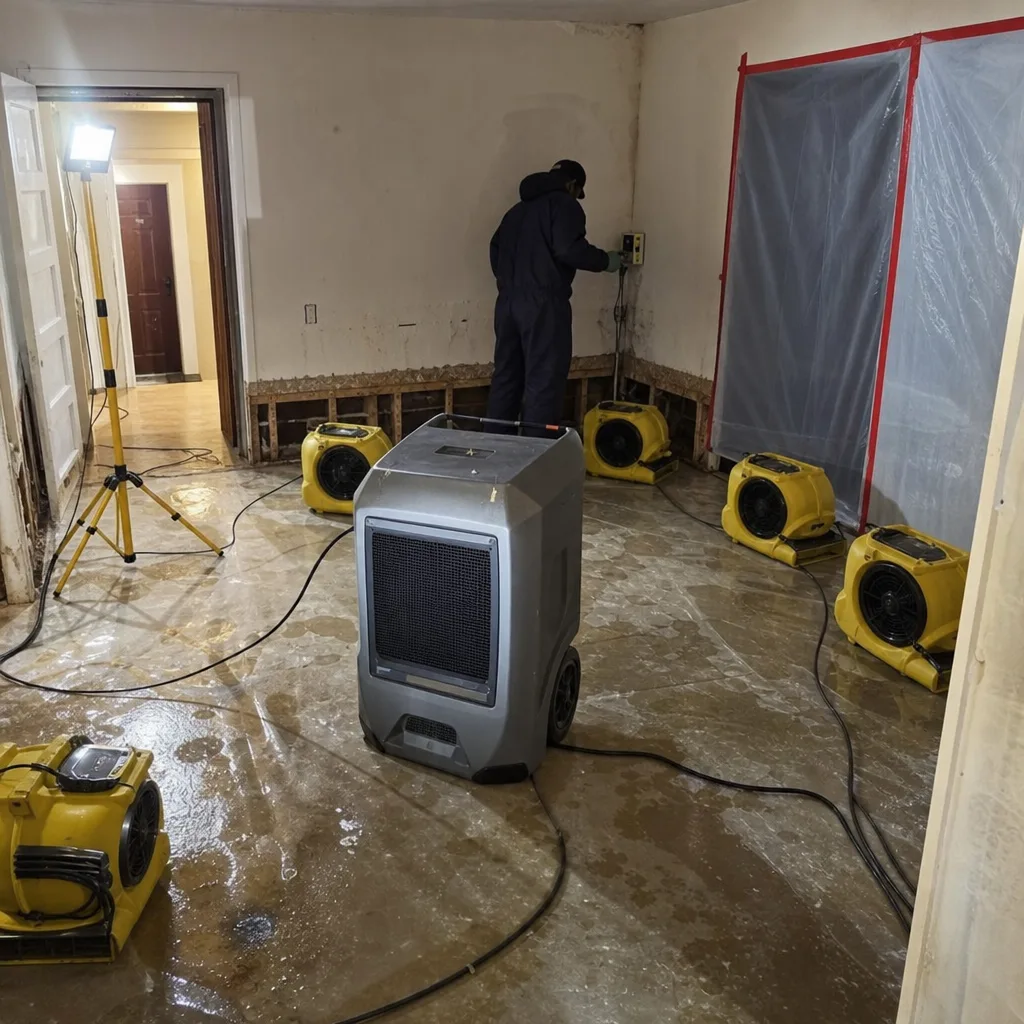
- 45-minute response commitment to Reseda addresses from our Los Angeles office - not a promise of “as soon as possible,” but a tracked arrival window.
- 24/7 live answer by a real person, never an automated system or voicemail tree; your call is logged and dispatched while you’re still on the line.
- IICRC-certified crews holding FSRT (Fire & Smoke Restoration Technician) and WRT (Water Damage Restoration Technician) credentials, with license numbers provided on request.
- Free visual inspection with photo documentation before any commitment - you see what we see.
- Direct insurance billing with adjuster coordination included as standard; we write the scope in Xactimate format your carrier recognizes.
- One team from emergency board-up through structural repair - no handoffs between mitigation and reconstruction contractors that lose documentation in the transfer.
 Before
 After
AfterOur Fire & Smoke Damage Restoration Process
1. Inspection & Assessment
We walk the property with thermal imaging cameras, moisture meters, and borescopes to map smoke migration and hidden water intrusion. In Reseda, this includes probing slab edges and wall cavities for 1994-era damage that changes the scope. You receive a written assessment with photos before we proceed.
2. Emergency Board-Up & Tarping
Compromised windows, doors, and roof openings are secured with fire-rated plywood and reinforced poly sheeting. Reseda’s Santa Ana wind exposure demands heavier fastening than standard - we use ring-shank nails and batten strips on roof tarps, because a failed tarp during wind season turns fire damage into water damage.
3. Water Extraction & Structural Drying
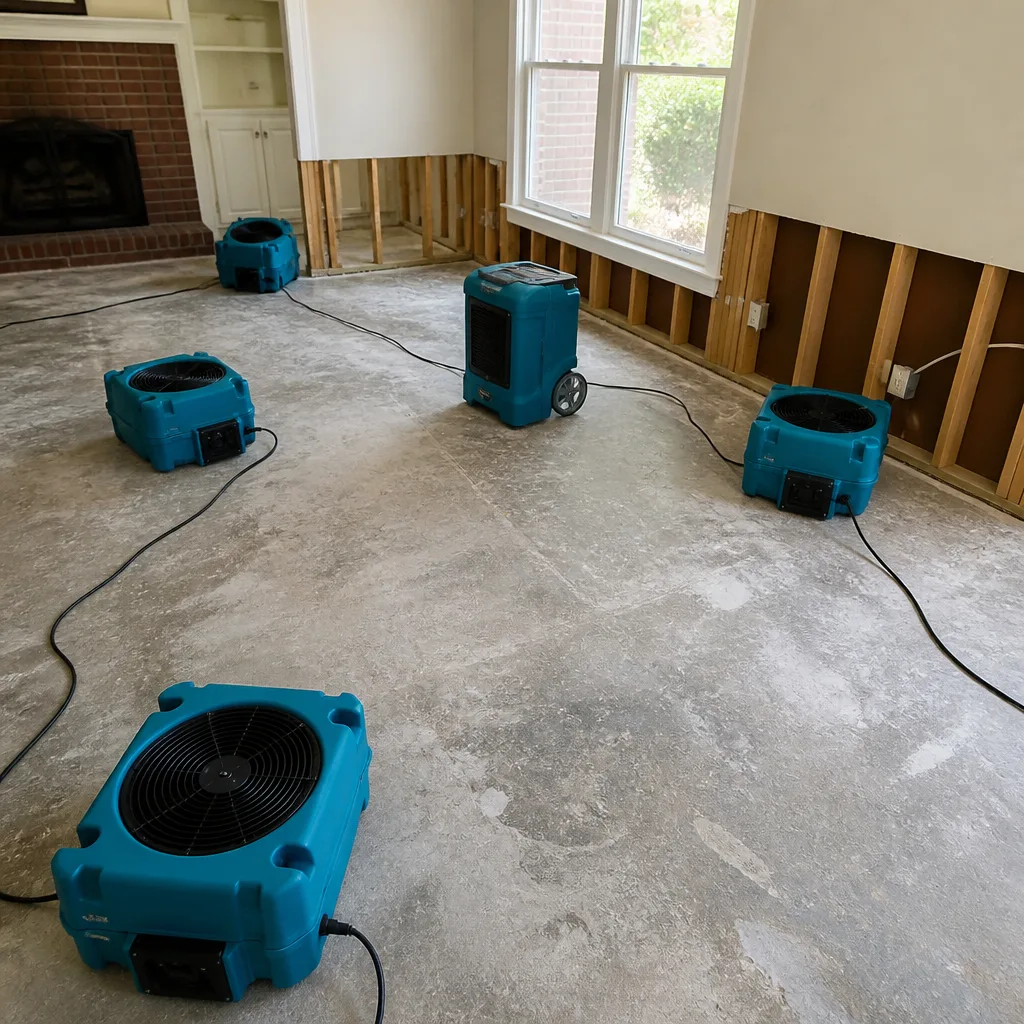
Fire suppression water is extracted with truck-mounted systems, then dried with Phoenix dehumidifiers and XPOWER air movers positioned for vapor pressure differential - the measurable force that drives moisture from wet materials into dry air. Daily moisture logs track progress to IICRC S500 standards.
4. Smoke & Soot Removal
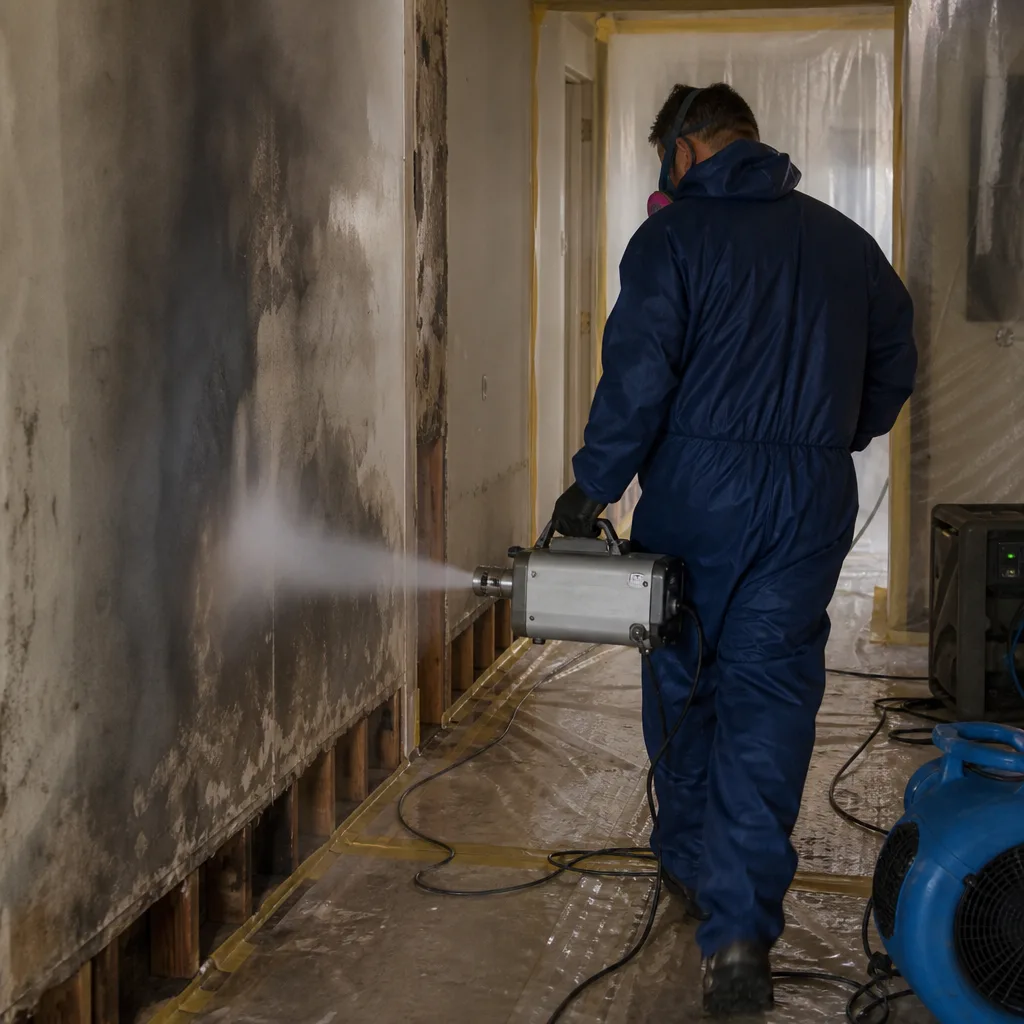
Dry soot receives HEPA vacuuming; wet smoke residue gets alkaline pre-cleaning followed by solvent wiping. On charred framing, we deploy soda or dry-ice blasting to remove residue without ablading wood fiber. Reseda’s older homes with oil-based finishes from the 1960s-70s need pH-specific chemistry to avoid etching.
5. Odor Deodorization & Contents Processing
Air scrubbers with activated carbon and potassium permanganate filters run during cleaning. For deep-seated odor, we seal accessible framing with odor-counteracting primers and deploy hydroxyl generators or ozone treatment where contents can be removed. Contents are inventoried, photographed, and packed out to our facility for ultrasonic or immersion cleaning - the pack-out list is written, not verbal.
6. Structural Repair & Reconstruction
Charred studs are sistered or replaced; compromised roof decking is removed and resheathed; finishes are restored to pre-loss condition. Our crew holds the same FSRT certification through reconstruction, so the documentation chain - photos, moisture logs, antimicrobial applications - stays intact from first arrival to final walkthrough.
Need Emergency Fire & Smoke Damage Restoration in Reseda Now?
Crews minutes away, answering live 24 hours a day. The sooner we start, the less it costs.
Working With Your Insurance Company
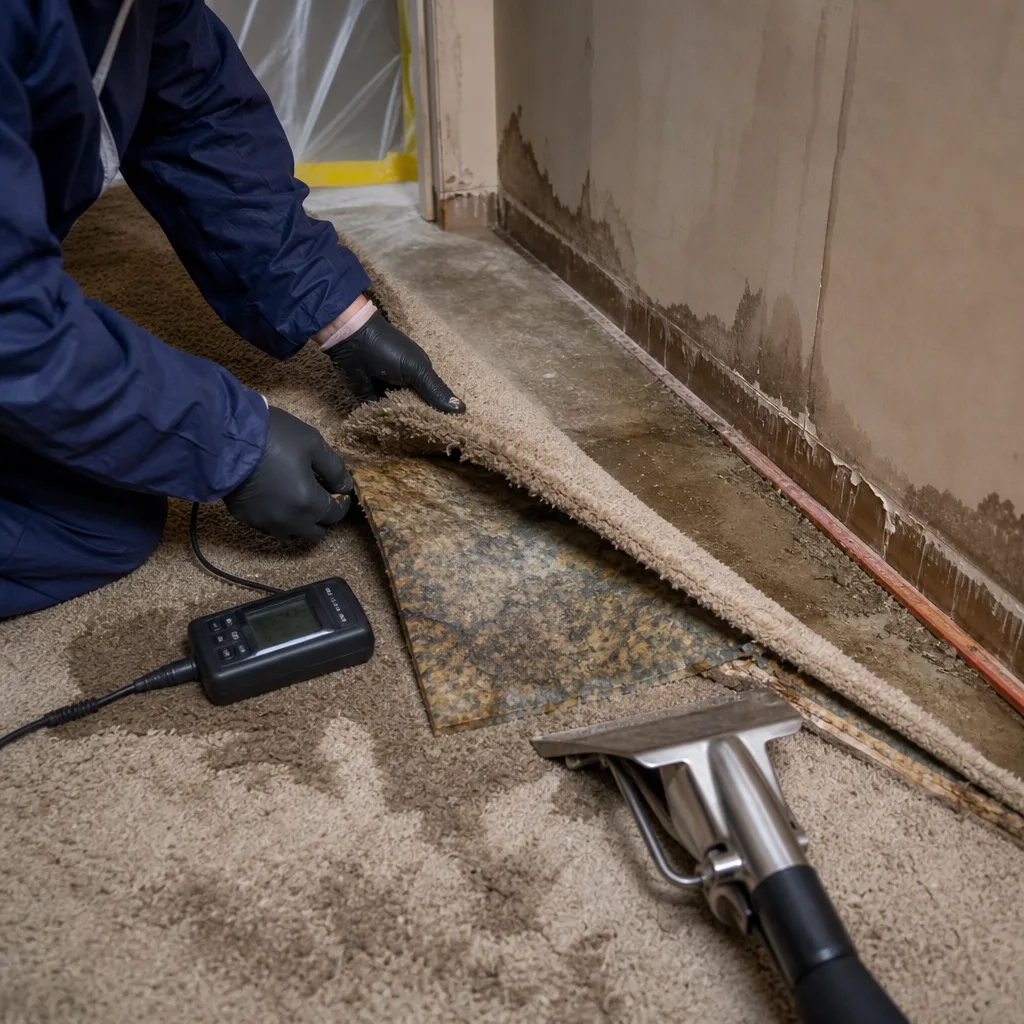
Insurance claims for fire damage fail most often on documentation gaps: missing photos, undocumented water damage, or scopes that don’t account for code-required upgrades. We close those gaps from the first hour. Our estimator documents the loss with room-by-room photos, moisture readings with make/model of instrument, and a line-item scope written in Xactimate - the same estimating platform adjusters use. This means fewer back-and-forth emails, fewer denied line items, and faster payment.
We coordinate directly with your adjuster, attend inspections when requested, and provide supplemental documentation if the initial scope proves incomplete. Reseda’s 1994 earthquake legacy makes this especially important: when we find hidden structural damage behind 1995-vintage drywall, we photograph it, log it, and write it into a revised scope with historical context your adjuster can verify. The 365-Day Done Right Promise covers our work if anything is missed - Haven Standard, Clause 7.
What We Provide Your Insurer
- Thorough documentation of the loss
- Photos of all damage, room by room
- Moisture readings and drying logs
- A detailed, line-item scope of work
- Direct coordination with your carrier
Built for Reseda’s Loss Calendar
Reseda’s fire and smoke damage follows patterns tied to its climate and housing stock. June through October brings Santa Ana wind events with humidity below 15% and gusts to 60 mph - conditions that turn small ignition sources into fast-moving brush exposures and drive embers into attic vents of older ranch homes. Our emergency board-up volume peaks in these months, often with tarping calls on roofs already hardened by 105-110°F summer heat.
December through February brings the heaviest rain, and Reseda’s sun-baked clay soils shed water rather than absorb it. A fire call that compromises the roof assembly in autumn becomes a water intrusion event by January if the tarp fails or the scope didn’t account for degraded decking. We see this compound loss - fire plus Category 3 water - most often on homes near Reseda Boulevard and Sherman Way where the 1960s building stock has original roofing at end of service life.
Spring brings electrical fire risk from aging service panels in Reseda’s dingbat apartments and original ranch homes. Aluminum wiring, common in 1965-1973 construction, runs hotter at connection points and produces slow-smoldering fires with heavy wet smoke residue. These jobs almost always require full gutting of affected wall cavities - the smoke penetrates every gap in the balloon framing.
Fire & Smoke Damage Restoration Across Reseda’s Neighborhoods
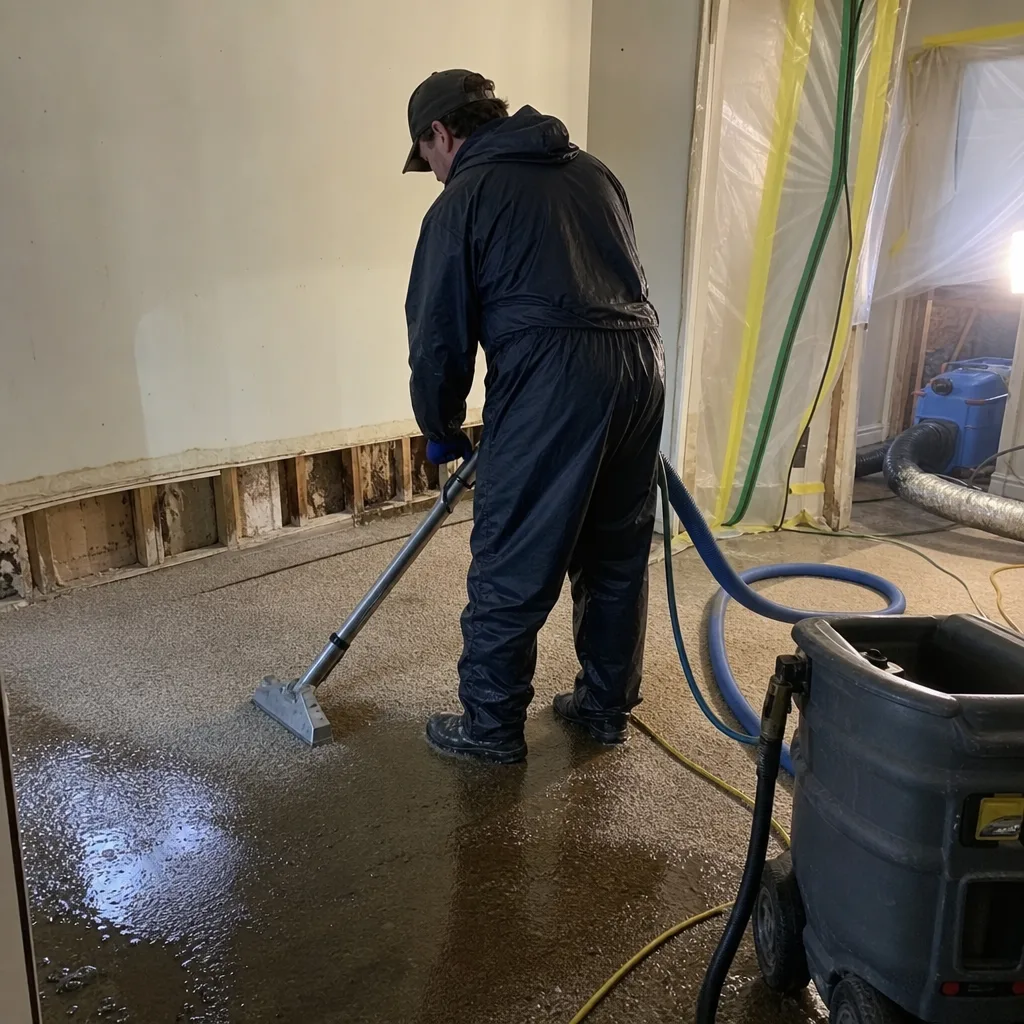
Reseda’s geography shapes every fire and smoke job we take. Near the intersection of Reseda Boulevard and Strathern Street, the 1950s-1960s slab ranch homes sit on some of the most earthquake-compromised foundations in the Valley. On a fire and smoke call in this corridor, our crew pulled smoke-damaged drywall in a 1961 slab ranch and found a 1994-era shear crack behind the 1995 replacement drywall, with a disconnected vapor barrier running right past a shifted mudsill - the original post-quake scope had simply been painted over. We ran moisture mapping and structural drying on the wet framing before rebuilding, logged antimicrobial treatment on the exposed cavity, and wrote the 1994-era findings into the scope of work so the homeowner wasn’t surprised down the line.
West of Tampa Avenue, the neighborhood transitions to 1970s split-levels and two-story stucco tract homes with more complex HVAC routing. Smoke migration here follows multi-zone ductwork into second-floor bedrooms that seem untouched from the ground floor. We isolate zones with temporary duct sealing and run HEPA-negative air machines on each level to prevent cross-contamination during cleaning.
South of Victory Boulevard, Reseda’s dingbat apartment buildings - two-story stucco-over-wood-frame construction with open carports below - present a different challenge. Shared wall assemblies mean fire in one unit routinely requires smoke remediation in adjacent units. Our scopes include adjacent-unit inspection and documented clearance testing before re-occupancy, because Reseda’s older apartments lack the fire-rated party walls required by current code.
North of Roscoe Boulevard, larger lots with detached workshops and accessory structures are common. Homeowners here often assume a single board-up and pack-out covers the whole property. Without a pre-loss condition walk of the shop, tools and stored contents get missed and the pack-out list is short. We document outbuildings separately, with their own photo record and inventory, because insurance adjusters treat detached structures as separate coverage limits.
Specialized Fire & Smoke Damage Restoration Services We Offer in Reseda
Structural Fire Repair
Charred studs, compromised roof assemblies, and slab-edge damage from fire suppression water require structural evaluation before reconstruction. In Reseda, this evaluation includes probing for 1994-era foundation cracks that fire crews or previous restoration contractors may have concealed. We sister damaged framing, replace roof decking, and restore structural integrity with permits pulled to Los Angeles Building Code - your inspector receives the same photo documentation your adjuster does.
Smoke & Soot Removal
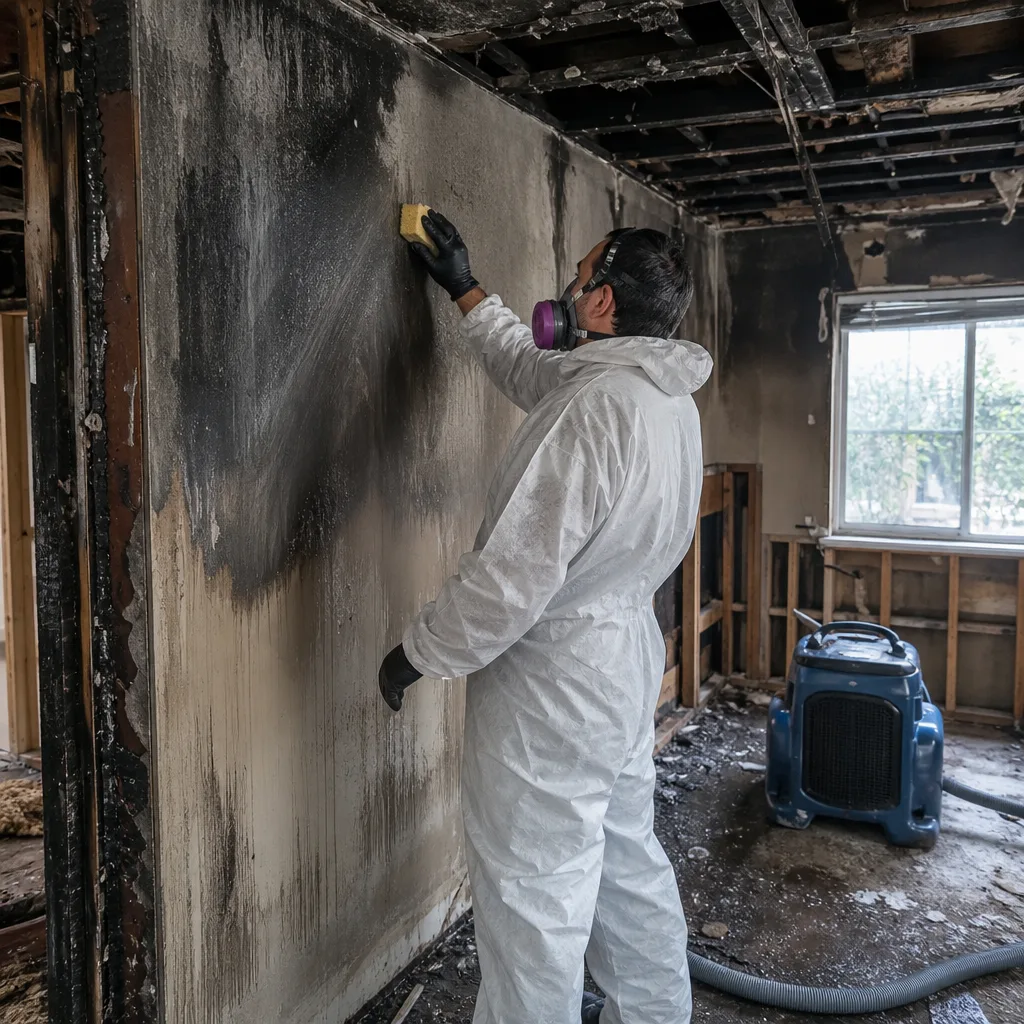
Soot type determines chemistry and technique. Dry soot from fast-burning paper and wood responds to dry cleaning sponges and HEPA vacuuming. Wet smoke from plastics and synthetics requires alkaline pre-cleaning and often media blasting on porous surfaces. Reseda’s 1960s-1970s homes with original oil-based paints and varnishes need pH-balanced formulations to avoid etching - we test in an inconspicuous area before full application.
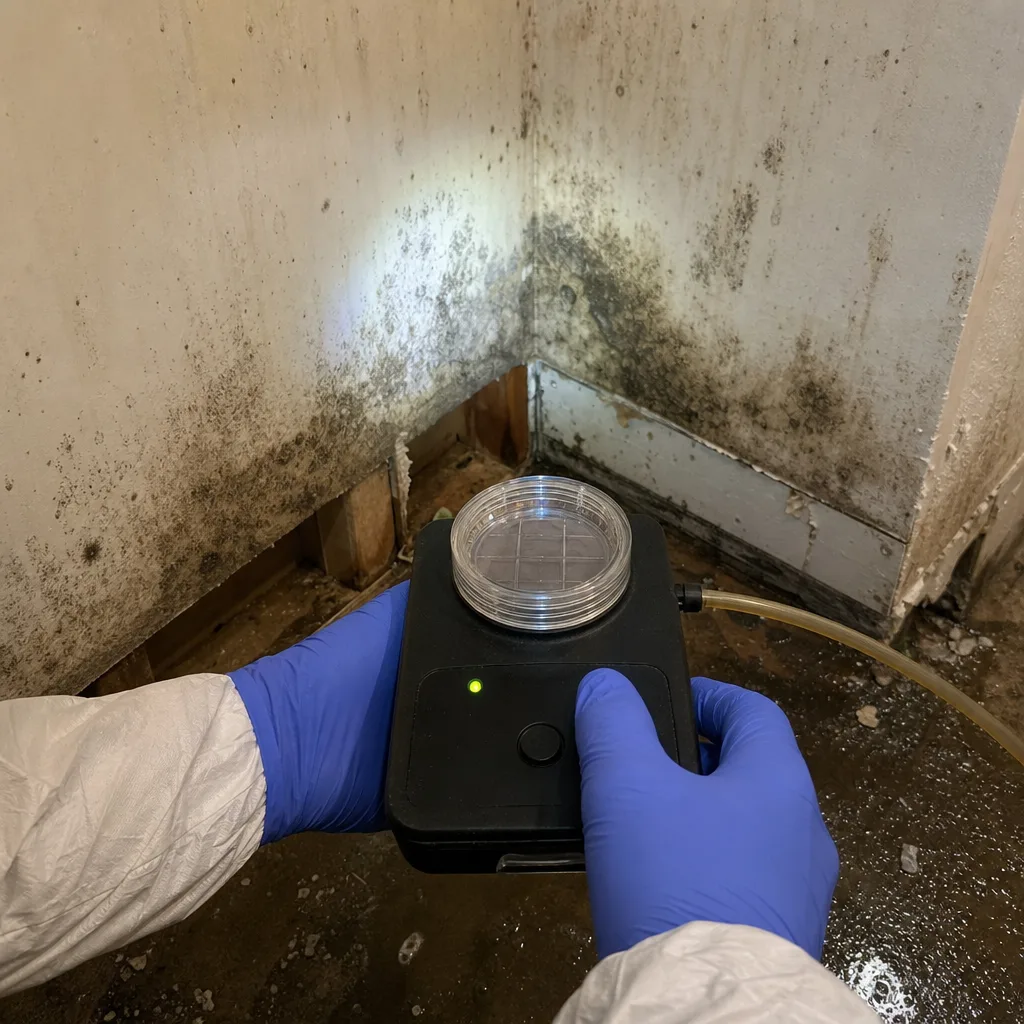
Odor Removal & Deodorization
Surface cleaning removes visible residue; odor removal addresses what penetrated. We deploy hydroxyl generators for occupied spaces, ozone treatment for unoccupied contents, and thermal fogging for deep-seated contamination in insulation and wall cavities. The choice depends on odor source, material porosity, and re-occupancy timeline - documented in your scope with expected clearance criteria.
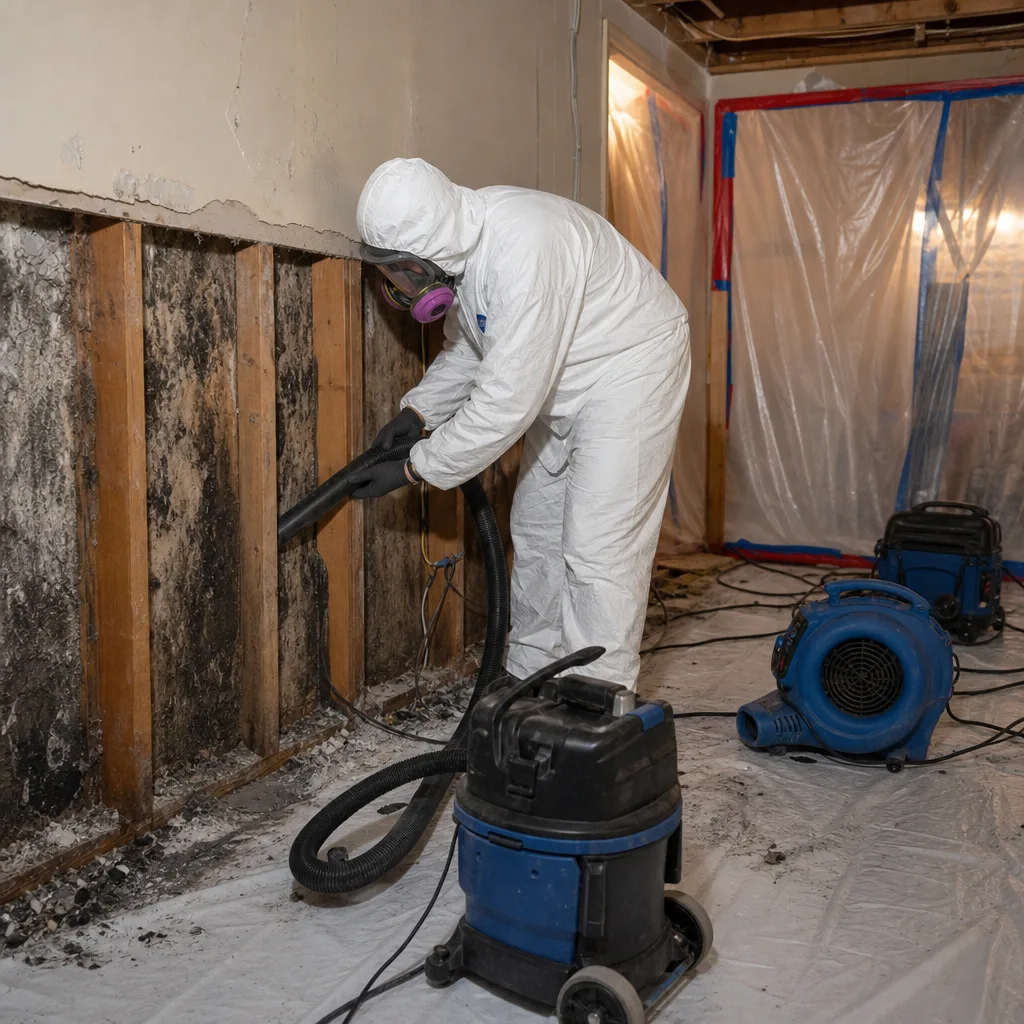
Contents Cleaning & Pack-Out
Your belongings are inventoried, photographed, and packed to our facility for ultrasonic cleaning, immersion washing, or specialized textile restoration. Electronics receive corrosion-inhibitive cleaning within 72 hours of exposure. In Reseda, detached workshops with tools and equipment get separate inventory sheets - we don’t assume the garage is “just storage.”
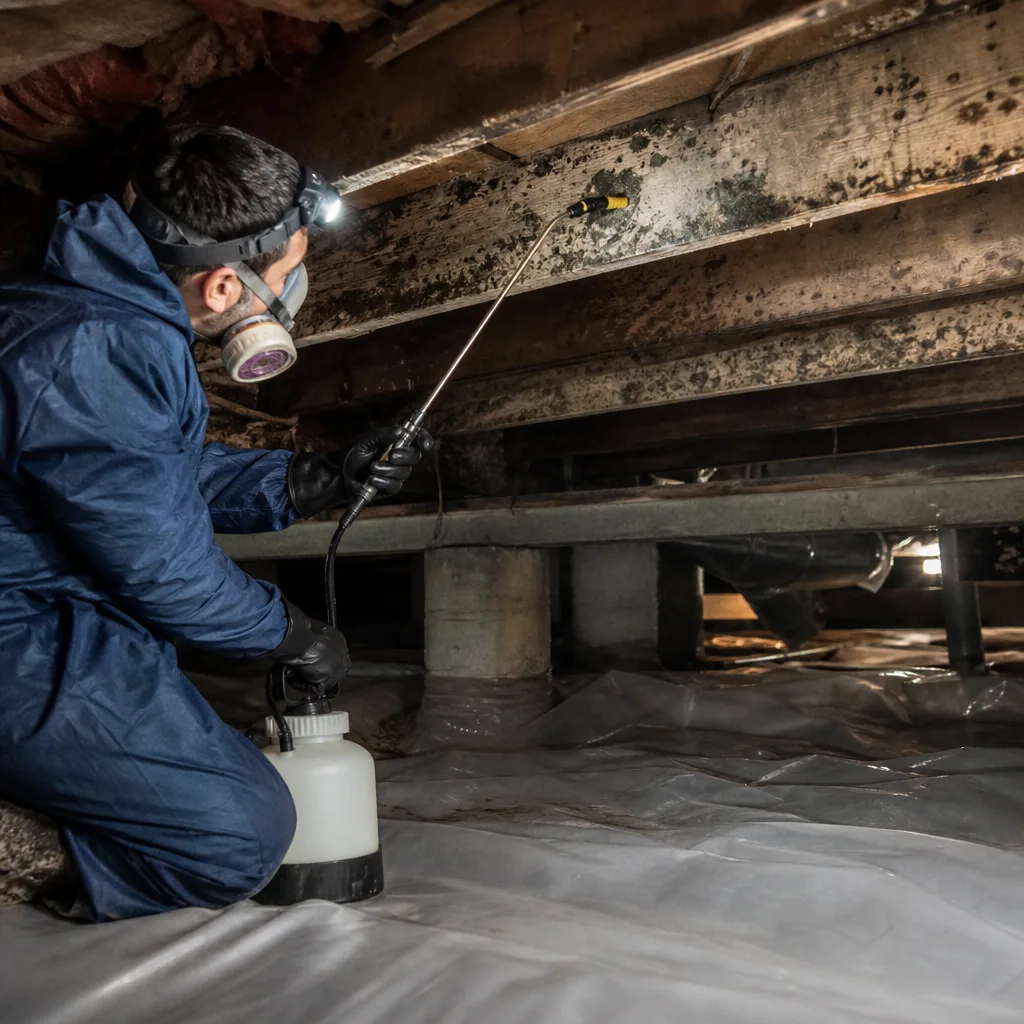
Emergency Board-Up & Tarping
Immediate security against weather, intrusion, and secondary damage. Our Reseda crews carry fire-rated plywood, reinforced poly sheeting, and ring-shank fasteners rated for Santa Ana wind exposure. Tarping on sun-hardened roof decking gets additional batten strips because standard fastening pulls through degraded substrate - a failure mode we’ve documented on multiple Reseda jobs where the original fire scope didn’t account for roof condition.
What happens when you call
- 1
A real person answersNo phone trees - you reach a local pro.
- 2
You get an upfront price rangeHonest numbers before anyone is dispatched.
- 3
A background-checked tech heads outLicensed & insured, dispatched right away.
- 4
You approve before work beginsNothing starts until you say go.
Fire & Smoke Damage Restoration Costs in Reseda, CA
Light smoke cleanup in a single Reseda room: $1,800-$3,500. Moderate damage with wet smoke residue and multi-room deodorization: $4,200-$9,500. Heavy structural fire with charred framing, roof compromise, and water damage from suppression: $12,000-$35,000, with full reconstruction at the upper end. Emergency board-up and stabilization: $800-$2,400. Contents pack-out and cleaning: $2,500-$7,000 depending on volume and specialty items.
What moves the price: affected square footage, soot type (dry vs. wet), structural involvement, and whether 1994-era hidden damage expands the scope. Insurance typically covers direct fire and smoke damage plus water damage from suppression; gradual deterioration (pre-existing roof failure, long-term foundation issues) is usually excluded. We identify and document both so your adjuster has clear line-item justification for each covered element.
Every Reseda job starts with a free visual inspection and written price before work begins - Haven Standard, Clause 1. Bring a competitor’s written estimate and we’ll provide a free second opinion.
We Also Serve Cities Near Reseda
Our crews respond from the Los Angeles office to Reseda and surrounding communities: Winnetka to the west, Northridge to the north, Porter Ranch in the hills above, and Chatsworth to the northwest. Each shares Reseda’s San Fernando Valley climate and much of its mid-century housing stock, with similar fire and smoke restoration challenges - though Reseda’s position at the 1994 earthquake epicenter remains unique.
Serving Reseda, CA - Our Local Coverage Area
We’re based in the Reseda area and know this community well. Use the map below to see our service coverage - if you’re nearby, we can almost certainly help.
Reseda Fire & Smoke Damage Restoration Questions, Answered
Our Reseda ranch home was built in the 1950s - does a fire and smoke job here usually uncover older 1994 earthquake damage?
Yes, often enough that we plan for it. The 1994 Northridge Earthquake epicenter was in Reseda itself, and post-quake repairs frequently concealed shear cracks and disconnected vapor barriers behind replacement drywall.
On a fire and smoke call near Reseda Boulevard and Strathern Street, our crew found exactly this: a 1994-era shear crack and shifted mudsill hidden behind 1995-vintage drywall, with the vapor barrier simply painted over. We documented it, dried the exposed framing, and wrote it into the scope so the homeowner had a complete record. Not every Reseda home has hidden 1994 damage, but we probe before quoting so you’re not surprised mid-job. Call (747) 294-2725 for a free inspection.
How fast do we need to start after a fire in Reseda - is there a real deadline?
Within 24 hours for optimal outcomes, though emergency board-up should happen immediately.
Smoke is acidic and begins etching finishes within hours; soot that sits overnight bonds to surfaces and requires more aggressive cleaning. Reseda’s tight ranch-home construction traps smoke in wall cavities that newer homes vent more readily, so migration continues until the source is contained and negative air pressure is established. We answer live 24/7 and dispatch crews within 45 minutes to stop this progression. Call (747) 294-2725 - the sooner we start, the less restoration costs.
We have a detached workshop and oversized doors on our Reseda property - does that change the fire and smoke scope?
It requires separate documentation, not necessarily a larger scope.
Detached structures in Reseda often carry separate insurance coverage limits, and tools or equipment stored in workshops need individual inventory and photo records. We walk outbuildings during the initial inspection, document pre-loss condition, and write separate pack-out and cleaning scopes. Without this step, contents get missed and the adjuster has no basis to approve additional limits. Our crew carries extra inventory sheets for exactly this situation. Call (747) 294-2725 to schedule.
Is smoke and soot removal on a Reseda dingbat apartment different from a single-family home?
Yes, primarily because of shared construction and code-era fireblocking.
Reseda’s dingbat apartments - two-story stucco-over-frame with open carports below - typically lack fire-rated party walls between units. Smoke in one unit migrates through wall cavities and attic spaces into adjacent units, and our scopes include inspection of neighboring spaces with documented clearance testing. Single-family ranch homes have simpler migration paths but more complex 1994-era concealed damage. The cleaning chemistry and equipment are similar; the containment strategy and documentation requirements differ. Call (747) 294-2725 for unit-specific assessment.
What does the fire and smoke restoration process actually look like in Reseda?
Six steps: inspection with cavity probing, emergency board-up and tarping, water extraction and structural drying, smoke and soot removal, odor deodorization with contents pack-out, and structural repair to pre-loss condition.
In Reseda, step one includes borescope inspection of wall cavities for 1994-era concealed damage; step two uses wind-rated fastening for Santa Ana exposure; step three accounts for slab-edge water intrusion through earthquake-compromised foundations. Every step is photo-documented, moisture-logged, and written into a line-item scope before work proceeds. The same FSRT-certified crew stays with your job from arrival through reconstruction. Call (747) 294-2725 for a free visual inspection and written scope.
Will insurance cover our fire and smoke damage in Reseda?
Most homeowner and dwelling policies cover direct fire damage, smoke remediation, and water damage from fire suppression, subject to your deductible and policy limits.
Exclusions typically apply to gradual deterioration (pre-existing roof failure, long-term foundation issues) and code-upgrade costs above stated limits. Our documentation distinguishes covered sudden damage from excluded pre-existing conditions with photo evidence and moisture readings your adjuster can verify. We coordinate directly with carriers and write scopes in Xactimate format to minimize back-and-forth. Call (747) 294-2725 - we’ll review your policy documentation and provide a free inspection.
How long does fire and smoke restoration take in Reseda?
Light smoke cleanup: 2-4 days. Moderate damage with deodorization: 1-2 weeks. Heavy structural fire with reconstruction: 4-12 weeks depending on permit timelines and scope complexity.
Reseda’s unique factor is 1994-era concealed damage, which can add 3-7 days for structural drying and remediation before reconstruction begins. We build this contingency into initial timelines when our borescope inspection indicates probable concealed damage, so you’re not facing open-ended delays. Daily moisture logs and photo updates keep you informed. Call (747) 294-2725 for a timeline specific to your property.
Can we stay in our Reseda home during fire and smoke restoration?
Sometimes during light smoke cleanup, rarely during moderate or heavy damage.
Odor deodorization equipment (hydroxyl generators, ozone machines) requires either unoccupied space or containment of treated areas. Reseda’s single-story ranch homes offer fewer separation options than multi-level homes; with shared HVAC, smoke particulate in ductwork affects air quality throughout. We test airborne particulate and VOC levels before authorizing re-occupancy, with documented clearance criteria provided to you and your insurer. Temporary relocation is often the safer choice for moderate-plus damage. Call (747) 294-2725 to discuss your specific situation.
Written by Alicia Brennan, Owner at Back to Dry Restoration, serving Reseda since 2011 under The Haven Standard.
Fire & Smoke Damage Restoration in Nearby Areas