
Last updated September 23, 2026
Free visual inspection and a written scope of work before any mitigation begins - photos, moisture readings, and drying logs go in your claim file
The scope we write is the scope we bill. Anything new gets shown to you, in writing, before we touch it.
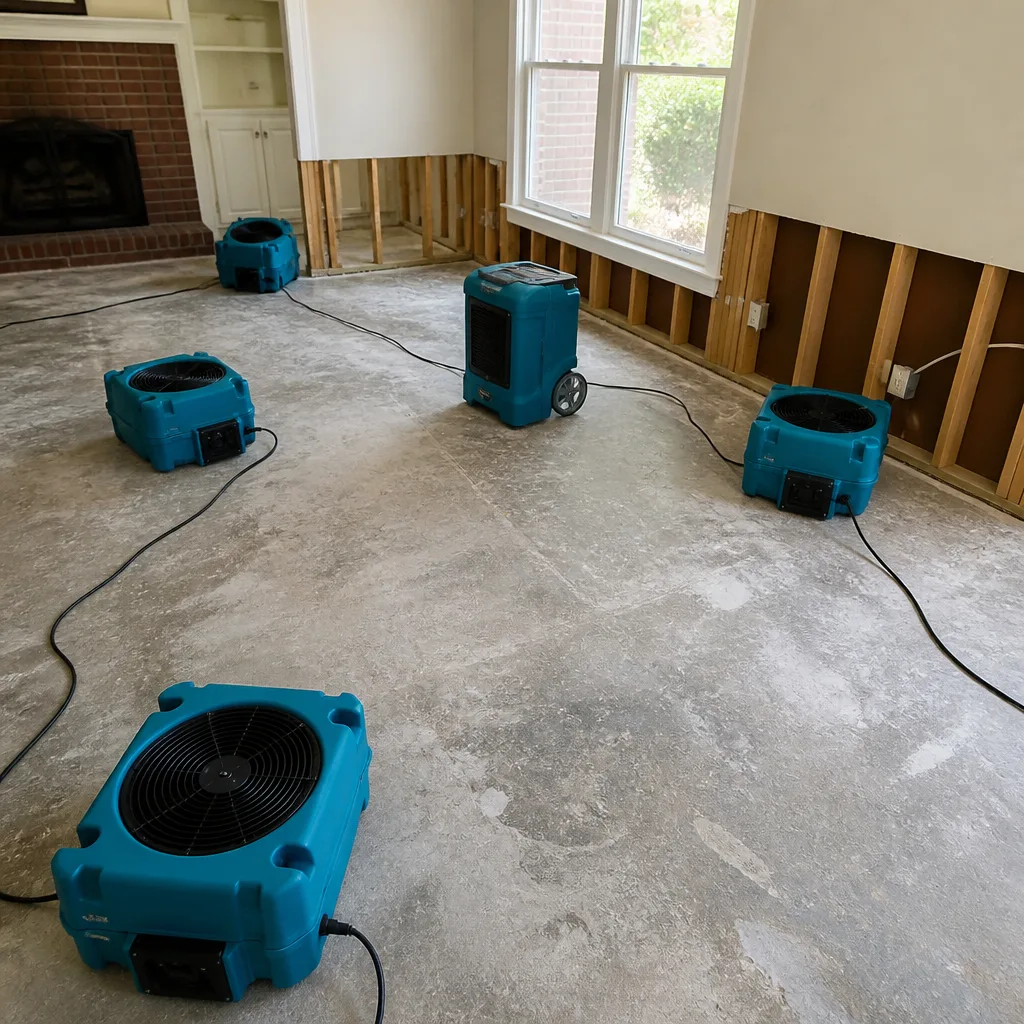
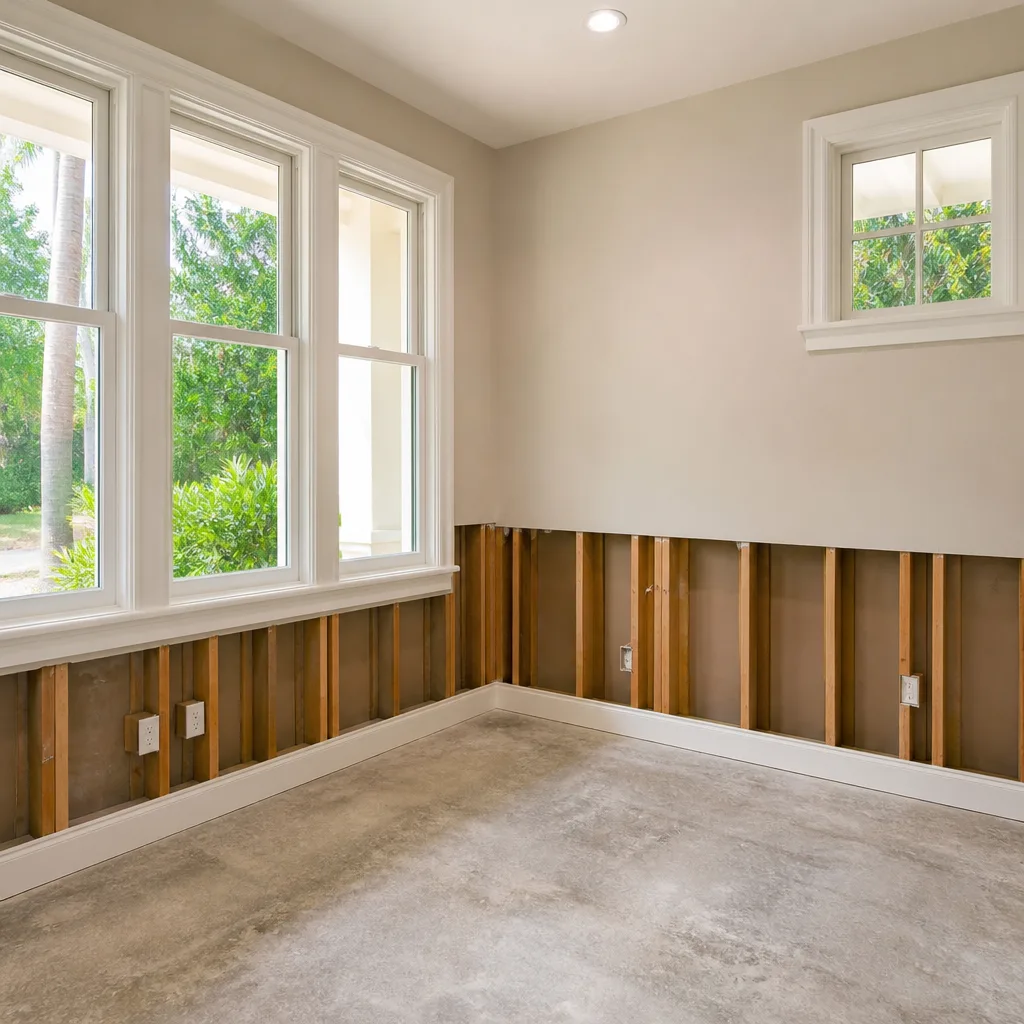

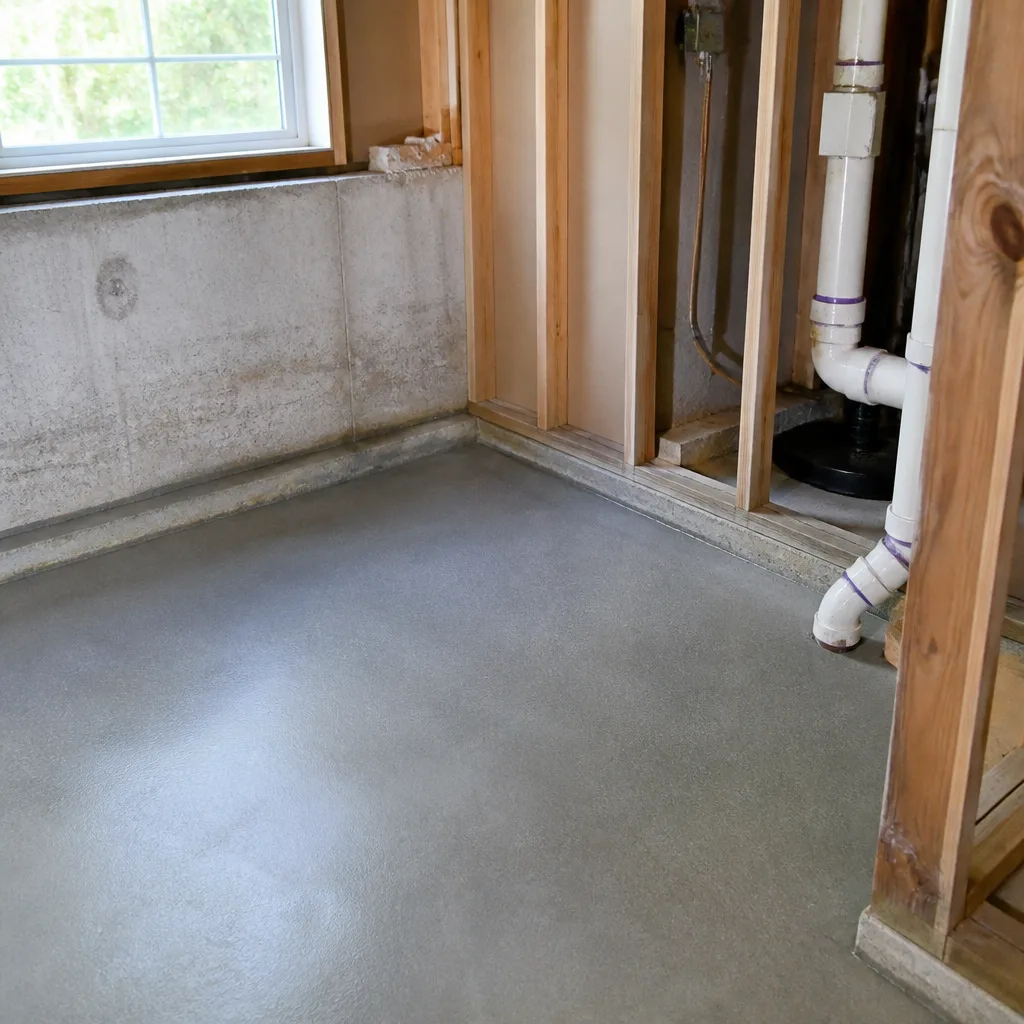
 Before
 After
After Before
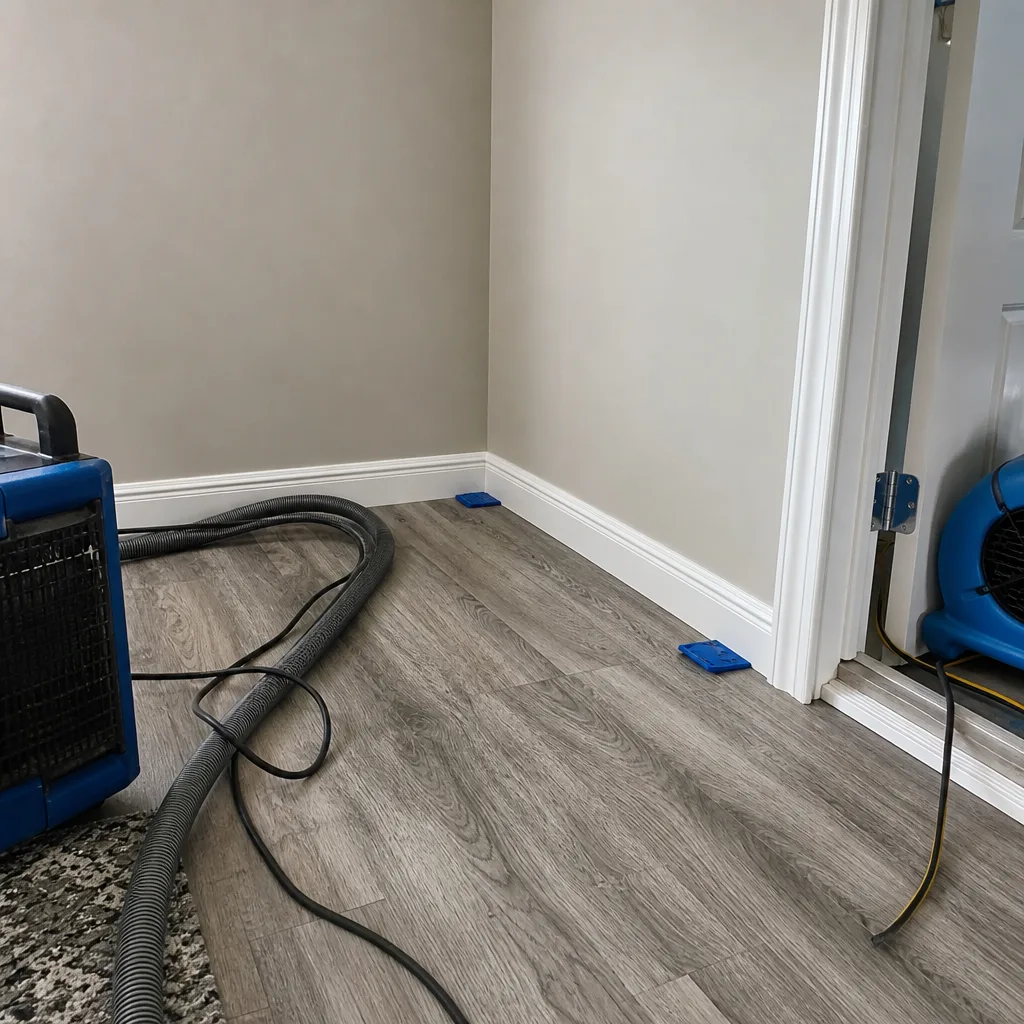 After
After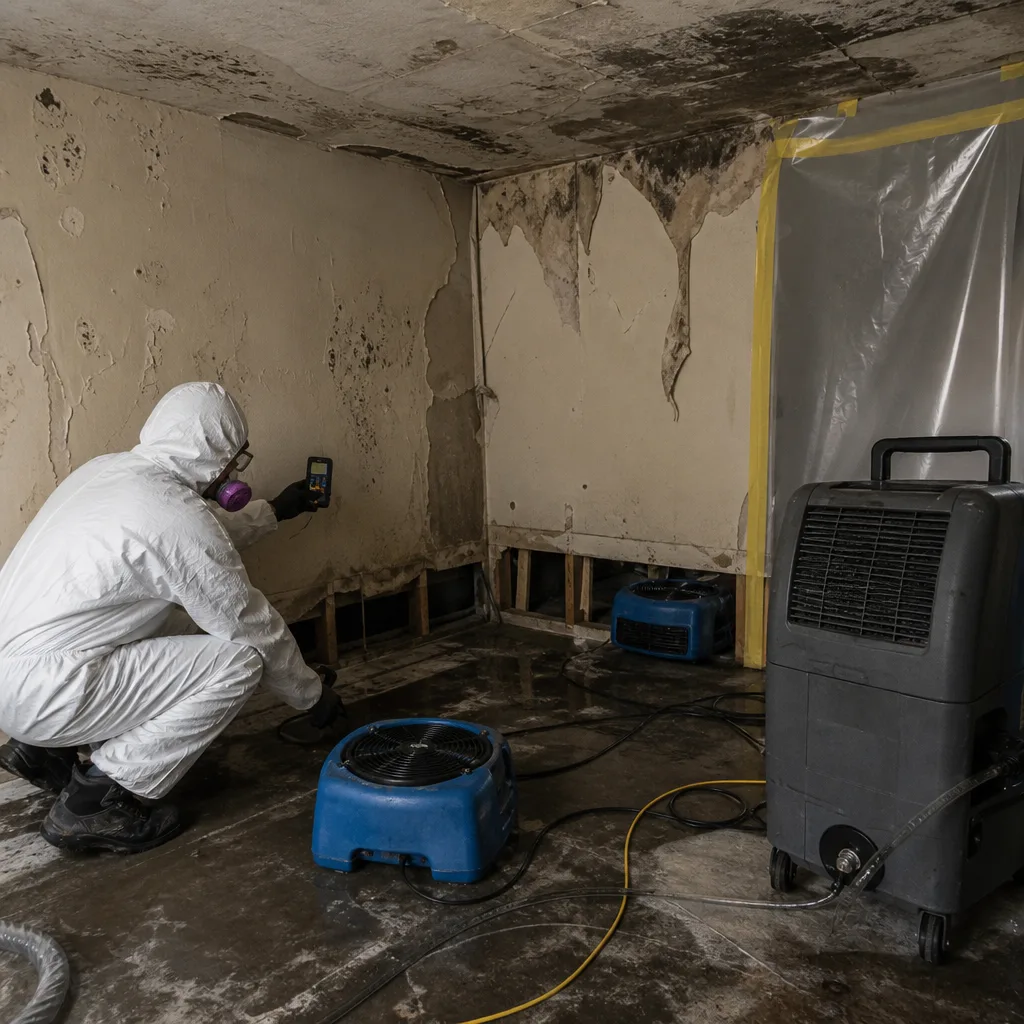 Before
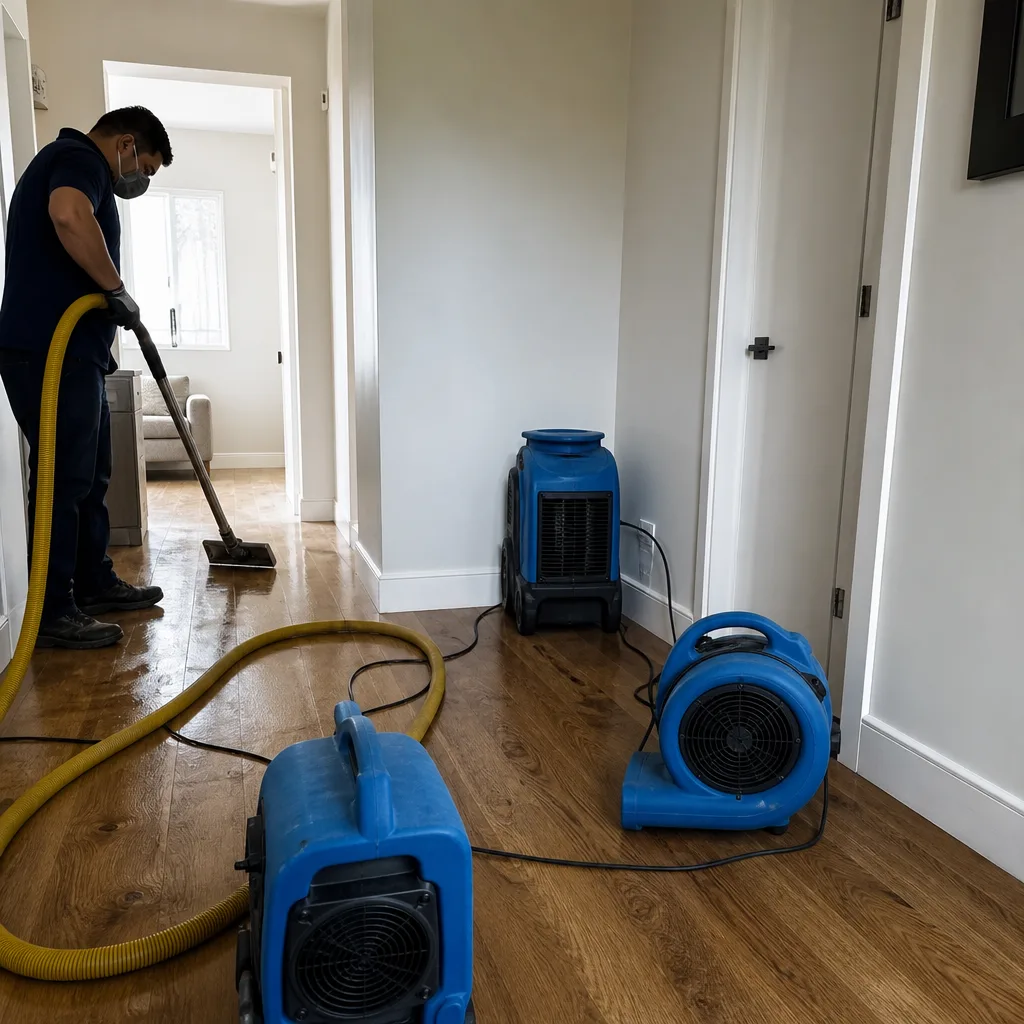 After
AfterDamage Restoration Warning Signs: A Santa Clarita Homeowner’s Reference Guide
A musty odor in your Santa Clarita home is not a warning sign. It is a lagging indicator. By the time your nose detects it, the moisture content in adjacent wall framing has almost certainly crossed 19%, and surface mold has likely begun colonizing. Most homeowners we meet in Valencia, Saugus, and Canyon Country can describe what they saw or smelled, but almost none can cite a moisture reading, a date of first observation, or a photograph that establishes either. That documentation gap costs claims. It turns a sudden-and-accidental coverage event into a months-long dispute over whether the damage was “ongoing” or “discovered promptly.” This guide pairs every visible warning sign with the measurable threshold it represents, the meter type required to verify it, and the documentation method that preserves your position with your insurer and your contractor. For more guides & resources on protecting your home, see our full library.
Quick Answer
Water damage warning signs in Santa Clarita homes fall into three categories by urgency: immediate-response indicators (moisture readings above 20% in framing, active dripping, or sewage odor), monitored indicators (efflorescence on stucco, isolated paint bubbling with readings of 12-16%), and lagging indicators (musty odor, visible mold, or soft drywall). The threshold that separates a scheduled inspection from an emergency dispatch is 16% moisture content in wood-based materials, measured with a pin-type meter.
Table of Contents
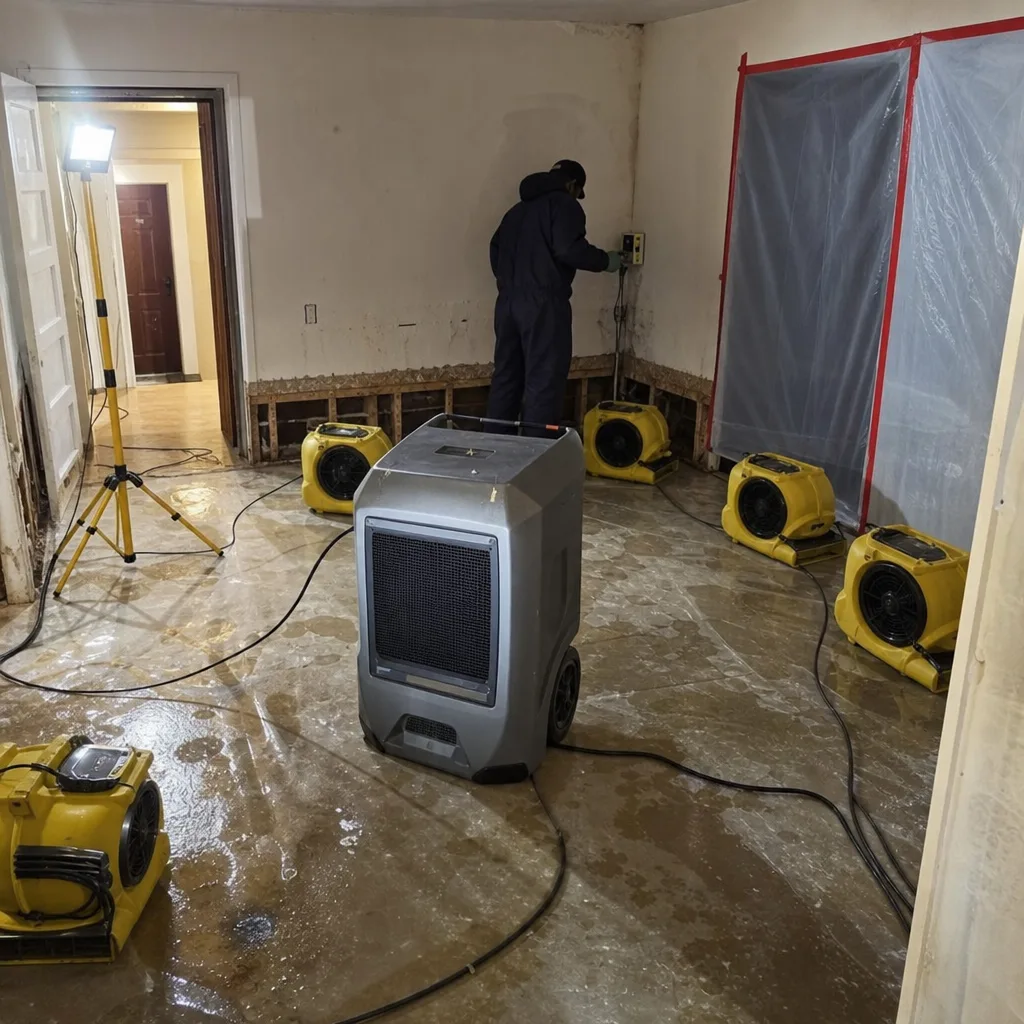
- Why Moisture Readings Matter More Than Visual Cues
- Santa Clarita Construction Types and Their Vulnerability Patterns
- Warning Signs Paired with Measurable Thresholds
- Timeline from Intrusion to Structural Damage by Material
- How to Document Warning Signs for Your Claim
- Call Today vs. Schedule: The Decision Framework
- Common Mistakes to Avoid
- When to Call a Professional
- Frequently Asked Questions
 Before
 After
AfterWhy Moisture Readings Matter More Than Visual Cues
Visual inspection is a starting point, not a diagnostic. A water stain on a ceiling tells you that water has traveled through some path; it does not tell you whether the ceiling cavity is currently wet, whether the insulation above is saturated, or whether the moisture content in the rafter above has reached the 20% threshold where mold sporulation accelerates. We have opened ceilings in Stevenson Ranch where the stain was dry to the touch but the OSB roof deck above read 28% with a pin-type meter. We have also found stains in older Canyon Country homes where the moisture reading was 11%, indicating a resolved event that needed monitoring, not demolition.
The restoration industry operates on psychrometric data, which is the measurable relationship between air temperature, relative humidity, and moisture content in materials. When we deploy drying systems from Dri-Eaz and Phoenix, we are not drying to “looks dry” or “feels dry.” We are drying to a specific equilibrium moisture content, typically 12% or below for structural wood in Santa Clarita’s climate, verified with calibrated meters and logged daily until the target is sustained for 48 hours.
Three meter types matter for homeowners attempting preliminary documentation:
- Pin-type moisture meters penetrate the material surface and measure electrical resistance between two probes. Required for wood framing, OSB, and hardwood flooring. Accuracy: +/- 1-2%. The Protimeter Surveymaster and similar devices are standard in IICRC-certified firms.
- Pinless meters use electromagnetic signals to scan below the surface without penetration. Useful for drywall, tile, and finished surfaces where holes are undesirable. Less accurate on irregular materials; best for mapping the extent of a suspected wet area.
- Thermal hygrometers measure air temperature and relative humidity. Critical for identifying vapor pressure differential, which is the force that drives moisture from wet materials into the air. A reading of 60% relative humidity in a Santa Clarita crawl space in July, when outdoor humidity is typically 25-35%, indicates an active moisture source.
Homeowners who arrive at a contractor conversation with a moisture reading, a date, and a photograph-prepared using the steps in our How to Hire a Damage Restoration Contractor in Santa Clarita: A Step-by-Step Guide-transform the discussion from “tell me what you saw” to “here is what I measured, and here is when I measured it.” That shift matters for claim documentation, for scope accuracy, and for holding any contractor accountable to the same standard.
Santa Clarita Construction Types and Their Vulnerability Patterns
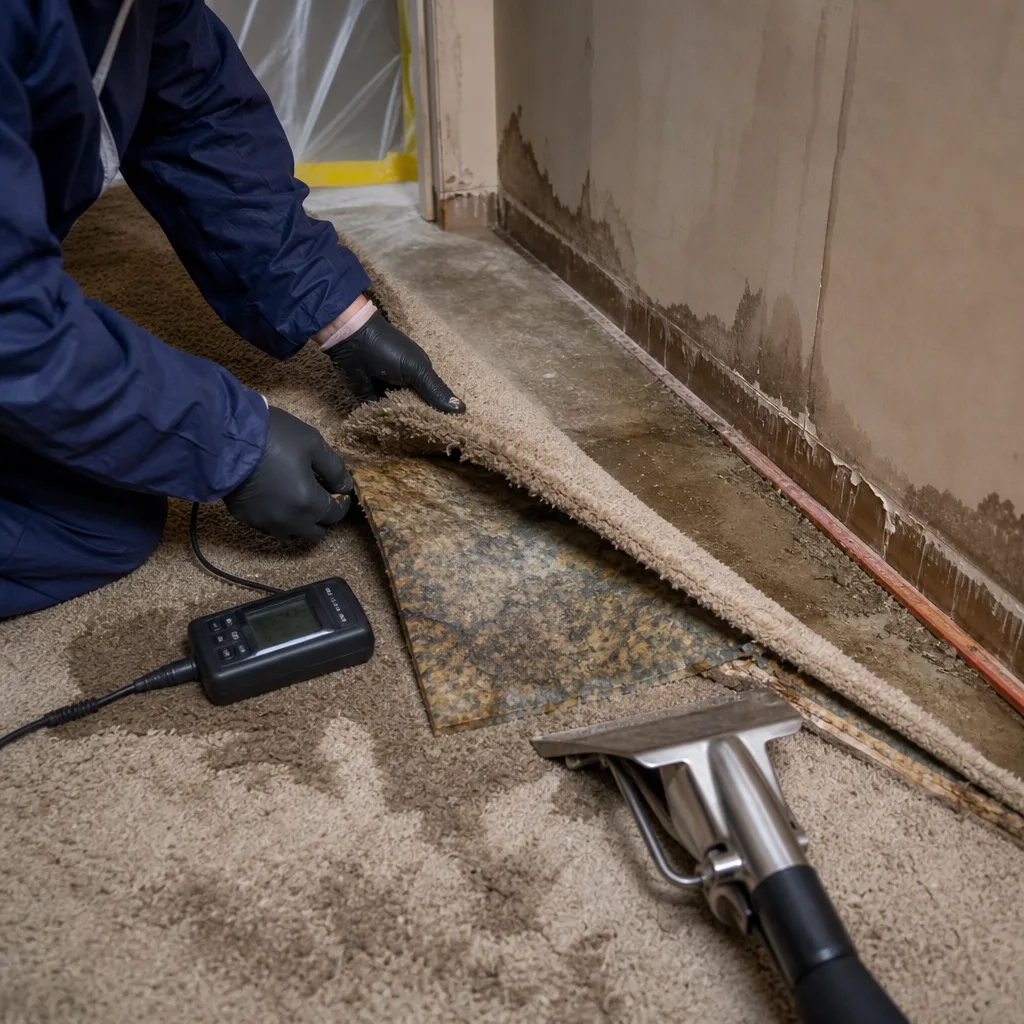
Santa Clarita’s housing stock spans four distinct eras, each with characteristic failure modes that predict where warning signs will appear first.
1970s-1980s Tract Homes in Canyon Country and Saugus
These homes typically feature stucco-over-wood-frame construction with original galvanized steel plumbing. The stucco in this era was often applied over building paper that has degraded after 40+ years of Santa Clarita’s thermal cycling, summer temperatures above 100°F, and winter freeze-thaw events in the foothills. Warning signs specific to this type:
- Stucco cracking pattern: Diagonal cracks running from window corners toward the ground indicate bulk water entry through failed flashing, not thermal movement. Thermal cracks run horizontally or vertically, following stress planes. Bulk water cracks follow the path of gravity-driven flow. Measure moisture in the sill plate below with a pin-type meter; readings above 16% confirm active intrusion.
- Galvanized pipe failure: These pipes have exceeded their 40-50 year design life. The first warning is often a drop in water pressure at a single fixture, followed by rust-colored water. A pinless meter scan of the wall behind the fixture will often reveal elevated readings before visible staining appears.
1990s-2000s Homes in Valencia and Westridge
These neighborhoods saw extensive use of concrete tile roofs with raised-heel trusses and engineered lumber. The vulnerability here is nail-pop patterns in tile roofs preceding leak events. Santa Clarita’s Santa Ana wind events, which can exceed 60 mph, flex roof decks and loosen nail fasteners. A pattern of 3+ nail pops in a roof plane, visible from the ground or during gutter cleaning, indicates a deck that is moving independently of its fasteners. Water entry follows within 1-3 wind seasons, typically at the underlayment penetration.
2010s-2020s Infill and Custom Homes
Newer construction in Sand Canyon and parts of Newhall uses moisture-resistant materials and improved flashing details, but we have documented failures in these homes too. The issue is often improper installation of weather-resistive barriers behind stucco, or condensation in unvented conditioned attics during Santa Clarita’s rare but significant humidity spikes. Warning signs: condensation on interior skylight wells in March and April, when overnight lows drop below the dew point of conditioned interior air.
Historic and Hillside Construction
Homes built before 1970 or on steep lots in areas like Happy Valley face distinct challenges: inadequate foundation drainage, original clay sewer lines, and hillside water migration. The warning sign here is efflorescence on interior basement or retaining walls, which indicates water pressure behind the wall sufficient to dissolve and transport soluble salts. A moisture reading of the wall surface may read 8-10% (apparently dry) while the concrete core behind it exceeds 25%.
Warning Signs Paired with Measurable Thresholds
This section pairs each common visual indicator with the moisture threshold it represents, the meter type to verify it, and the documentation method that preserves your claim position.
Water Stains on Ceilings or Walls
What it means: A stain indicates that water has traveled through the material and deposited dissolved solids at the evaporation front. It does not indicate whether the source is active.
Threshold: Pin-type reading of the framing or substrate above the stain. Below 12%: historical event, monitor quarterly. 12-16%: intermittent or residual moisture, inspect within 30 days. Above 16%: active leak, inspect within 48 hours. Above 20%: emergency response, potential mold amplification.
Meter: Pin-type for framing above; pinless for drywall surface mapping.
Paint Bubbling or Blistering
What it means: Water vapor migrating through the wall assembly has accumulated at the paint film, where it is trapped by latex coatings with permeance below 5 perms. The bubble is a pressure relief point.
Threshold: Pinless meter reading of the drywall behind the bubble. 10-14%: humidity-driven, likely from interior moisture loading (cooking, bathing) without adequate exhaust. 15-20%: likely bulk water entry from exterior. Above 20%: active leak in wall cavity.
Santa Clarita-specific note: South- and west-facing walls in Valencia experience thermal drive that can produce paint bubbling at moisture readings as low as 10% during summer heat events. The distinguishing factor is whether bubbling recedes when temperatures drop. Persistent bubbles that enlarge over weeks indicate bulk water, not thermal drive.
Efflorescence on Stucco or Masonry
What it means: Water has dissolved soluble salts in the wall assembly and transported them to the surface, where evaporation leaves a white crystalline deposit. Efflorescence requires water movement; it does not occur from humidity alone.
Threshold: Pin-type reading of the wood framing at the base of the wall, accessed through weep screed or interior wall. Below 15%: past event, monitor. 15-20%: seasonal or intermittent moisture. Above 20%: active bulk water entry, likely at failed flashing or weep screed blockage.
Documentation: Photograph the efflorescence pattern with a ruler for scale, noting date and weather conditions. Santa Clarita’s winter rains produce most efflorescence events between January and March; summer efflorescence indicates irrigation or plumbing source.
Soft or Spongy Drywall
What it means: The gypsum core has absorbed sufficient water to degrade its structural integrity. This occurs at moisture content above 30% in standard 1/2″ drywall.
Threshold: Pinless meter reading of the affected area. 20-30%: saturated but potentially salvageable with professional drying using Injectidry systems for in-wall air circulation. Above 30%: removal required, as gypsum integrity is compromised and mold growth is likely in the paper facing.
Safety note: Soft drywall near electrical fixtures or switches indicates potential water contact with energized components. Do not press or probe. De-energize the circuit at the panel and call a licensed electrician before restoration work begins.
Musty or Earthy Odor
What it means: Microbial volatile organic compounds (MVOCs) produced by active mold colonization. By the time odor is detectable, mold is established, not incipient.
Threshold: Air sampling is not required for response decisions. The relevant measurement is moisture content of the nearest suspected substrate. Above 16% in cellulose materials (drywall paper, wood, OSB): conditions support mold growth. Above 20%: active colonization likely. A thermal hygrometer reading of 60%+ relative humidity in the space confirms insufficient drying.
Santa Clarita-specific note: Homes near the Santa Clara River corridor in Newhall and lower Valencia experience higher seasonal humidity than the valley floor. A musty odor in these areas during Santa Ana wind lulls (typically October-November) often indicates crawl space or slab moisture that has been driven inward by pressure changes.
Buckling Hardwood or Laminate Flooring
What it means: Wood expansion from moisture absorption has exceeded the expansion gap left at installation perimeter.
Threshold: Pin-type meter reading of the subfloor beneath, accessed through a floor vent or by removing a transition strip. Solid hardwood buckles at subfloor moisture above 14%. Engineered products vary by construction but typically fail at 12-16%. Laminate with fiberboard core swells irreversibly above 18%.
Critical distinction: Buckling from a single water event (overflow, leak) may be restorable if drying begins within 24-48 hours. Buckling with no identified event indicates chronic moisture, often from slab vapor emission or inadequate vapor barrier. The response and the claim position differ significantly.
Tile Grout Discoloration or Cracking
What it means: Water migration through the tile assembly has degraded grout or deposited minerals. In Santa Clarita’s hard water areas, calcium deposits appear as white haze; iron deposits from corroded fasteners appear as orange or brown staining.
Threshold: Pinless meter of the tile surface will not read accurately through glazed ceramic. Use a pin-type meter with 2″ probes through grout joints to reach the mortar bed. Readings above 20% in the mortar indicate failed waterproofing membrane in wet areas (showers, tub surrounds).
Corroded HVAC Registers or Baseboard Hardware
What it means: Condensation on metal surfaces in contact with humid air. In Santa Clarita, this typically indicates duct leakage in unconditioned attic spaces, where supply air at 55°F meets attic air at 95°F+ in summer, or supply duct contact with hot roof decking.
Threshold: Thermal hygrometer reading at the register: relative humidity above 65% at the supply register indicates duct leakage or inadequate insulation. Moisture meter of the surrounding drywall: readings above 12% indicate condensation-driven wetting of the wall cavity.
Timeline from Intrusion to Structural Damage by Material
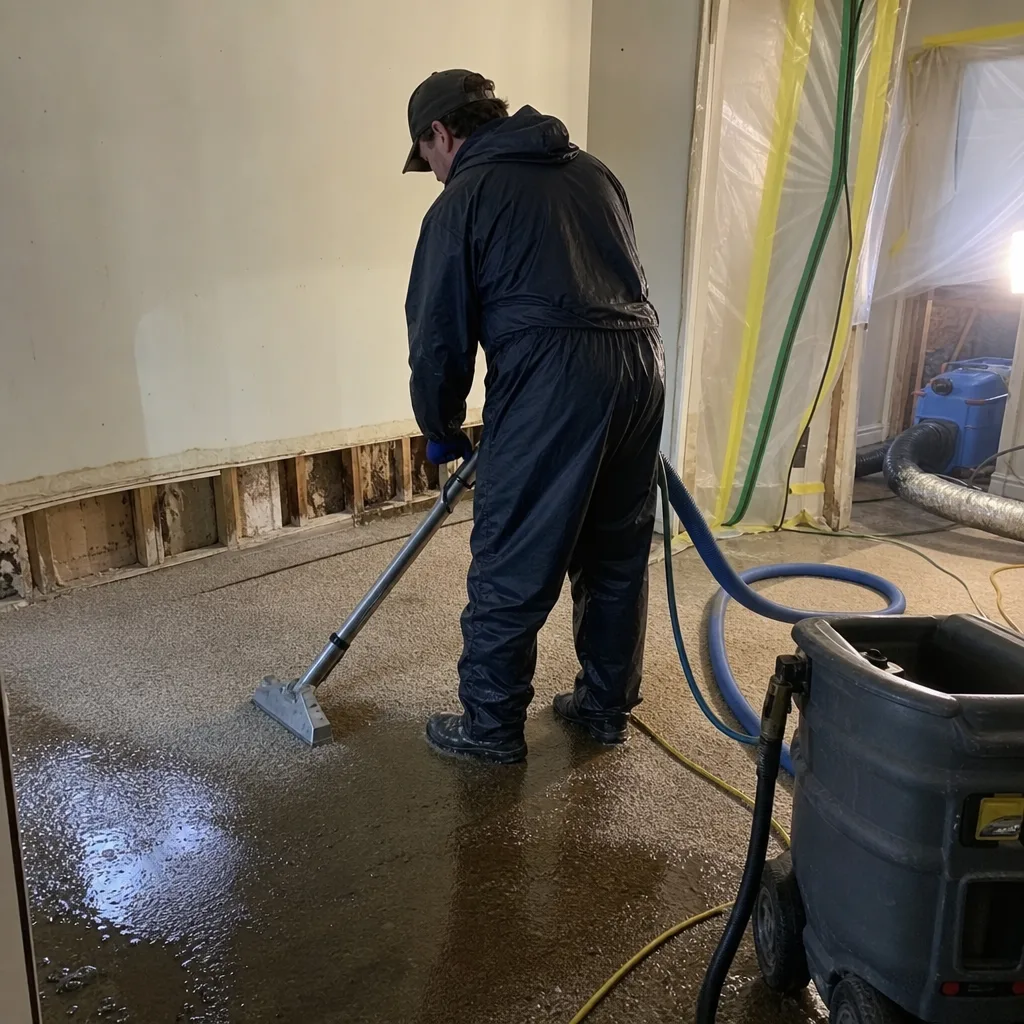
Homeowners routinely underestimate how quickly materials degrade once moisture exceeds their tolerance threshold. The timelines below assume Santa Clarita’s typical indoor conditions: 68-75°F, with seasonal humidity variation from 25% (summer) to 55% (winter). These timelines shorten significantly in unconditioned spaces during heat events.
| Material | Moisture Threshold for Damage | Time to Structural Compromise | Time to Mold Colonization | Typical Santa Clarita Scenario |
|---|---|---|---|---|
| Framing lumber (2×4, 2×6) | 20% | 2-4 weeks at >20% | 48-72 hours at >16% | Leak in wall cavity from failed shower valve in Valencia home |
| OSB roof/wall sheathing | 23% | 1-2 weeks at >23% | 48-96 hours at >18% | Tile roof nail-pop leak in Saugus, undiscovered until ceiling stain appears |
| 1/2″ standard drywall | 30% | Immediate (structural integrity lost) | 24-48 hours on paper facing at >16% | Washing machine overflow in Canyon Country second-story laundry |
| 5/8″ fire-rated drywall | 28% | Immediate | 24-48 hours at >16% | Garage-to-living-area wall in Westridge townhome |
| Plywood subfloor | 20% | 2-6 weeks at >20% | 48-72 hours at >16% | Slab leak in Newhall home with original copper plumbing |
| Particleboard underlayment | 18% | Immediate (irreversible swelling) | 24-48 hours at >16% | Laminate flooring in Sand Canyon rental property |
| Concrete slab (surface) | 75-80% RH in air above | Months to years for rebar corrosion | Not applicable (inorganic) | Vapor emission through unsealed slab in hillside construction |
The critical takeaway: mold colonization precedes structural damage in every organic material. A homeowner who waits for visible decay has already passed the point where professional drying could prevent removal. This is why moisture readings, not visual inspection, drive response timing.
In our work across Santa Clarita since 2011, the most expensive claims we have documented involved delays of 5-14 days between first observable sign and professional response-a risk our Seasonal Damage Restoration Care for Santa Clarita: Year-Round Homeowner’s Guide is designed to help you avoid. A ceiling stain that might have required $800 in drying and repair becomes $12,000+ in mold remediation, drywall replacement, and contents cleaning. The difference is not the severity of the original event; it is the duration of undetected moisture.
How to Document Warning Signs for Your Claim
Insurance coverage for water damage hinges on the sudden-and-accidental clause: the event was sudden, and it was discovered promptly. A homeowner who cannot establish when damage began faces a coverage dispute that often ends in partial denial. The documentation method below produces a record that contractors and adjusters can work from.
Step 1: Photograph with Context
- Take one photograph that includes the warning sign and a recognizable reference point (door frame, window, light switch) to establish location within the home.
- Take a second photograph with a ruler or tape measure adjacent to the sign, to establish scale.
- Take a third photograph of the surrounding area, to show what is not affected. This establishes the boundary of damage at time of discovery.
- Enable timestamp on your camera or phone, or photograph a newspaper or phone screen showing date and time.
Step 2: Record Environmental Conditions
- Note outdoor temperature and weather. Santa Clarita’s daily high/low is available from NOAA or local news.
- Note whether HVAC was operating, and at what setting.
- If you have a basic humidity meter, record indoor relative humidity.
Step 3: Obtain a Moisture Reading if Possible
- Pin-type meters suitable for homeowner use cost $50-150. The General Tools MMD4E or similar is adequate for preliminary documentation.
- Record the reading, the material tested, and the exact probe location.
- If you do not have a meter, note this explicitly: “No moisture reading obtained at time of discovery.” This prevents an adjuster from later claiming you concealed information.
Step 4: Preserve the Evidence
- Do not clean, paint, or repair before documentation is complete and your insurer has had opportunity to inspect.
- Save damaged materials if removal is necessary for safety: place in labeled bags, photograph before and after removal, store in dry location.
- Email the photograph set to yourself or a cloud account with automatic timestamp, creating an immutable record of when documentation occurred.
Step 5: Request Written Scope Before Any Work
Under DryMark Restoration Santa Clarita home practice, and consistent with The Haven Standard, Clause 1, any contractor who begins work without a written scope and price is operating outside industry best practice. Your documentation supports that scope. A contractor who will not put a price in writing before work starts is a contractor who expects to expand the scope once demolition begins.
Call Today vs. Schedule: The Decision Framework
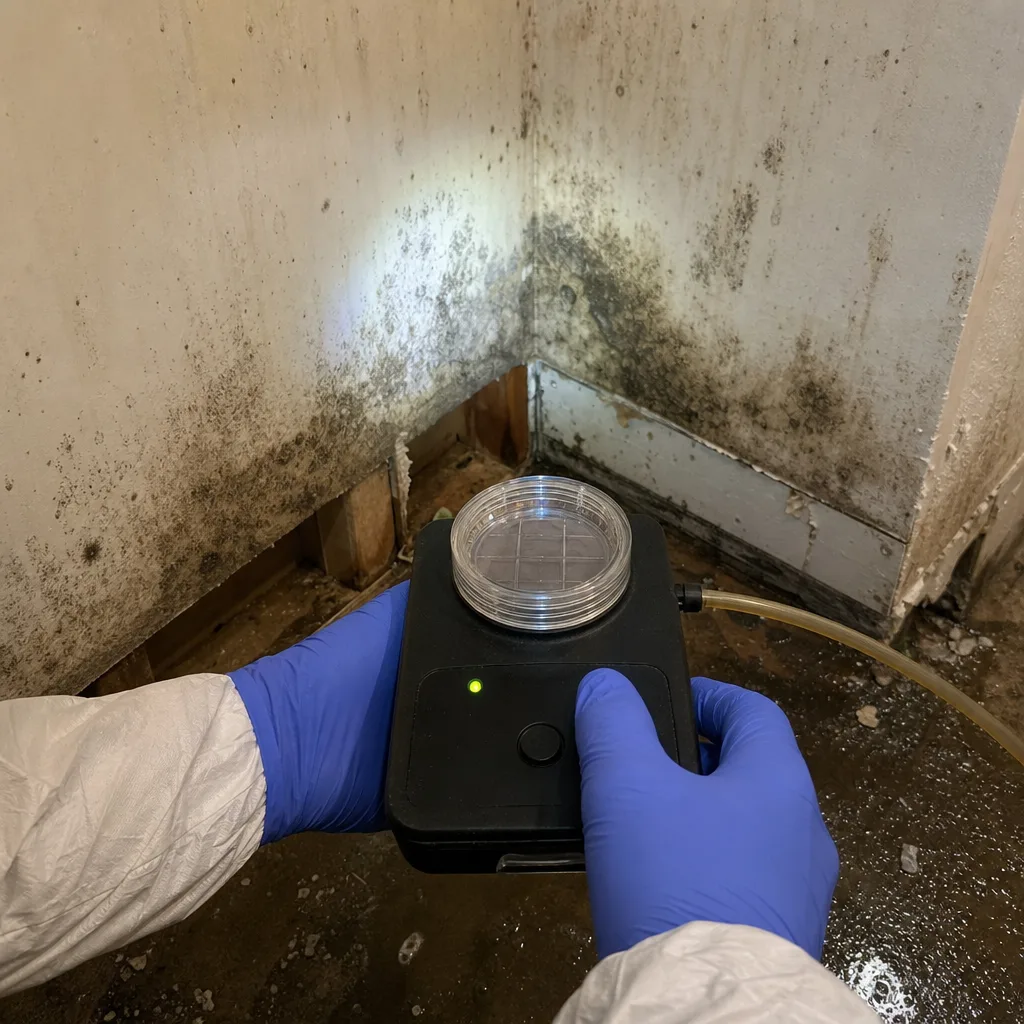
Not every warning sign requires emergency dispatch. The framework below uses moisture thresholds to categorize response timing, with specific Santa Clarita considerations.
Call Today: Emergency Response Indicators
- Moisture reading above 20% in any structural wood or OSB
- Active dripping, streaming, or pooling water
- Sewage odor or gray/black water visible
- Water contact with electrical panel, outlets, or switches
- Structural deformation: sagging ceiling, buckling wall, or compromised floor
- HVAC system producing water or moisture at registers
In Santa Clarita, emergency response availability varies by contractor. Water Damage Restoration in Santa Clarita through DryMark Restoration Santa Clarita maintains live phone coverage 24 hours a day, 7 days a week with no voicemail on emergency lines. Response time to Valencia, Saugus, and Canyon Country is typically under 90 minutes during business hours and under 2 hours overnight.
Schedule Within 48-72 Hours: Urgent Inspection Indicators
- Moisture reading 16-20% in structural materials
- Isolated efflorescence with no active dripping
- Musty odor localized to one room or area
- Paint bubbling confined to single wall section
- Tile grout discoloration in single wet area
These conditions support mold growth but have not yet caused structural compromise. Professional inspection with thermal imaging and moisture mapping can define the extent, establish drying targets, and produce the written scope needed for insurance submission.
Schedule Within 2 Weeks: Monitored Indicators
- Moisture reading 12-16% in structural materials
- Historical stain with no current moisture elevation
- Seasonal condensation patterns
- Minor stucco cracking consistent with thermal movement
These conditions require documentation and periodic re-check, not immediate intervention. A homeowner who establishes a baseline reading and re-checks quarterly can detect escalation before it crosses the emergency threshold.
Common Mistakes to Avoid
- Waiting for the stain to “dry out on its own.” A dry surface does not indicate dry substrate. We have documented ceiling stains in Santa Clarita homes where the drywall surface read 10% but the attic insulation above was 45% saturated, and the rafter above that read 22%. Surface drying is not restoration.
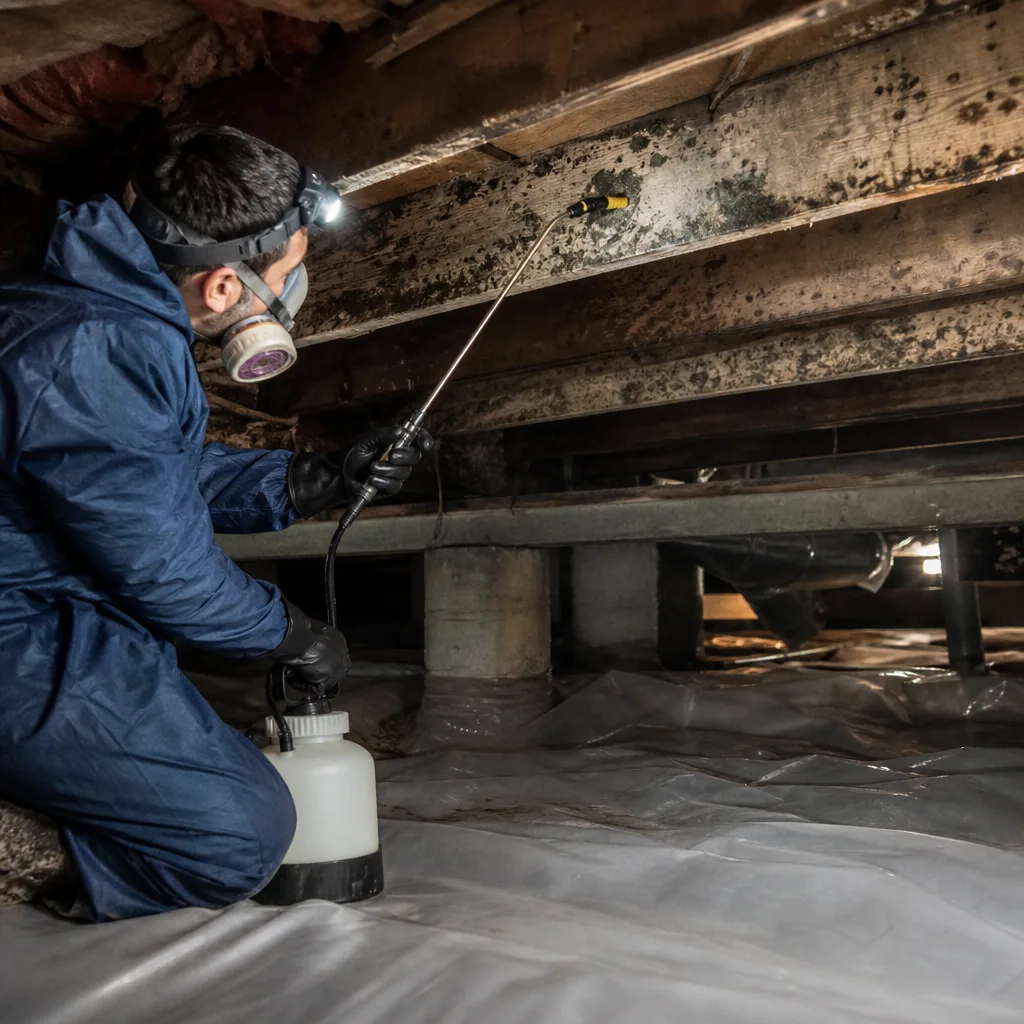
- Using bleach on mold-affected drywall. Bleach does not penetrate drywall to address mold in the paper facing or core. It discolors the surface, which can conceal ongoing growth from later inspectors. Mold Remediation in Santa Clarita requires removal of affected porous materials, not surface treatment.
- Assuming new construction is immune. The most severe mold remediation we have performed in Santa Clarita was in a 2019 custom home in Sand Canyon, where improper weather-resistive barrier installation behind stucco allowed two years of bulk water entry before discovery. Age is not protection; installation quality is.
- Photographing the damage without scale or context. A close-up of mold on drywall proves nothing about when it began, where it is located, or how extensive it is. Adjusters reject claims based on inadequate documentation every day.
- Accepting a verbal estimate or “range” for restoration work. Haven Standard, Clause 1 exists because verbal estimates become inflated invoices once demolition reveals “unforeseen” conditions. A written price before work begins protects against scope creep and establishes a baseline for any insurance dispute.
- Ignoring Santa Clarita’s wind-driven rain patterns. Santa Ana winds drive rain horizontally into wall assemblies that standard flashing was not designed to resist. Stucco homes on north and east exposures in Valencia and Stevenson Ranch experience wind-driven rain entry that produces no visible interior signs for weeks. Annual inspection of exterior sealant at windows, doors, and penetrations is preventive maintenance, not paranoia.
- Failing to distinguish water source categories. Category 1 (clean water from supply line) becomes Category 2 (gray water) within 48 hours, and Category 3 (black water) if it contacts soil or sewage. The restoration protocol and the insurance coverage differ by category. Document the source at discovery, because the source may be altered by subsequent events.
When to Call a Professional
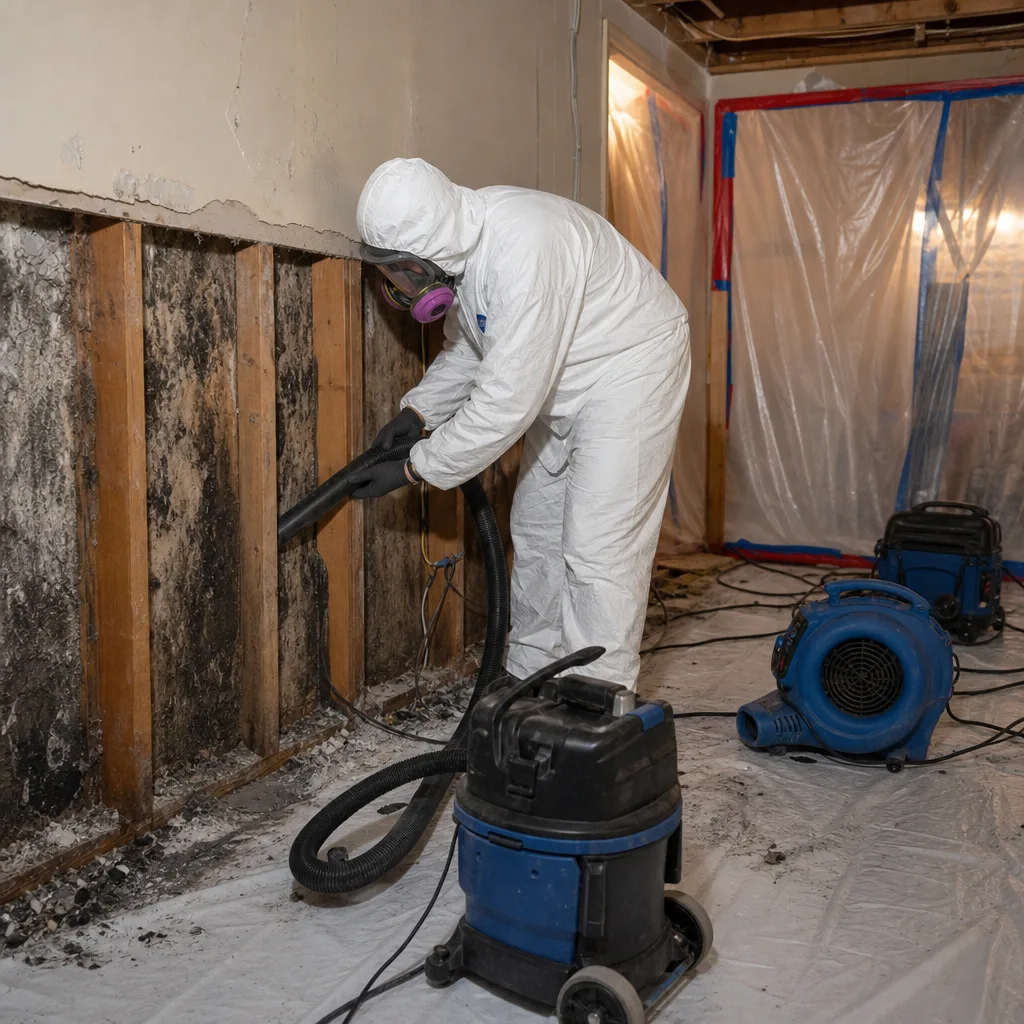
Call for professional inspection when any moisture reading exceeds 16% in structural materials, when you cannot identify or stop the water source, when electrical components are involved, or when mold is visible on more than 10 square feet of surface. These thresholds reflect where homeowner capability ends and professional equipment, training, and documentation become necessary.
DryMark Restoration Santa Clarita offers free estimates in Santa Clarita, including a written scope and price before any work begins, documented photo record on every visit, and the 365-Day Done Right Promise under The Haven Standard. For water damage, mold, fire, or storm concerns, call (747) 294-2725. Live phone coverage is available 24 hours a day, 7 days a week with no voicemail on emergency lines.
Frequently Asked Questions
Reputable restoration firms in Santa Clarita typically offer initial moisture inspection at no charge, with the understanding that significant findings may lead to a scoped proposal. DryMark Restoration Santa Clarita provides free estimates that include thermal imaging, moisture mapping with professional-grade meters, and a written scope with price before any work begins. Call (747) 294-2725 to schedule.
Coverage depends on whether the damage was “sudden and accidental” versus “gradual and ongoing.” A warning sign you noticed weeks ago but did not document complicates this determination. Your best protection is dated photographs, moisture readings, and records of when you first observed the condition and what you did about it. Insurers deny claims for lack of documentation, not for the damage itself. We coordinate directly with adjusters and provide the photo-documented drying logs that support payable claims.
Homeowner-grade pin-type meters ($50-150) are adequate for preliminary documentation and trend monitoring. Professional-grade meters offer greater accuracy, deeper penetration, and calibration certification that holds up in dispute resolution. The critical factor is not the meter’s cost but consistent measurement technique: same depth, same location, recorded with date and environmental conditions. For insurance purposes, a professional reading with calibrated equipment and documented methodology carries more weight.
Response time varies by contractor and by whether the call is during business hours, overnight, or during regional storm events. DryMark Restoration Santa Clarita maintains live phone coverage 24 hours a day, 7 days a week with no voicemail on emergency lines. Typical response to Valencia, Saugus, and Canyon Country is under 90 minutes during business hours and under 2 hours overnight. Response to more remote areas of Sand Canyon or Happy Valley may extend to 2-3 hours. The question to ask any contractor is not “how fast can you get here” but “will a trained technician arrive, or will a salesperson arrive first to sign paperwork before the crew is dispatched.”
For mold growth on less than 10 square feet of hard, non-porous surface, homeowner cleaning with appropriate PPE and EPA-registered product is generally acceptable. For growth on porous materials (drywall, carpet, insulation), growth exceeding 10 square feet, or growth in HVAC systems, professional remediation is indicated per IICRC S520 standards. The determining factor is not visible extent but whether the moisture source has been identified and corrected. Cleaning mold without fixing the moisture condition guarantees recurrence. We provide free second opinions on any competitor’s written mold remediation estimate.
A significantly lower estimate typically indicates one of three conditions: incomplete scope (missing necessary steps that will be added later), different response category (cleaning versus remediation versus reconstruction), or different equipment and drying standards. The Haven Standard requires that every job be quoted in writing before work begins, with no scope-creep additions once the crew is inside. We offer a Free Second Opinion on any competitor’s written estimate. Bring the estimate, and we will review line by line what is included, what is omitted, and what the drying standard specifies. Call (747) 294-2725.
Santa Ana winds create two distinct risks. First, wind-driven rain penetrates building envelopes at velocities standard flashing was not designed to resist, particularly on north and east exposures. Second, high winds damage roofing materials and create entry points that are not visible from the ground. After any significant Santa Ana event, inspect your roof from the ground for displaced tiles, damaged flashing, or debris accumulation at valleys and penetrations. Check interior ceilings and upper walls within 48-72 hours for new stains or odors.
The Bottom Line
Warning signs are data points, not decisions. A stain, a bubble, or a musty odor gains meaning only when paired with a moisture reading, a date of observation, and a photograph. The homeowner who documents these three elements arrives at every professional conversation with leverage: leverage to demand a written scope, leverage to hold a contractor accountable, and leverage to establish insurance coverage under sudden-and-accidental terms. In Santa Clarita’s specific construction environment, stucco cracking patterns, tile roof nail-pops, and seasonal wind-driven rain entry create predictable failure modes that informed homeowners can detect early. The threshold that separates monitoring from emergency response is 16% moisture content in structural wood, measured with a pin-type meter. Below that, schedule and document. Above that, call for professional inspection with thermal imaging and moisture mapping. The cost of early documentation is a $50 meter and fifteen minutes. The cost of delayed response is often thousands in uncovered damages and months in claim dispute.
Written by Alicia Brennan, Owner at DryMark Restoration Santa Clarita, serving Santa Clarita since 2011.