
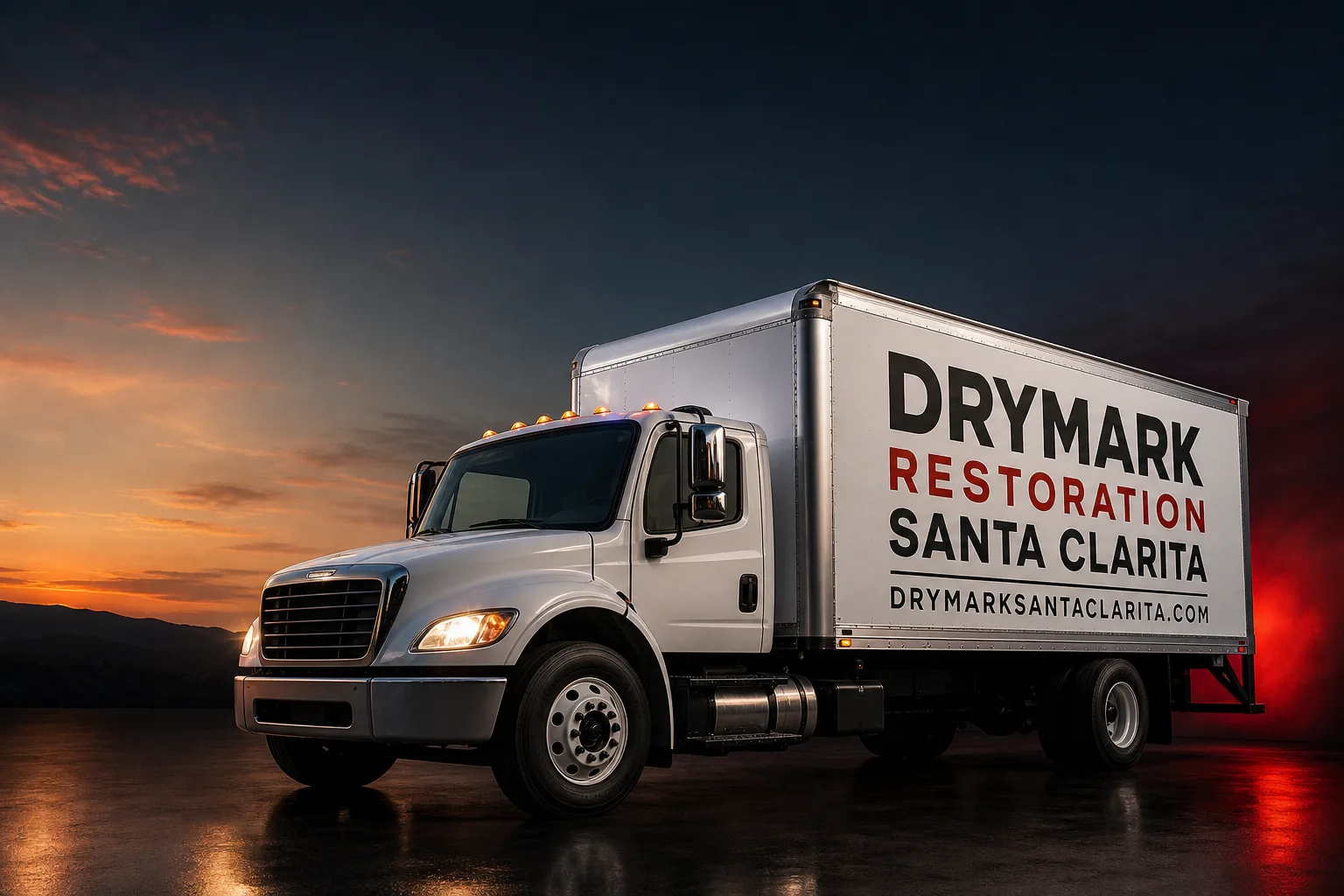
Free visual inspection and a written scope of work before any mitigation begins - photos, moisture readings, and drying logs go in your claim file
The scope we write is the scope we bill. Anything new gets shown to you, in writing, before we touch it.
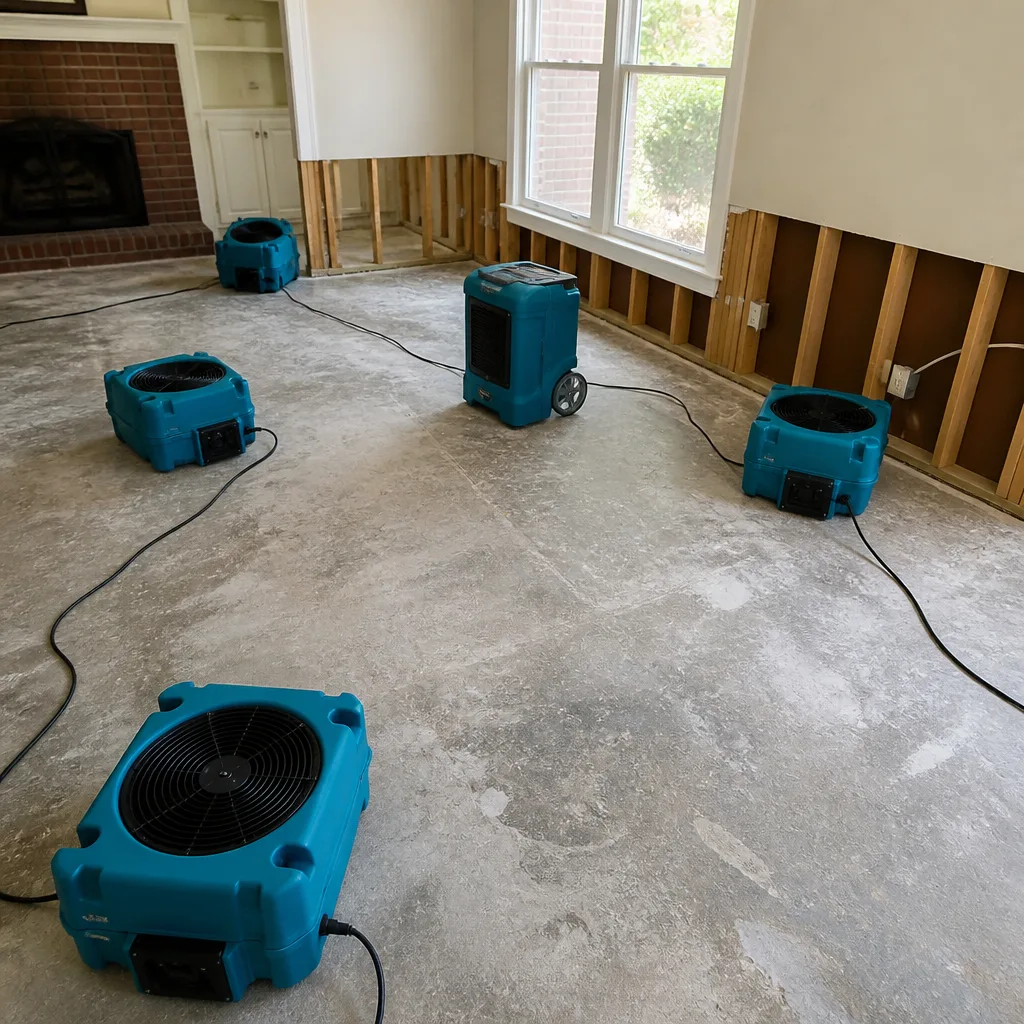
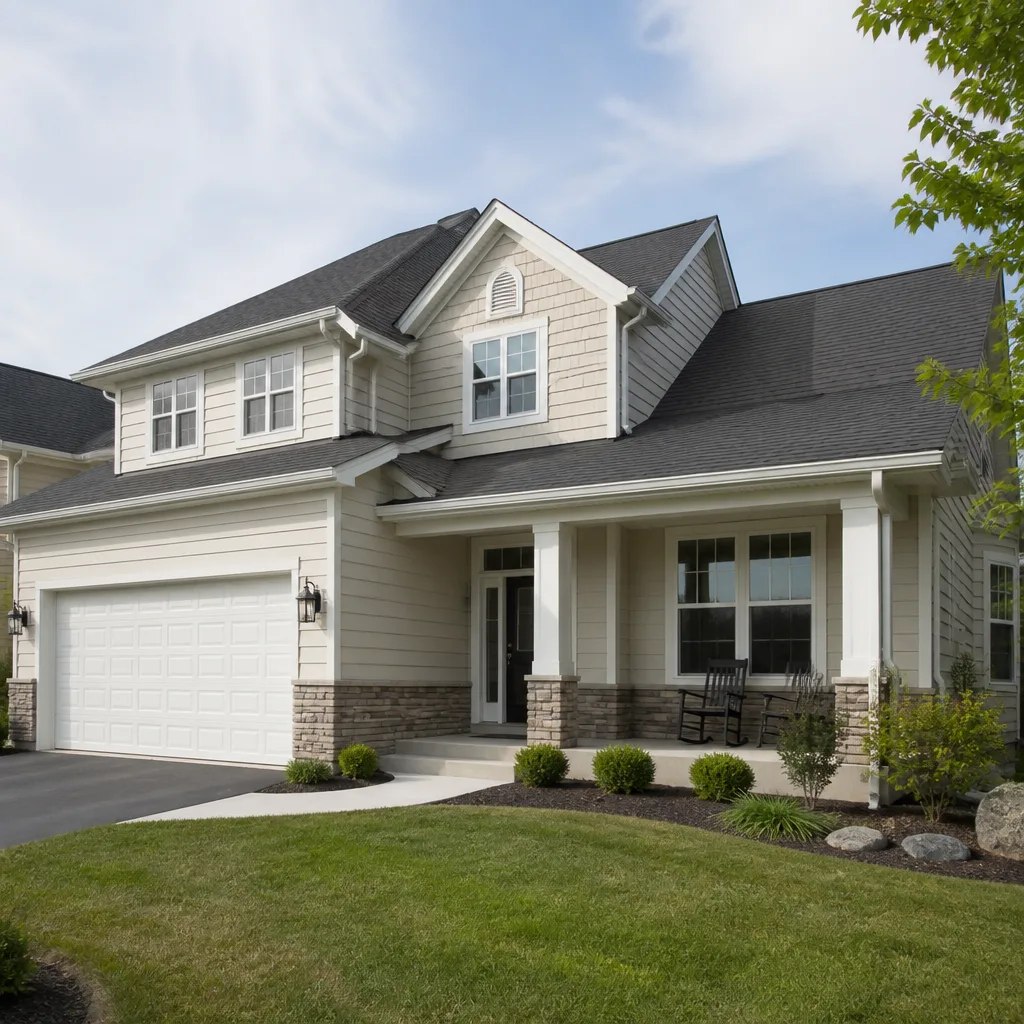
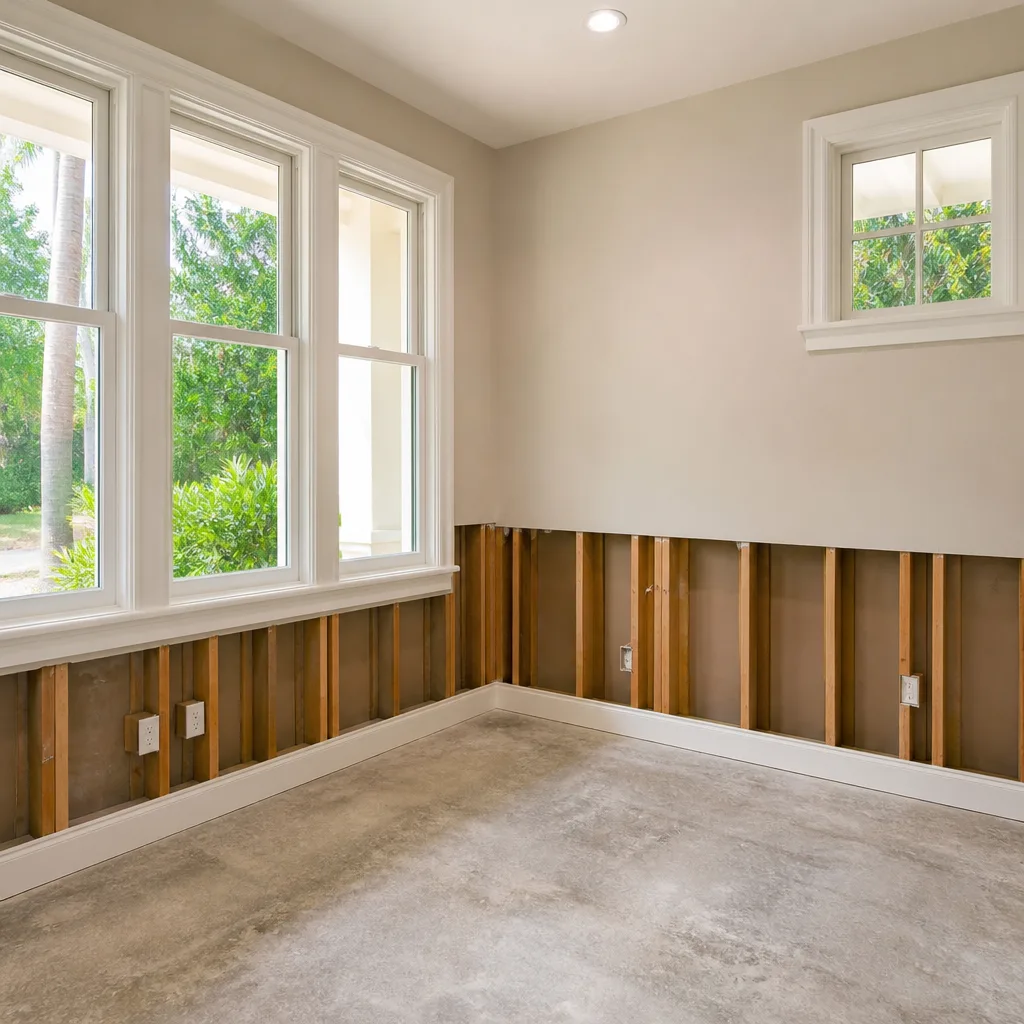
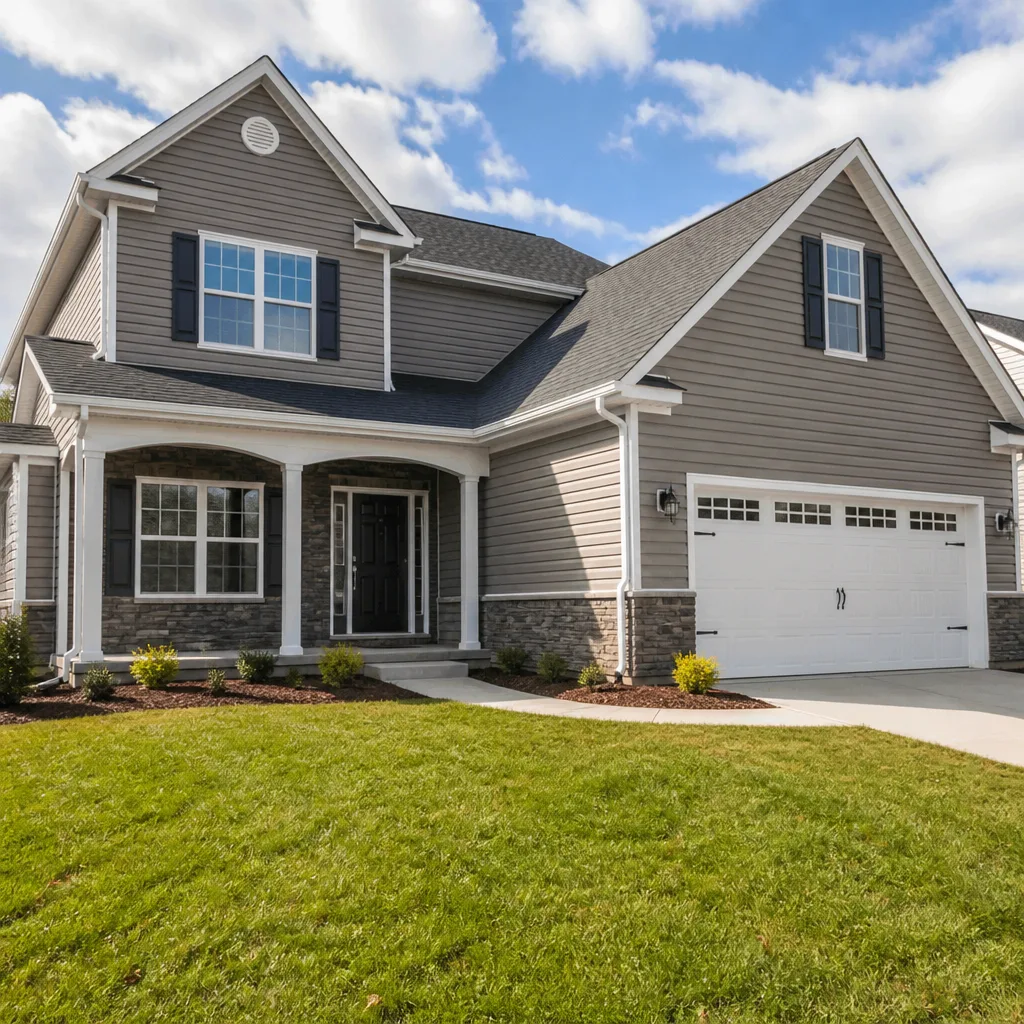
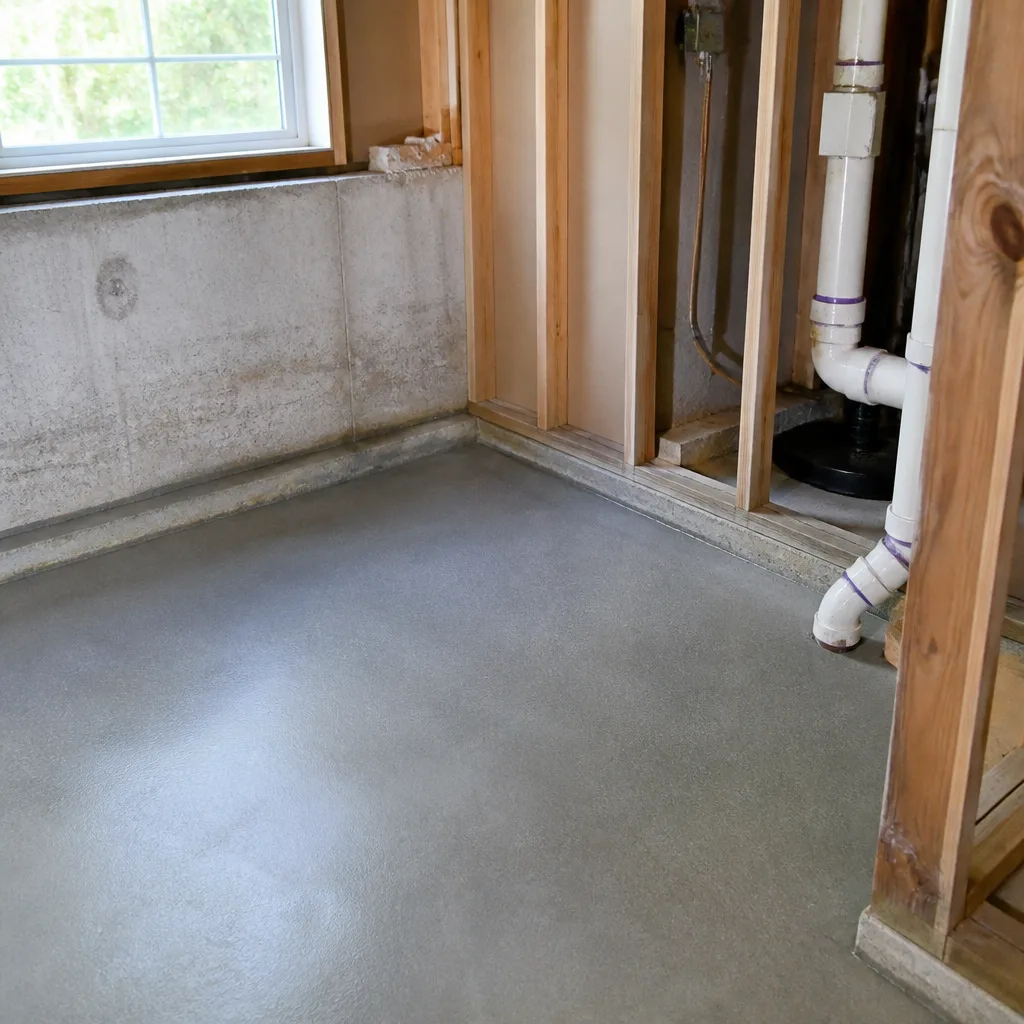
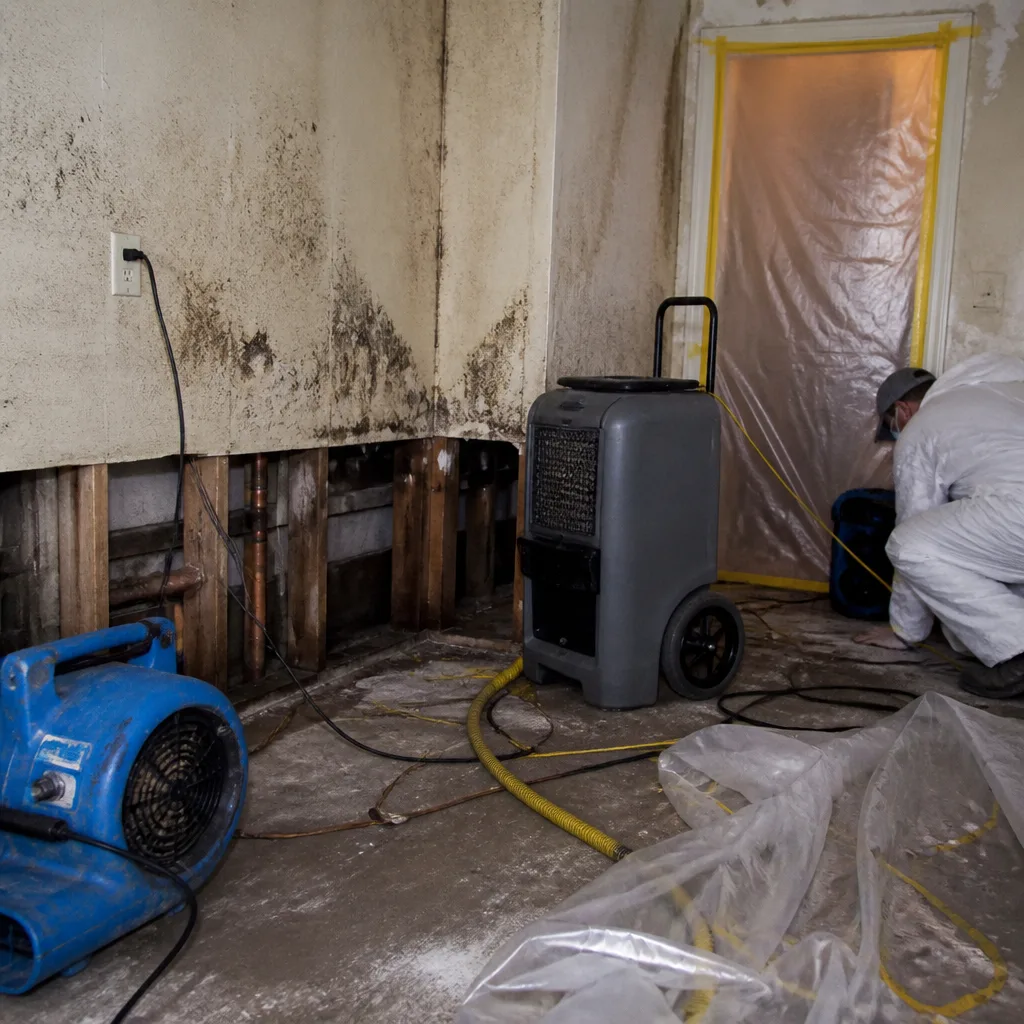 Before
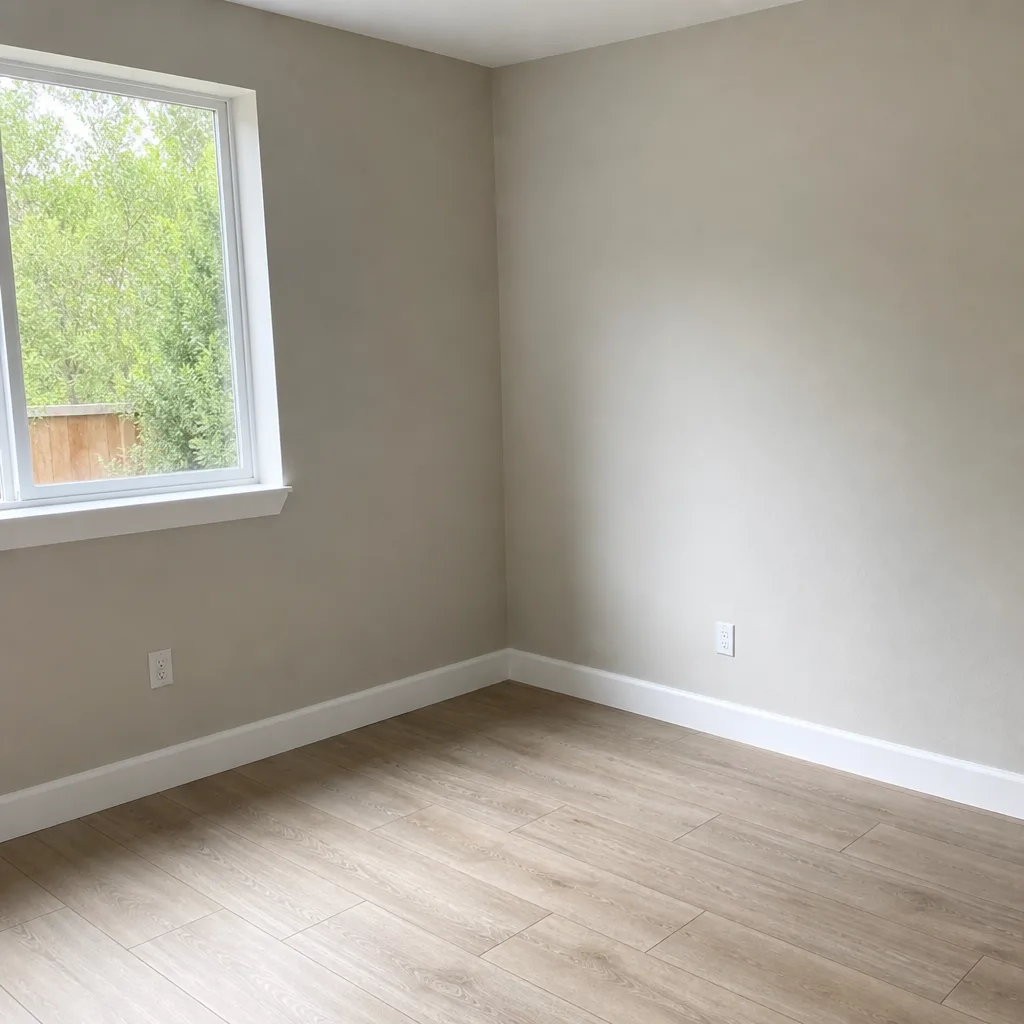 After
After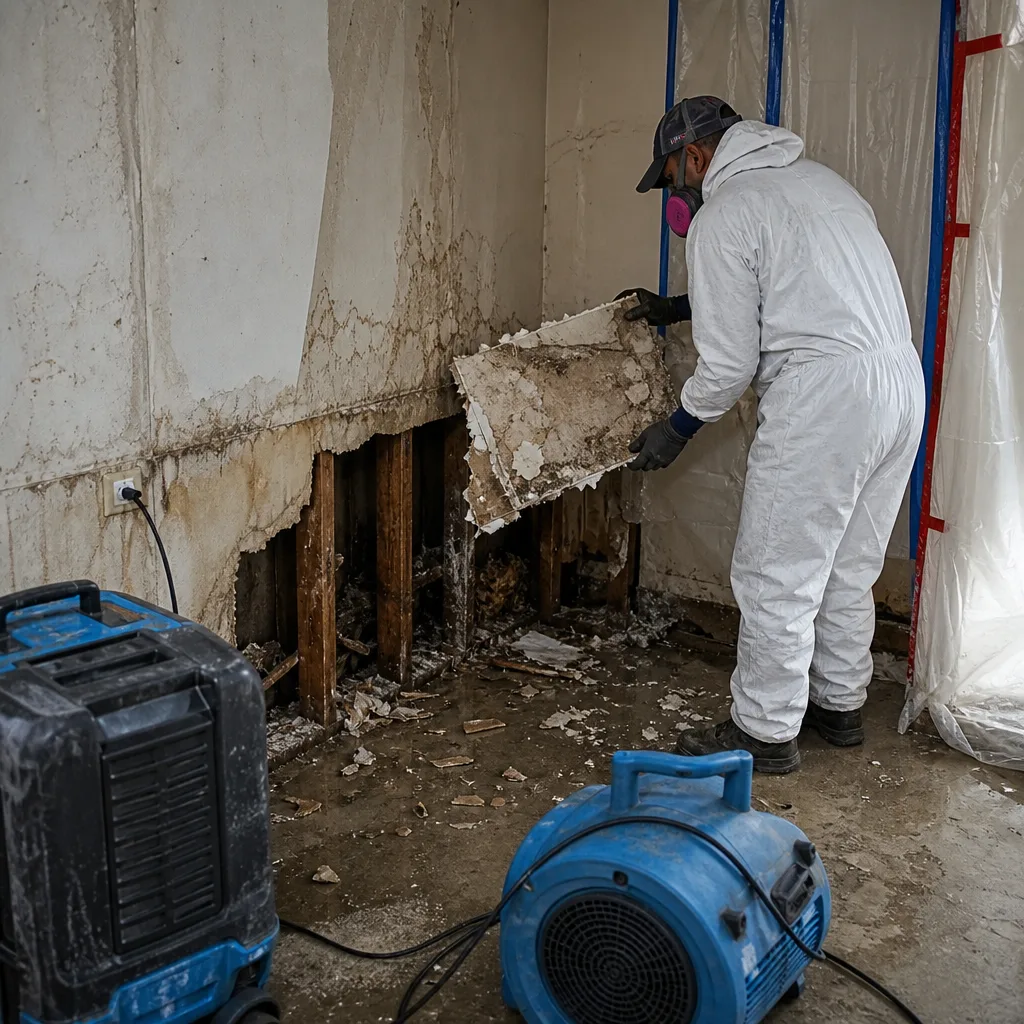 Before
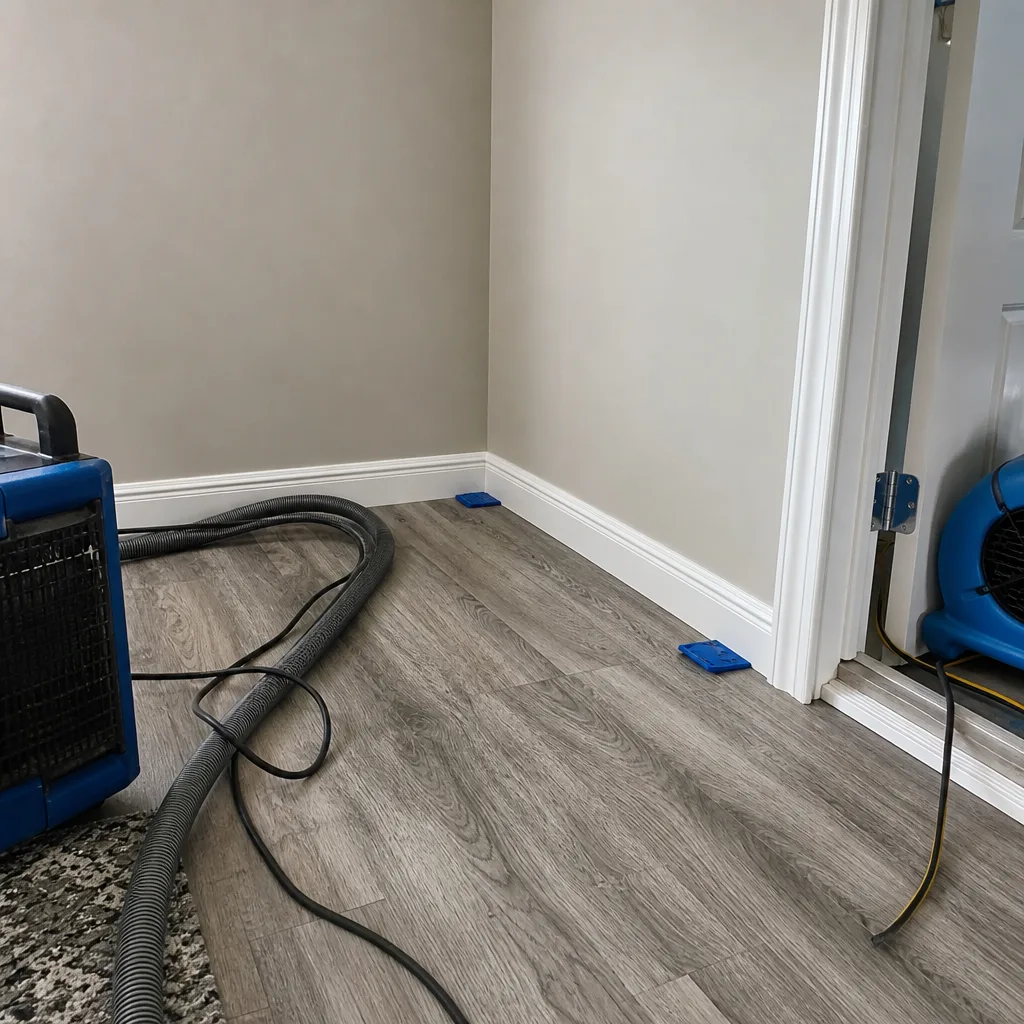 After
After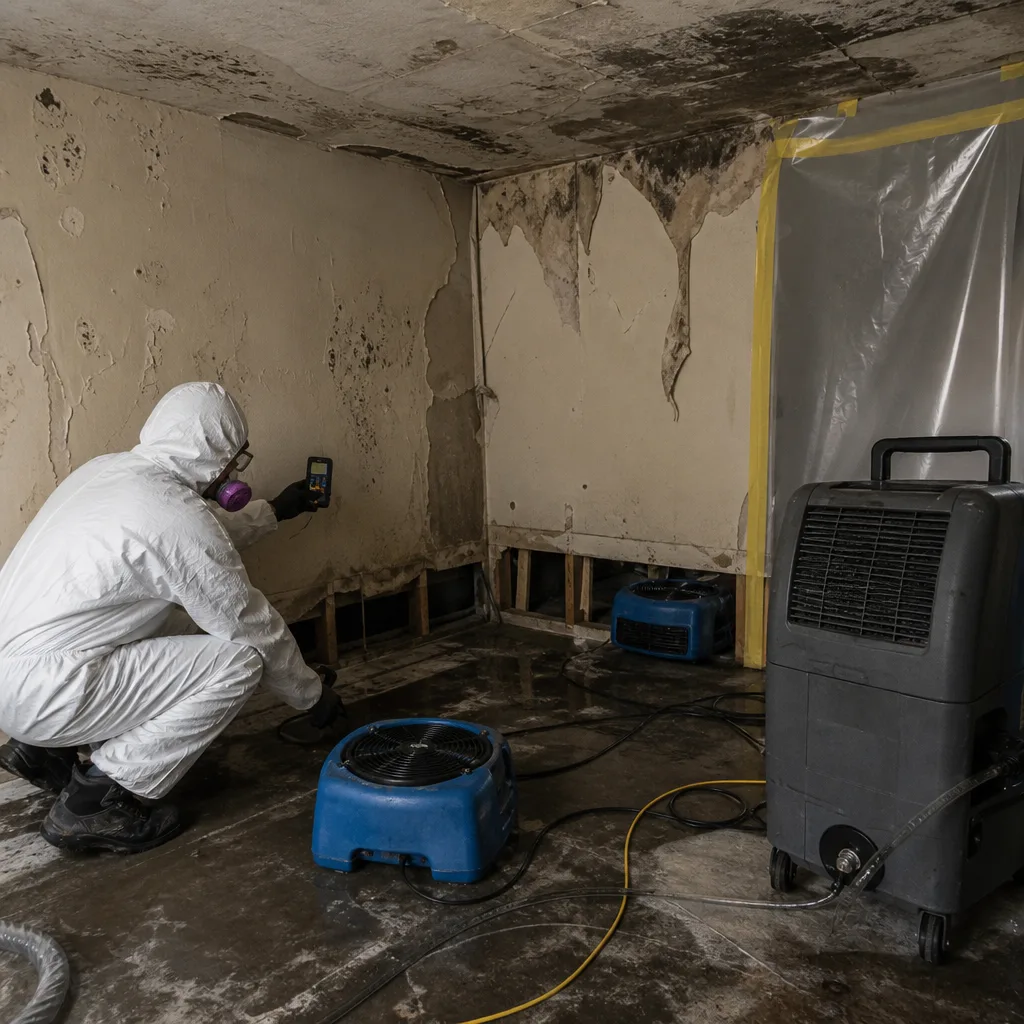 Before
 After
After24/7 Emergency Water Damage Restoration in Castaic
Water damage restoration in Castaic typically costs $2,800-$7,500 for a standard residential mitigation, with emergency extraction starting at $450-$950 and full structural drying running $1,800-$4,200 depending on affected square footage and water category. Crews can be on-site in Castaic within 45 minutes of your call, and every job begins with a free visual inspection and written scope before any equipment runs. Call (747) 294-2725 now - a live person answers, 24 hours a day, with no voicemail trees while water is still moving through your walls.
The first hour determines whether you’re looking at extraction and drying, or full gutting and reconstruction. In Castaic’s 1980s-2000s-era stucco-over-frame tract homes, water follows the path of least resistance: down wall cavities, under slab edges, and into attic insulation through compromised vent screens. Santa Ana wind events have already stressed many of these structures to near-desiccation, so when water hits, it absorbs fast and hides deep. Our Water Damage Restoration team documents moisture readings from minute one, because what you can’t see in a Castaic hillside home will cost you twice if it’s missed.
Understanding Water Damage Restoration Severity in Castaic Properties
Water damage breaks into three categories, and in Castaic, we see all three - often in sequence after a hillside fire. Category 1 is clean water: burst supply lines, failed water heaters, overflowing sinks. Category 2 is gray water: dishwasher discharge, washing machine overflow, sump pump failures. Category 3 is black water: sewage backup, flood runoff, and the mud-ash-contaminant slurry that pours off burned hillsides when rain hits hydrophobic soil.
Moisture mapping with thermal imaging and pinless meters tells us where the water traveled, not just where it pooled. Structural drying then uses psychrometric data - temperature, relative humidity, and vapor pressure differential, which is the force that actually pulls moisture out of materials - to set equipment loads and placement. In Castaic’s canyon-positioned homes, we pay special attention to slab-edge readings because graded hillside lots with minimal natural drainage buffer allow mud migration under foundations that surface meters miss entirely. Tertiary drying, the final phase where we chase bound water in dense materials like tile bed mortar or engineered joists, often runs longer here because Santa Ana-stressed wood framing has opened micro-fissures that wick moisture deeper than standard drying curves predict.
Why Castaic Property Owners Choose DryMark Restoration Santa Clarita
- 45-minute response commitment to Castaic addresses, with dispatch coordinated from our Los Angeles office and crews already staged in the Santa Clarita Valley corridor.
- 24/7 live answer - a real person, never an automated system or next-business-day callback, because water doesn’t observe business hours and neither do we.
- IICRC-certified crews holding WRT (Water Damage Restoration Technician) and AMRT (Applied Microbial Remediation Technician) certifications, with license numbers verified and provided on request before any technician enters your home.
- Free visual inspection with moisture readings, photo documentation, and a written scope delivered before work begins - Haven Standard, Clause 1.
- Direct insurance billing with photo-documented drying logs, line-item estimates, and adjuster coordination handled by our in-house claims team.
- One team from extraction to reconstruction - no handoffs between mitigation and rebuild contractors, no gaps in documentation, no disputed scope transitions.
 Before
 After
AfterOur Water Damage Restoration Process
1. Inspection & Assessment
We arrive with thermal imaging cameras, pin and pinless moisture meters, and hygrometers to map the full extent of migration. In Castaic hillside homes, we specifically probe slab perimeters and wall cavities adjacent to graded fill - the places post-fire debris flows hide water that surface checks miss.
2. Extraction & Stabilization
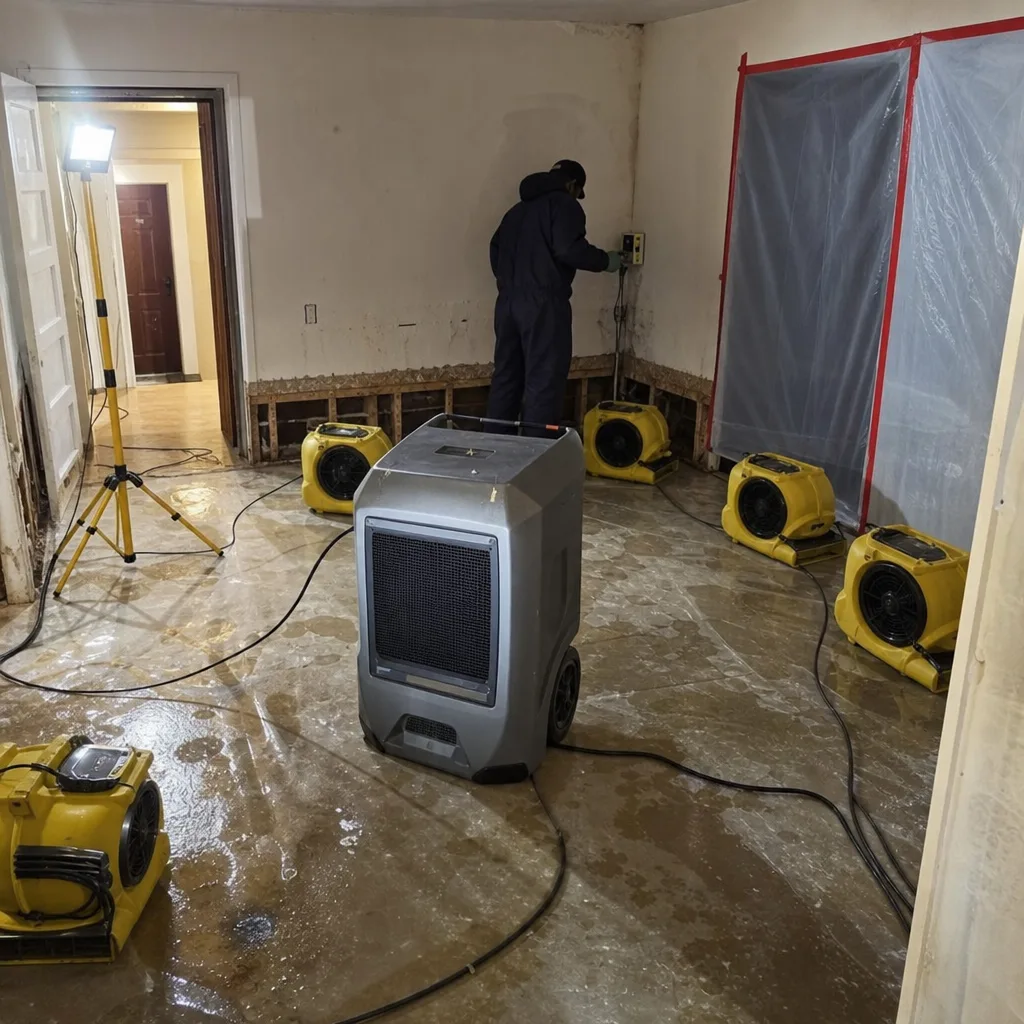
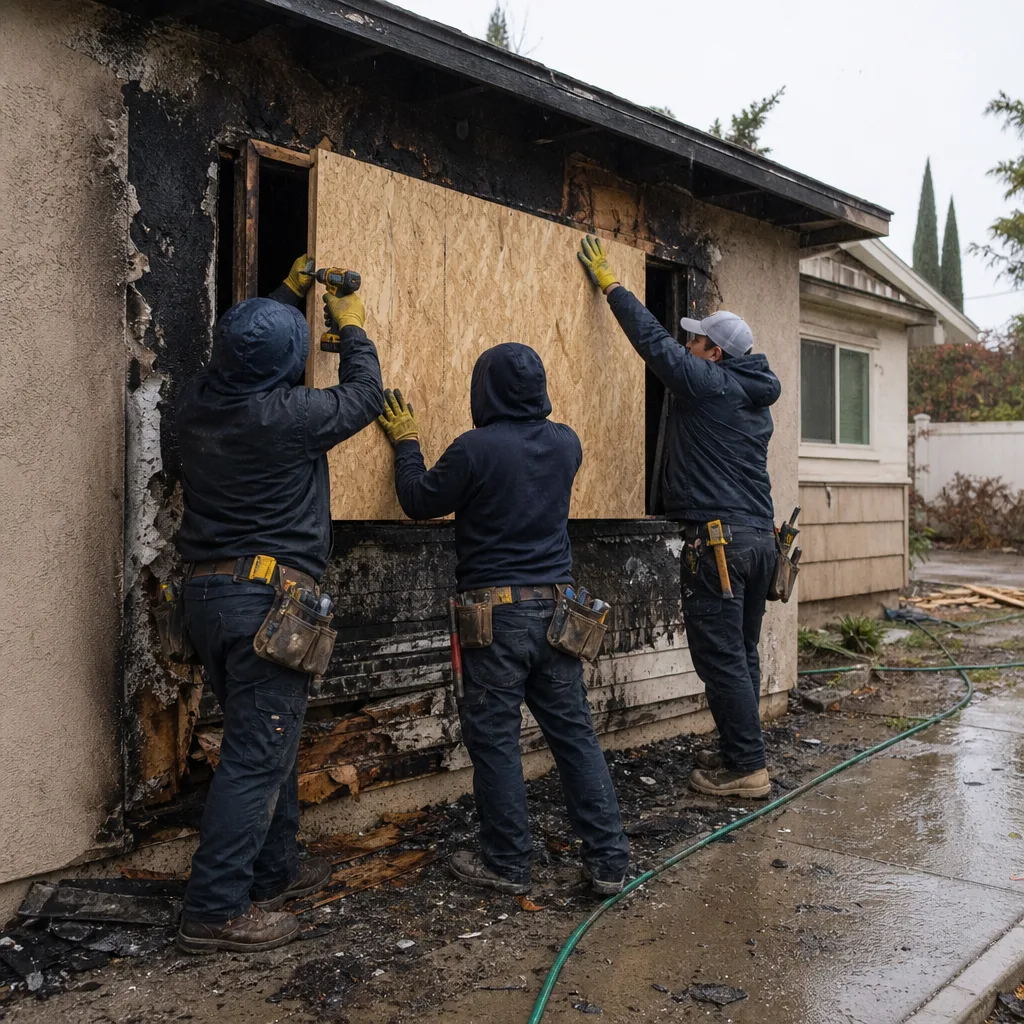
Standing water comes out first with truck-mounted extraction systems and portable submersible pumps. We then set containment barriers around affected zones to prevent cross-contamination, critical when category 3 water from burned canyon runoff carries ash, hydrocarbons, and soil contaminants.
3. Drying & Dehumidification
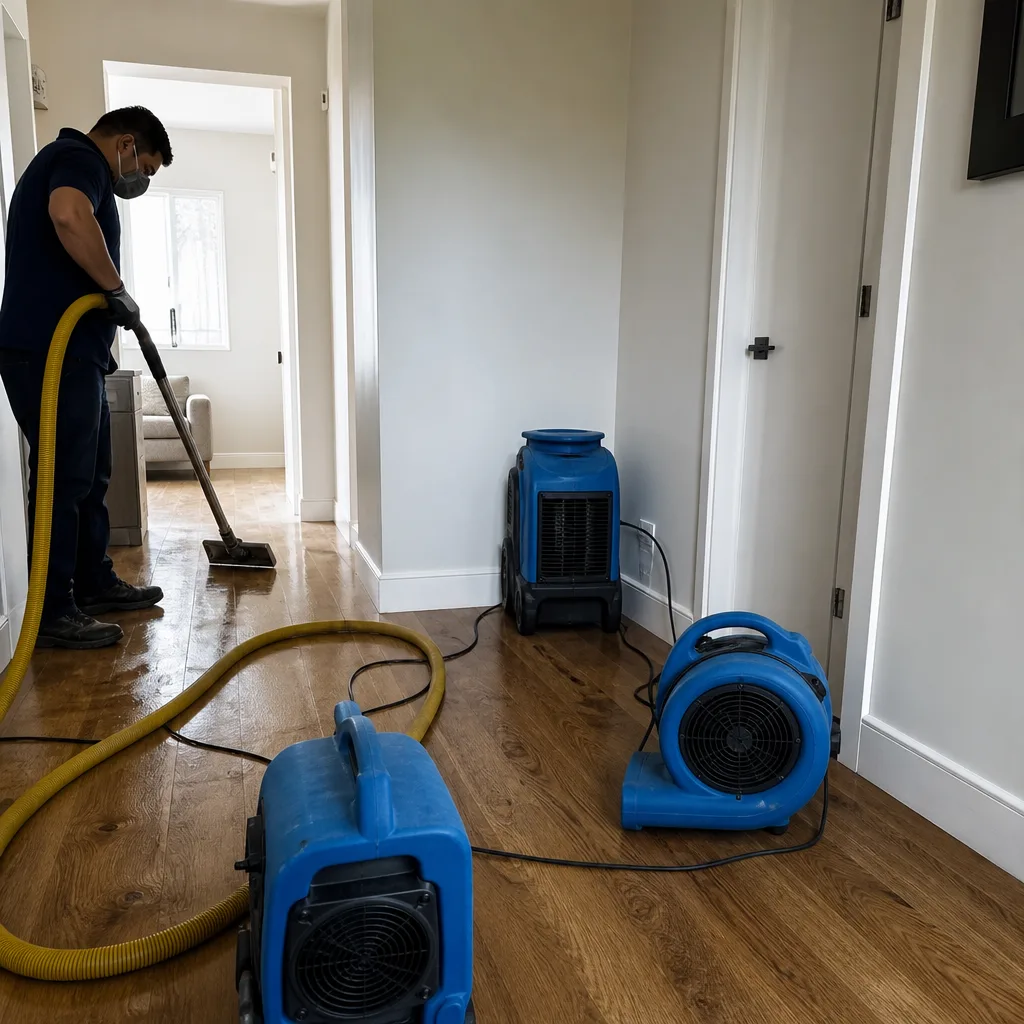
Air movers create airflow across wet surfaces while dehumidifiers remove evaporated moisture from the air. We deploy Phoenix and B-Air dehumidifiers sized to the cubic footage and vapor load, with daily moisture logs tracking specific humidity and grain depression until materials return to dry standard.
4. Cleaning & Sanitization
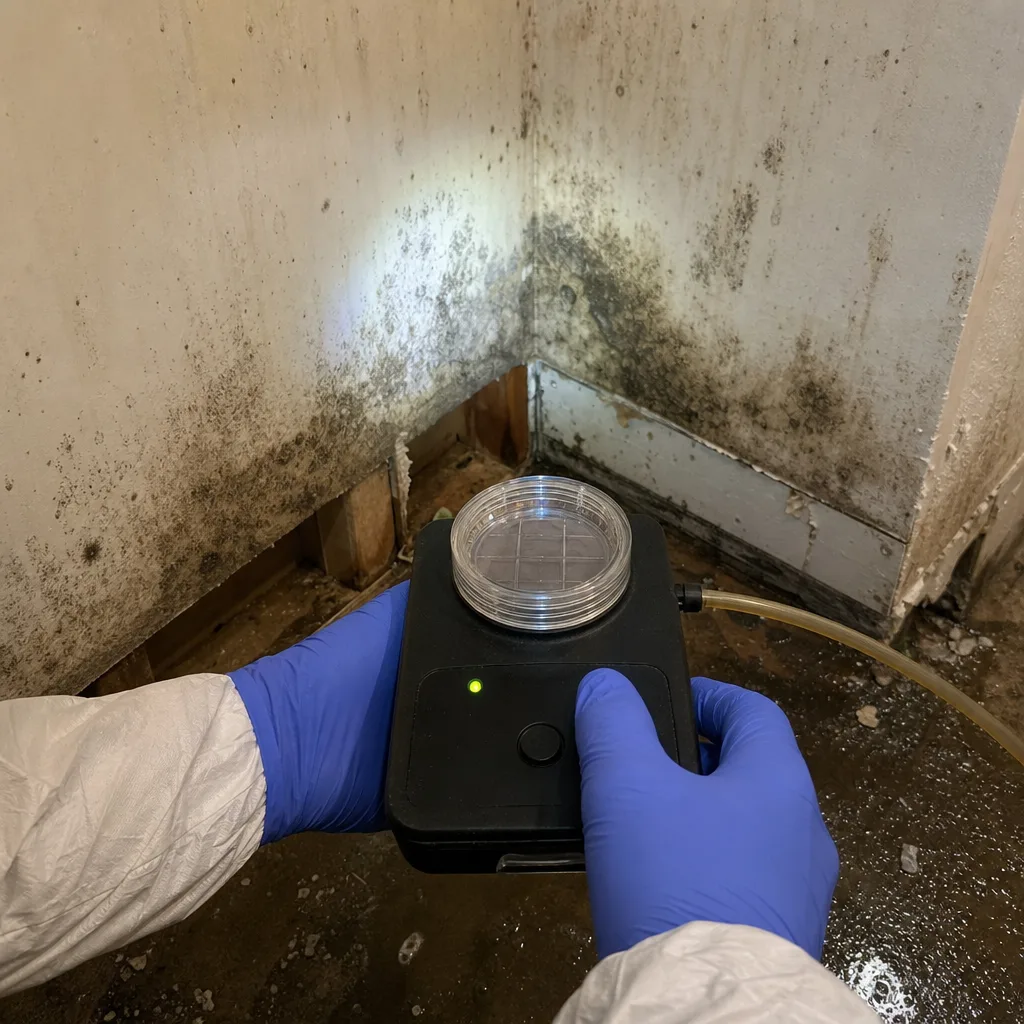
All affected surfaces receive antimicrobial treatment appropriate to water category. Category 3 losses in Castaic’s fire-flood sequence require EPA-registered disinfectants and HEPA air scrubbers to capture airborne particulates from ash-contaminated water.
5. Post-Fire Flood Reassessment
For homes on the downslope side of burned canyons, we conduct a mandatory pre-rain flood vulnerability review before closing any mitigation. This Castaic-specific protocol checks drainage paths, sediment accumulation, and slab integrity to prevent re-damage when the November-March rain window opens.
6. Repairs & Restoration
Once drying goals are met and documented, our reconstruction team restores removed materials - drywall, flooring, trim, insulation - with a written scope and firm price before any rebuild work starts, backed by our 365-Day Done Right Promise under The Haven Standard.
Need Emergency Water Damage Restoration in Castaic Now?
Crews minutes away, answering live 24 hours a day. The sooner we start, the less it costs.
Working With Your Insurance Company
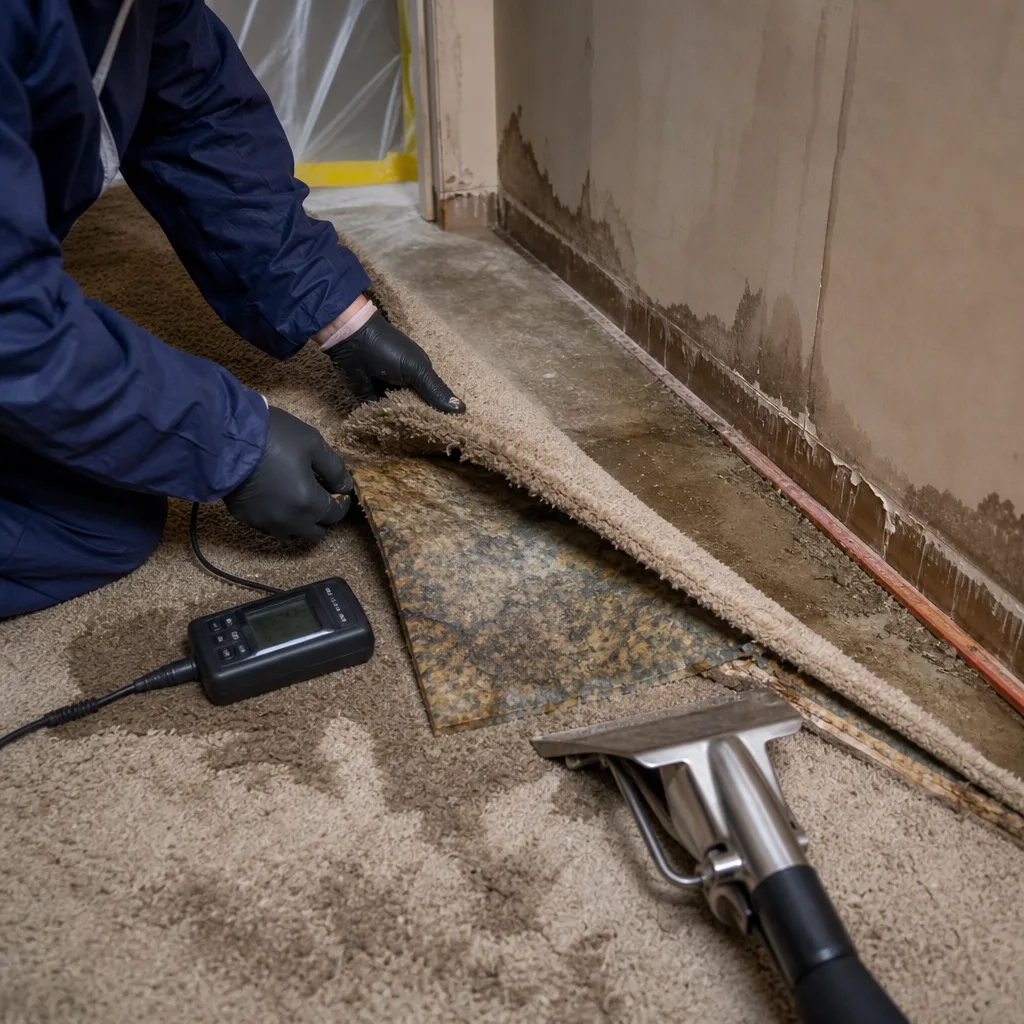
Insurance claims succeed or fail on documentation. We know this because our founder, Alicia Brennan, spent years as a claims adjuster watching homeowners lose coverage over incomplete drying logs and disputed scope descriptions. Every Castaic job we handle produces a file an adjuster can pay without argument: timestamped photos from every visit, room-by-room moisture readings with equipment serial numbers, daily psychrometric data, and a line-item scope tied to IICRC standards.
We bill your carrier directly when coverage applies, and we coordinate with your adjuster from the first hour - not after the fact when positions have hardened. Our estimates use industry-standard pricing platforms, and our photo record is included as standard, never sold as an upsell. If you’ve received another company’s estimate, our Free Second Opinion service reviews it at no charge.
What We Provide Your Insurer
- Thorough documentation of the loss
- Photos of all damage, room by room
- Moisture readings and drying logs
- A detailed, line-item scope of work
- Direct coordination with your carrier
Built for Castaic’s Loss Calendar
Castaic’s water damage calendar follows the wildfire-rain sequence that defines this wildland-urban interface. June through October brings Santa Ana wind events with relative humidity plunging below 15%, desiccating structural materials and opening them to rapid absorption when water finally arrives. November through March delivers the rain that turns burned hillsides into debris-flow sources; a half-inch storm on hydrophobic ash can produce more runoff than two inches on healthy soil.
January and February see the freeze-thaw cycle hit older supply lines in Castaic’s 1980s-1990s construction, with copper pinhole failures and polybutylene deterioration in homes that haven’t had repiping. Spring brings modest seepage in hillside lots where winter saturation has found new paths through compromised waterproofing. Summer monsoon thunderstorms, though brief, can overwhelm gutters and window wells on homes already stressed by months of dryness. Our crew maintains pre-staged equipment in the Santa Clarita Valley through the November-March high-risk window, because a burned canyon doesn’t wait for business hours.
Water Damage Restoration Across Castaic’s Neighborhoods
Castaic’s neighborhoods each present distinct water damage profiles, and our response routes are planned accordingly.
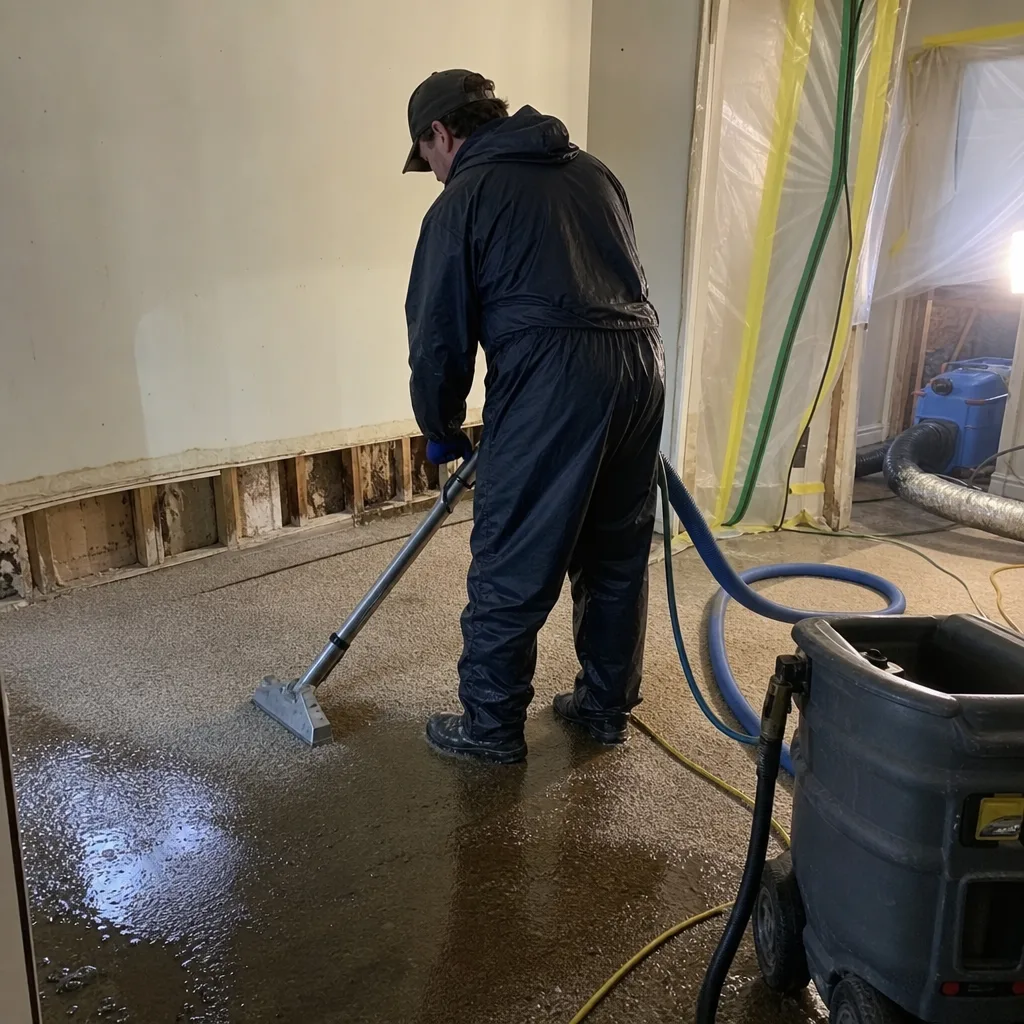
North Castaic and Hillcrest Parkway corridor: These graded hillside lots sit directly below wildland interface zones. After the 2023 Castaic fire, we were called to a 1990s stucco-over-frame tract home on Hillcrest Parkway where the owner had just finished interior repairs when a half-inch rainstorm sent mud and ash through the sliding door and under the slab. Our techs pulled category 3 water with XPOWER air movers and a Phoenix dehumidifier, set containment to isolate the affected hallway, and ran moisture mapping on the slab edge - the drying logs showed we had to extend structural drying by two extra days because the low-humidity canyon air had already stressed the framing. We finished with antimicrobial treatment and advised the homeowner to keep the post-fire flood reassessment on file before the next rain window.
Castaic Lake area and lower Valencia Boulevard: Flatter terrain but older infrastructure, with 1980s-era water mains and sewer laterals showing age-related failure. Basement and crawl space water intrusion is common here, often from irrigation backflow or seasonal water table rise rather than surface flooding.
Hasley Canyon and Templin Highway periphery: Rural-residential with well water systems, septic fields, and larger setbacks. Water damage here often involves pump failures and septic backup into structures, requiring specialized category 3 protocols and coordination with environmental health for disposal.
Commerce Center Drive and commercial corridor: Mixed-use buildings with flat roofs, aging TPO membrane, and HVAC condensate drainage issues. After-hours sprinkler activation and grease interceptor backup create category 2 losses that demand rapid response to protect inventory and avoid business interruption claims.
Specialized Water Damage Restoration Services We Offer in Castaic
Emergency Water Extraction
Standing water removal within the first hour prevents secondary damage to substrates and reduces total restoration cost by 40-60% in typical Castaic residential losses. Our truck-mounted extraction units handle bulk water removal, with portable units for multi-story structures where access limits equipment size.
Structural Drying & Dehumidification
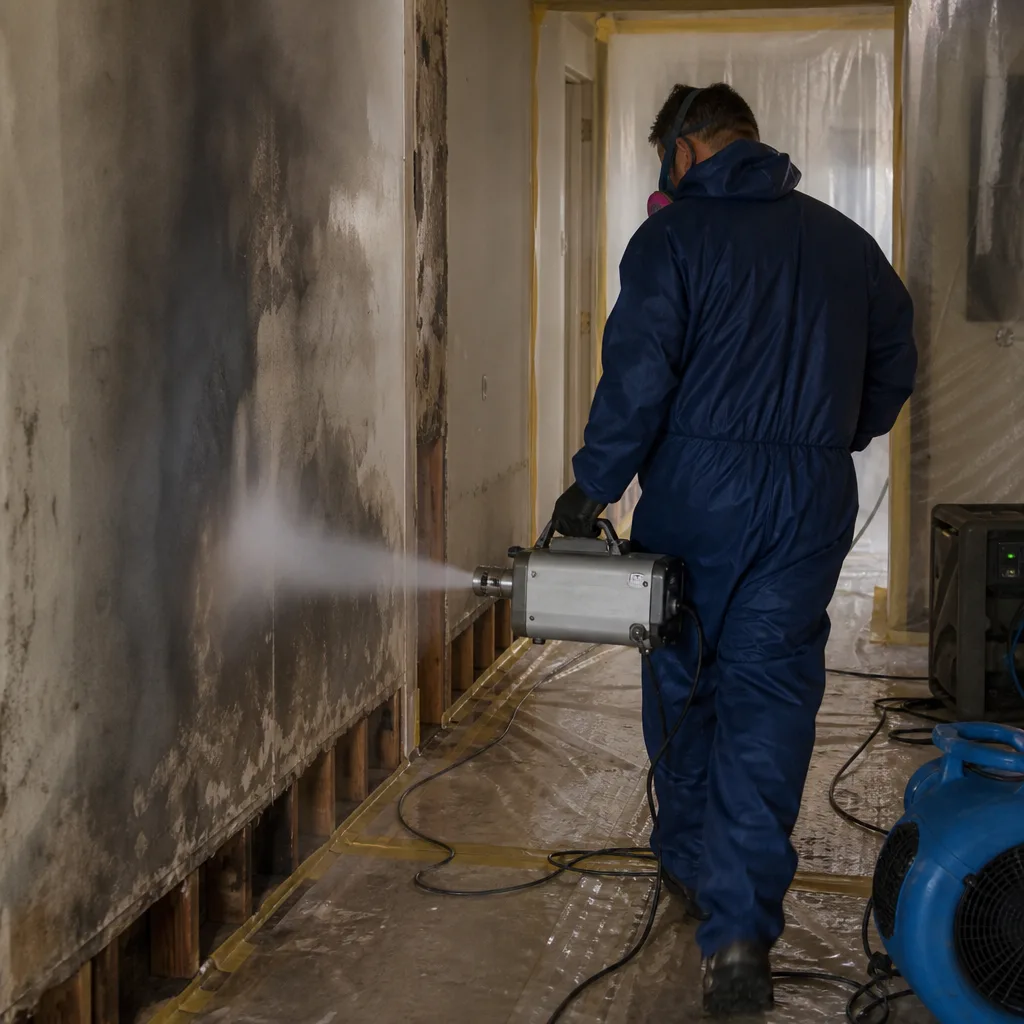
We size dehumidification to the specific vapor load using LGR (low-grain refrigerant) dehumidifiers from Phoenix and B-Air, with desiccant units for deep drying in Santa Ana-stressed materials that standard equipment can’t pull to dry standard. Every day produces a drying log with grain depression readings, equipment placement maps, and moisture content percentages by material.
Flood Cleanup
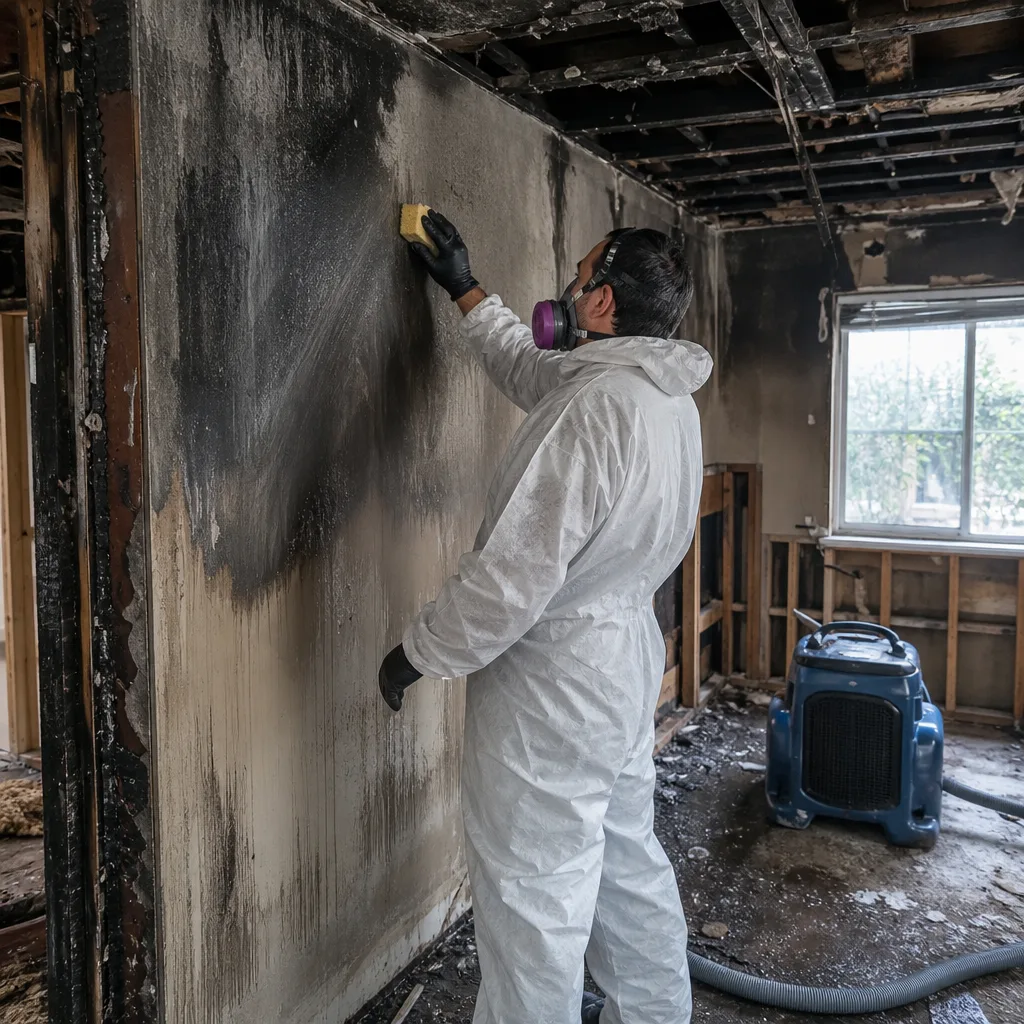
Castaic’s post-fire floods deliver category 3 water by definition - any water contacting ground, ash, or debris carries contaminants requiring full sanitation protocol. We extract, remove contaminated porous materials, apply EPA-registered disinfectants, and run HEPA air scrubbers until particulate counts drop to safe levels.
Burst Pipe Restoration
Freeze-thaw failures and age-related corrosion in Castaic’s 1980s-2000s plumbing stock require immediate water shutoff, extraction, and full pipe assessment. We coordinate with licensed plumbers for repair, then restore walls, ceilings, and flooring with documented moisture verification before closeout.
Basement Water Removal
Hillside homes with walkout basements or below-grade construction on graded lots face hydrostatic pressure and surface water intrusion. We install temporary sump systems, extract standing water, and design permanent drainage solutions where indicated, with full documentation for insurance submittal.
What happens when you call
- 1
A real person answersNo phone trees - you reach a local pro.
- 2
You get an upfront price rangeHonest numbers before anyone is dispatched.
- 3
A background-checked tech heads outLicensed & insured, dispatched right away.
- 4
You approve before work beginsNothing starts until you say go.
Water Damage Restoration Costs in Castaic, CA
Typical water damage mitigation in Castaic runs $2,800-$7,500 for residential properties, with pricing driven by water category, affected square footage, and structural involvement. Emergency extraction alone: $450-$950. Structural drying with dehumidification: $1,800-$4,200 for standard residential scope. Category 3 flood cleanup with contamination protocol: $3,500-$8,500 due to removal of porous materials, antimicrobial treatment, and extended air scrubbing.
What moves the price: water that reached wall cavities or slab edges requires more equipment days; category 3 contamination triggers mandatory removal of drywall below the water line and carpet pad replacement; contents manipulation and pack-out add labor hours. Insurance typically covers sudden and accidental water damage from burst pipes, appliance failures, and fire suppression; gradual leaks and maintenance-related issues often fall to homeowner responsibility. We deliver a written price before any work begins, every time - Haven Standard, Clause 1 - and our Free Second Opinion reviews any competitor’s estimate at no charge. Call (747) 294-2725 for your exact scope; estimates are free.
We Also Serve Cities Near Castaic
Our crews respond throughout the Santa Clarita Valley and adjacent San Fernando Valley corridors, including Water Damage Restoration in Castaic proper plus Stevenson Ranch, Santa Clarita, Porter Ranch, and Chatsworth. Dispatch is coordinated from our Los Angeles office with local crews already positioned for 45-minute response across this service area.
Serving Castaic, CA - Our Local Coverage Area
We’re based in the Castaic area and know this community well. Use the map below to see our service coverage - if you’re nearby, we can almost certainly help.
Castaic Water Damage Restoration Questions, Answered
Why does Castaic get water damage after a wildfire even if my home didn’t burn?
Post-fire hydrophobic soils repel water instead of absorbing it, turning modest rain into flash flooding and debris flows that carry ash, mud, and contaminants into downslope homes.
Even homes that escaped direct flame exposure sit in the path of this runoff. The 2023 Castaic fire demonstrated this pattern clearly: burned hillsides above Hillcrest Parkway and similar corridors became debris sources for homes that had never seen flood risk before. Our mandatory post-fire flood reassessment identifies vulnerability before the November-March rain window opens. Call (747) 294-2725 to schedule.
How fast do we need to start drying after water intrusion in a Castaic home?
Within 24 hours, and preferably within the first 4-6 hours, to prevent mold colonization and structural degradation.
In Castaic’s Santa Ana wind-stressed homes, framing materials are already desiccated and micro-fissured, so they absorb water faster than standard drying curves predict - but they also release it more slowly once saturated, extending drying timelines if extraction is delayed. Our 45-minute response commitment exists because the first hour saves the most. Call (747) 294-2725 for immediate dispatch.
What is category 3 water and why does it matter for Castaic flood cleanup?
Category 3 water is grossly contaminated, containing pathogens, toxins, or hazardous substances that require full protective equipment, mandatory removal of porous materials, and specialized disposal.
Castaic’s post-fire debris flows qualify automatically: any water contacting burned soil, ash, or fire retardant carries contaminants no standard cleaning can address. Carpet, pad, drywall below the water line, and insulation must be removed. Our crews use full PPE, EPA-registered disinfectants, and HEPA containment with negative air pressure to protect unaffected areas. This protocol is non-negotiable for health and insurance compliance.
Do Castaic homes on hillside lots need a different drying approach?
Yes, because graded hillside construction with minimal natural drainage buffer allows water and mud migration under slab foundations that standard surface drying misses.
We run moisture mapping specifically at slab edges, use injectidry systems for wall cavity drying where indicated, and extend tertiary drying phases to capture bound water in stressed framing. The post-fire flood reassessment checks for sediment accumulation and compromised perimeter drainage that could reintroduce moisture after we leave. These steps are standard on every Castaic hillside job, not optional add-ons.
What brands of drying equipment does your Castaic water damage crew use?
We deploy professional-grade systems from Phoenix, B-Air, and Injectidry, with equipment selection matched to the specific vapor load and material type.
Phoenix LGR dehumidifiers handle high-capacity residential drying; B-Air units serve targeted applications and contents drying; Injectidry’s interstitial drying systems reach wall cavities and subfloor spaces that conventional air movement can’t access. All equipment is maintained, calibrated, and documented to IICRC and RIA standards, with serial numbers logged in your drying record for insurance verification.
How long does structural drying typically take in Castaic?
Standard residential drying runs 3-5 days; Santa Ana-stressed materials in Castaic often extend to 5-7 days for full dry standard achievement.
The extended timeline comes from desiccated wood opening micro-fissures that wick water deeper than standard penetration, requiring longer tertiary drying phases. We don’t guess at completion - daily moisture logs with specific humidity, grain depression, and material moisture content percentages determine when equipment comes out. Premature removal risks mold and warranty failure. Your written drying log proves completion to your insurer.
Will insurance cover my water damage restoration in Castaic?
Sudden and accidental water damage from burst pipes, appliance failures, fire suppression, and weather events is typically covered under standard homeowners policies.
Gradual leaks, maintenance neglect, and flood damage from rising water usually require separate flood coverage. We document every loss from the first hour with photos, moisture readings, and cause determination to support your claim. Our in-house claims team coordinates directly with your adjuster, and our line-item estimates use industry-standard pricing platforms. Bring any competitor’s estimate for our Free Second Opinion - we’ll review coverage implications at no charge. Call (747) 294-2725 to start your file.
Can my family stay in the home during water damage restoration?
Sometimes, but category 3 losses, extensive demolition, or compromised HVAC systems require temporary relocation for health and safety.
We establish containment barriers to isolate work zones when partial occupancy is feasible, and we coordinate with your insurer on additional living expense documentation when displacement is necessary. The decision is driven by air quality testing, structural safety, and the extent of affected space - not by our schedule. Your written scope includes occupancy status recommendations before work begins.
Written by Alicia Brennan, Owner at Back to Dry Restoration, serving Castaic since 2011 under The Haven Standard.
Water Damage Restoration in Nearby Areas